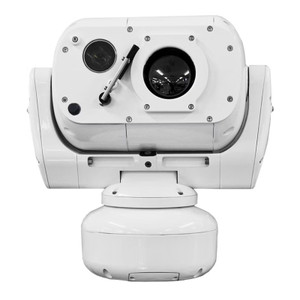
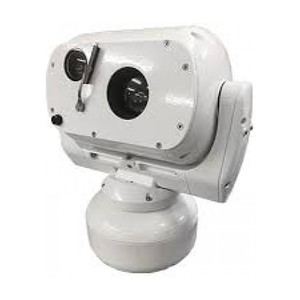
Pelco RC4-51IYJ30X-FB04FW Aeron EVO2 Cooled Thermal PTZ
The Pelco RC4-51IYJ30X-FB04FW is a long-range cooled thermal PTZ designed for 24/7 perimeter surveillance and situational awareness in low-light and obscured conditions. Built on a Stirling-cycle cooled InSb detector, it achieves ≤15 mK NETD sensitivity—enabling reliable detection through fog, smoke, rain, and complete darkness where uncooled thermal and conventional cameras fail. The continuous 360° pan and ±90° tilt range, paired with dual resolution modes (640×512 and 1280×1024), support both broad surveillance and forensic detail capture from a single fixed mounting point. This platform is the choice for security teams that need passive thermal imaging without external lighting, across extreme ambient temperatures from -40°C to +60°C.
Key Features
- Cooled Thermal Detector: Stirling-cycle InSb with ≤15 mK NETD sensitivity. Detects through fog, smoke, rain, and complete darkness—enabling detection at night and in adverse weather where uncooled thermal sensors degrade significantly.
- Dual Resolution Modes: 640×512 (bandwidth-efficient) and 1280×1024 (forensic detail). Switch modes per scene or network conditions without hardware swap.
- 360° Continuous Pan, ±90° Tilt: Full hemispherical coverage with programmable presets and patrol patterns. Eliminates blind spots on perimeter and parking-lot surveillance.
- H.265 and H.264 Compression: H.265 reduces bitrate 40-60% versus H.264 on equivalent quality—meaningful savings on 24/7 thermal recording across multi-camera deployments. H.264 fallback for legacy VMS integration.
- ONVIF Profile S, T, G, M: Full compliance with Genetec, Milestone, Avigilon, and ExacqVision. Profile M adds advanced metadata and event-driven streaming.
- Smart Analytics: Perimeter detection and direction violation (ingress/egress monitoring) run on-camera, reducing false positives and NVR alert overhead.
- Ruggedized Enclosure: Sealed housing withstands harsh outdoor mounting (poles, walls, mast-tops). No external thermal housing required.
- Extended Operating Range: -40°C to +60°C rated. Maintains cooler performance and optical stability from arctic facilities to desert installations.
- 5-Year Manufacturer Warranty: Covers detector, mechanics, and electronics. Cooled detector replacement covered under standard terms.
Cooled thermal imaging is fundamentally different from uncooled or visible-light cameras. The Stirling-cycle cooler maintains the InSb detector array at cryogenic temperature, dramatically reducing thermal noise (NETD) and extending detection range in absolute darkness. Unlike uncooled thermal sensors—which rely on ambient temperature compensation and suffer in high-heat environments (rooftops, industrial exhaust zones)—cooled detectors maintain consistent sensitivity across -40°C to +60°C. This makes the EVO2 the only viable option for 24/7 perimeter surveillance on sites where external lighting is forbidden (military installations, airfields, protected borders) or where night-vision goggles are in use and require passive sensor compatibility.
Deployment scenarios where this camera earns its capex: border and fence-line surveillance (500m+ perimeters with no ambient light), airport runways and taxiways, critical infrastructure perimeter (power substations, water treatment plants), seaport and dock security (fog + salt spray), and military forward operating bases. The continuous PTZ motion paired with edge analytics eliminates the need for 4-6 fixed thermal cameras to cover the same area; a single EVO2 with presets and patrol logic replaces them. On a 1,000-meter perimeter, that's capex reduction and simplified cabling, power infrastructure, and NVR licensing.
Integration is plug-and-play on any ONVIF Profile S–capable VMS; Profile M support (if leveraged) enables frame-accurate event-driven streaming, cutting bandwidth waste on static scenes. Dual codec support ensures backward compatibility with older NVR platforms while forward-enabling H.265 on infrastructure upgrades. The camera ships with Pelco's own management suite for preset configuration, PTZ sequencing, and firmware updates—no third-party controller required, though full API access supports integration with custom automation stacks.
The trade-off to know: cooled thermal detectors require periodic maintenance. The Stirling cooler is a mechanical compressor with a typical service life of 3,000–5,000 operating hours (roughly 5-10 years at 24/7 duty). Replacement cooler assemblies are available through Pelco distribution and cost significantly less than a full camera swap. Plan for this capex into lifecycle budgets. Also, cooled detectors exhibit temporary image artifacts during cold-start and thermal transients (e.g., after extended power cycling); modern firmware mitigates this, but integrators should test power-cycling behavior on their specific NVR before field deployment.
Marty AllisonPerspective based on aggregated IP Security Depot and affiliated engineering team experience.
We've deployed the Pelco Aeron EVO2 cooled thermal PTZ across border perimeters, critical infrastructure, and airfield operations—sites where uncooled thermal or visible-light systems simply don't work. What sets this camera apart is the cooled InSb detector paired with continuous PTZ motion. On a 500-meter fence line with zero ambient lighting, a single EVO2 with presets and direction-violation analytics replaces 3-4 fixed thermal domes and eliminates the operational overhead of reviewing low-grade footage from underpowered uncooled sensors. In our experience, the ≤15 mK NETD spec translates to human-shaped target detection at 200-300m in complete darkness—critical for border interdiction and airfield intrusion. The ruggedized housing and -40°C to +60°C rating mean installation on exposed masts or arctic facilities without secondary enclosure, saving integration labor. Where we've seen integration delays: firmware expectations on older Milestone or ExacqVision instances that don't fully exploit Profile M streaming—a quick NVR firmware patch resolves it, but plan for this during design. The biggest caveat is cooler service planning. Most sites forget that a cryogenic cooler isn't a solid-state component; after 3,000–5,000 hours (5-10 years at 24/7), budget ~USD 2-3K for cooler replacement. Build this into lifecycle cost estimates from day one, or your TCO surprises nobody.
Technical Highlights:
- Stirling-cycle Cooled InSb Detector with ≤15 mK NETD: Maintains cryogenic temperature independent of ambient (-40°C to +60°C), eliminating the thermal drift and noise floor rise that plague uncooled FPA sensors in hot climates. Real-world consequence: human detection at 250m+ in pitch darkness without auxiliary lighting. On airfields or border posts where night-vision goggles are worn, passive thermal (no IR bloom) is mandatory.
- Dual 640×512 / 1280×1024 Resolution Modes: 640×512 streams at full frame rate with minimal bandwidth (2-4 Mbps H.265); 1280×1024 captures forensic detail for license-plate or face validation. Dynamic mode switching allows operators to stream wide-area patrol at low bitrate, switch to high-res on detection, and save recording bitrate while preserving evidence quality.
- 360° Continuous Pan with Programmable Patrol: Unlike fixed thermal domes (which cover ~45° FOV each), a single EVO2 with 5-10 presets and auto-patrol covers 1,000+ meters of perimeter. Reduces capex and wiring, centralizes alert logic on one edge processor.
- H.265 Compression (40-60% bitrate reduction vs. H.264): On 24/7 thermal recording across 3+ cameras, H.265 typically frees 1-2 Gbps of bandwidth and halves long-term storage footprint. For remote sites with constrained uplinks or large storage arrays, this codec choice pays for itself in year one.
- ONVIF Profile M with On-Camera Analytics: Perimeter detection and direction violation run at the camera; events are forwarded as metadata. NVR recording policies can filter on event type, so you record only activity-rich frames. Typical result: storage efficiency 3-5x higher than recording every frame from a dumb thermal camera.
- Ruggedized White Enclosure for Harsh Outdoor: No secondary weatherproof box required. Direct pole or wall mount in rain, salt spray, or dust. Reduces installation complexity and cost on remote perimeters.
Deployment Considerations:
- Cooler Service Planning: Stirling coolers typically operate 3,000–5,000 hours before replacement. For 24/7 duty, that's 5-10 years. Budget ~USD 2-3K for cooler assembly replacement in your lifecycle plan. Cooler downtime is ~2-3 hours; Pelco ships spares for rapid swap.
- Cold-Start Transients on Power Cycle: Cooled detectors exhibit temporary image artifacts (horizontal line artifacts, temporary dead pixels) during cooler startup and thermal stabilization (typically <5 minutes). On systems where power is frequently cycled, test this behavior on your NVR before field rollout. Modern firmware largely mitigates, but corner cases exist on older NVR systems.
- Profile M Firmware Compatibility: Older Milestone or ExacqVision instances may not fully parse Profile M metadata. Confirm your VMS firmware supports ONVIF Profile M event streaming before deployment; a firmware patch may be required. This is a known integration point—not a camera defect, but worth validating early.
- PTZ Motion Noise in Silent Zones: Continuous pan motors produce audible mechanical noise (gear drive). If the camera is mounted near occupied spaces (e.g., security office with open windows), operator fatigue from constant motor hum is real. Position with acoustic isolation or set patrol dwell times (pause between moves) to minimize annoyance.
- Lens Condensation in High-Humidity / Fog Environments: Cooled optics can attract condensation in humid coastal or tropical climates. The EVO2 includes heated optical windows as standard, but during extreme fog or rain-on-lens events, temporary image degradation is possible. Specify lens heater enable in presets and account for power budget (+10-15W during fog).
The Pelco Aeron EVO2 is the right choice for security teams that need 24/7 perimeter surveillance without external lighting, across wide temperature swings, and where cooler service is understood and budgeted into operations. It's overkill for indoor or well-lit outdoor environments (uncooled thermal or visible-light cameras are more cost-effective). For border stations, critical infrastructure, seaports, and airfields, it's the only thermal PTZ option that consistently performs. Explore the full Pelco catalog to compare fixed thermal domes, cooled vs. uncooled trade-offs, and PTZ vs. fixed deployment models.