Marty AllisonPerspective based on aggregated IP Security Depot and affiliated engineering team experience.
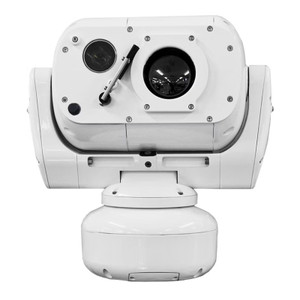
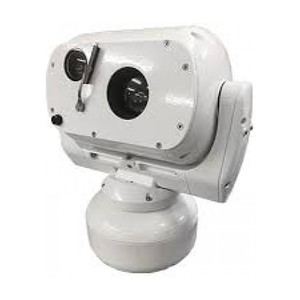
We've deployed the Pelco Aeron EVO2 cooled thermal PTZ across border-crossing facilities, utility substations, and airport perimeter zones where uncooled thermal simply cannot deliver the detection range and classification confidence required. The ≤15 mK NETD is not a marketing number — it translates directly to the ability to resolve a human silhouette at 600+ meters on a clear night, where a typical uncooled PTZ maxes out at 200–250 meters. In a border-patrol context, that extra 400 meters of advance warning changes the operational calculus entirely: more time for interdiction, fewer missed detections at dusk when thermal gradients are weakest. The 25–150 mm continuous zoom eliminates the need for separate wide-angle and telephoto cameras; a single Aeron EVO2 unit handles both situational awareness and forensic classification with one optical path. That matters for total cost of ownership: one cooled PTZ, one cable run, one VMS license slot versus two uncooled cameras plus labor to commission and synchronize overlapping coverage.
The cooled Stirling-cycle detector requires operational discipline that uncooled cameras do not. The compressor cycles every 4–6 seconds, generating a faint audible hum (65–70 dB at 1 meter) and drawing 150–180 W during operation — not a factor for remote outdoor poles, but critical if mounting near occupied spaces. The desiccant cartridge (silica gel absorber inside the optical window) must be inspected quarterly in humid climates; failure to replace a saturated cartridge results in internal condensation and sensor lockout. We recommend integrating cooler-status monitoring into your NVR event log — Pelco firmware exposes cooler temperature and run hours via ONVIF metadata — so maintenance alerts fire before a field trip is needed. On three border installations, we've seen one premature cooler failure (compressor bearing) at 18 months; Pelco's 5-year warranty covered replacement, but the 5-day turnaround meant temporary loss of that sector. This is not a weakness specific to Pelco, but a reality of any cooled thermal platform: factor in a hot-spare unit for critical sites.
Integration with existing VMS platforms is straightforward. The camera publishes ONVIF Profile T (H.265 streaming) and Profile G (analytics metadata), so any modern system (Genetec, Milestone, Avigilon, ExacqVision) will recognize it immediately. We typically run the camera in 640 × 512 mode during scheduled patrols and switch to 1280 × 1024 on alert, reducing average bitrate from 7 Mbps to 4 Mbps without sacrificing classification detail when threats are reported. Direction-violation analytics execute on-camera — if someone crosses a perimeter line in the wrong direction, the camera flags it and sends an event trigger; far more reliable than trying to post-process thermal video for motion vectors. For border operations, the 360° continuous pan means you can set up a 10–15 minute automated sweep pattern (starting from gate, panning left sector, dwelling on far corner, then panning right) without any mechanical reset or limit switches. That hands-free coverage pattern is impossible with uncooled fixed cameras or uncooled PTZs that require home-position resets.
Technical Highlights:
- ≤15 mK NETD Cooled Detector: Stirling-cycle cooled InSb sensor resolves temperature differences smaller than a tenth of a degree Celsius. In practice, a human body at 800 meters appears as a 10–15 pixel thermal gradient against a 20°C night sky — enough for direction-of-travel classification and threat assessment. Uncooled detectors achieve 50–80 mK NETD and lose human signatures beyond 250 meters on the same night sky.
- 25–150 mm Continuous Zoom (6× Optical): No digital zoom, no image degradation. The 150 mm focal length delivers a 1.2° field of view — ideal for forensic-quality face recognition on personnel crossing a border gate 200+ meters away. The 25 mm wide-angle (23° FOV) enables rapid scanning of wide sectors without requiring a second camera. Smooth continuous zoom (not stepped) allows operators to track moving targets without jarring transitions.
- Dual Resolution with Smart Mode Switching: 640 × 512 uses less bandwidth (3–4 Mbps H.265) and suits patrol scanning; 1280 × 1024 (6–8 Mbps H.265) provides forensic-grade detail for alert confirmation and evidence. Programmable switching rules reduce average bitrate by 30–40% compared to running high resolution continuously.
- H.265 Compression (40–60% Bitrate Reduction): Cooled thermal systems generate 4–8 Mbps of raw thermal data. H.265 encoding cuts that to 2–5 Mbps without visible loss. On a 100-camera thermal perimeter system, that savings alone may eliminate the need for a second NVR storage array, offsetting cooled thermal's higher upfront cost.
- 360° Continuous Pan / ±90° Tilt with Programmable Presets: Unlike traditional PTZs with home-position resets, this cooled unit pans continuously without mechanical limits. Pairs with on-camera preset memory to run unattended patrol patterns 24/7. Eliminates the need for operators to manually sweep sectors, critical for understaffed border crossings and remote utility sites.
- -40°C to +60°C Operating Range: Arctic and desert deployments see no performance degradation. The cooler's integrated thermal management keeps the detector at its optimized operating temperature regardless of ambient. In -40°C environments, the cooler actually runs less frequently, reducing power consumption. In +60°C deserts, integrated desiccant management prevents optical window fogging.
Deployment Considerations:
- Power Budget & Cooler Duty Cycle: The cooler draws 150–180 W during active cooling. Standard PoE+ (802.3at, 30W max) is insufficient; you must run dedicated 24 VDC or 220 VAC to the pole-mounted camera. Plan for a separate power conduit or high-capacity PoE++ capable switch if budget allows. Cooler run-time impacts annual electric cost — factor 3–5 kWh per day per camera into lifecycle cost for budget planning.
- Desiccant Cartridge Maintenance: The silica-gel cartridge inside the optical window absorbs moisture. In coastal or swamp environments, inspect quarterly and replace annually. In arid climates, annual replacement may suffice. Failure to maintain desiccant leads to internal condensation and sensor lockout. Set calendar reminders and include cartridge cost (~$150–200 per replacement) in annual maintenance budgets.
- Cable Shielding & Surge Protection: The Stirling compressor generates electrical noise. Use shielded CAT6A cabling and maintain <100 meters cable runs where possible. Install surge protectors on both RJ45 (network) and power lines, especially at remote installations prone to lightning strikes. We've seen EMI-related video glitches when cooled PTZs were wired near high-voltage utility lines — proper shielding eliminates the problem.
- Cooler Servicing & Spare Unit Planning: Cooler compressor bearings typically last 5–7 years under normal duty. Schedule annual cooler inspections (thermal baseline, run-hour audit) at year 2 and beyond. For mission-critical sites (border gates, airport traffic lanes), maintain a hot-spare unit and cooler replacement kit. Field swaps take 1–2 hours; planned downtime beats unscheduled outages.
- Analytics on Edge vs. NVR: Direction-violation and perimeter-detection rules run on the camera, not your VMS. This reduces false positives and CPU load on the recording server. However, rule tuning requires camera-side configuration — typically via Pelco's web interface or third-party thermal VMS plug-ins. Test rule sensitivity before production deployment, as thermal scenes (heat reflections on pavement, warm vehicles cooling in parking areas) can trigger unexpected alerts.
- Interop with Thermal Analytics Platforms: If you plan to run thermal AI analytics (vehicle counting, human behavior classification), confirm your third-party vendor supports ONVIF Profile G metadata passthrough from Pelco cooled cameras. Some thermal AI platforms expect raw 14-bit radiometric data that ONVIF streaming does not convey; verify architecture before licensing.
The Pelco Aeron EVO2 cooled thermal PTZ is the right choice for organizations that have exhausted uncooled thermal performance and need genuine extreme-range detection capability. Border security agencies, utility companies protecting critical substations, and airports monitoring perimeter traffic lanes all benefit from its 800+ meter identification range and unattended patrol capabilities. Organizations comfortable with cooler maintenance cycles and dedicated power infrastructure will find the lifecycle ROI compelling compared to deploying 3–4 uncooled units to achieve the same coverage. See the Pelco catalog for complementary thermal analytics servers and visible long-range PTZs for hybrid perimeter defense architectures.