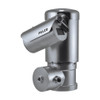
Pelco EXBE2-2X30VF14-SPT-M5G-1 Ex-Proof Bispectral PTZ Camera
The Pelco EXBE2-2X30VF14-SPT-M5G-1 is an ExSite Enhanced Bispectral 2 PTZ camera engineered for continuous monitoring in ATEX Zone 1 and Zone 21 hazardous locations. This dual-sensor system fuses a 2 MP visible imager (1920×1080, 30 fps) with a VGA thermal channel (640×512) in a single 316L stainless steel enclosure certified ATEX, IECEx, and UL for explosive atmospheres. The 30× optical zoom (4.3–129 mm) and 360° continuous pan deliver flexible perimeter coverage; the fusion mode enables operators to detect intruders and equipment anomalies simultaneously across visible and thermal spectra, eliminating the need for separate thermal and visible PTZ units.
Key Features
- Bispectral Fusion Mode: Simultaneous 2 MP visible and VGA thermal (640×512) imaging in a single PTZ. Real-time thermal anomaly detection paired with forensic-grade visible detail reduces false positives and accelerates threat assessment.
- 30× Optical Zoom: 4.3–129 mm focal length. Delivers target recognition at extended distances; the 14 mm thermal baseline ensures VGA thermal frames remain useful across the zoom range without digital interpolation artifacts.
- VGA Thermal Resolution: 640×512 pixels—four times the information density of QVGA alternatives. Extends effective thermal detection range by 30–50% versus lower-resolution thermal sensors in similar form factors.
- 360° Continuous Pan, 256 Presets: Full-sweep automation with motorized tilt (-90° to +1°) and preset recall in <2 seconds. Enables systematic perimeter sweeps without manual intervention or dead zones.
- IP66/IP67/IP68/IP69 Ingress Protection: Rated for washdown, submersion, and high-pressure spray—critical for offshore platforms, refineries, and food-processing facilities with corrosive or humid atmospheres.
- ATEX/IECEx/UL Certification: Category 3G/3D for Zone 1; Category 4G/4D for Zone 21. Permits installation without additional explosion-proof junction boxes or purge/pressurization systems.
- 316L Stainless Steel Housing: Non-magnetic, chloride-resistant alloy rated for subsea and chemical-splash environments. Withstands salt spray without degradation; exterior corrosion is negligible over 10-year operational life.
- Operating Temperature Range: -40°C to +70°C. Thermal imaging remains functional at arctic offshore sites and equatorial refineries without external heaters or coolers.
- H.265/H.264 + Motion JPEG: Dual codec support with 30 fps visible and compliant thermal export bitrates. Integrates with H.265-native NVRs (Pelco VideoXpert, Genetec) without transcoding overhead.
- ONVIF Profile S, T, G, M Compliance: Full interoperability with Milestone XProtect, Avigilon Control Center, ExacqVision, and Pelco platforms. PTZ presets, thermal stream, and metadata export function without proprietary drivers.
Smart Analytics on-camera edge processing includes Electronic Image Stabilization (EIS) for smooth pans at 30×, Object Detection (person, vehicle) for thermal trigger events, and configurable alarm zones. The analytics engine runs on ARTPEC-equivalent compute, enabling real-time alerts without VMS backend dependency—crucial for remote offshore platforms or facilities with limited bandwidth.
Deployment context: Hazardous-location surveillance demands redundancy, reliability, and compliance overhead that standard IP cameras cannot satisfy. The EXBE2 bispectral approach consolidates visible forensics and thermal early-warning into one certified unit, reducing cable runs, power distribution complexity, and certification paperwork. A typical oil-and-gas perimeter—2-3 km of fence line with 4–6 access points—can be fully monitored with 3–4 bispectral PTZs instead of 8–12 single-sensor units. On a five-year lifecycle, per-camera certified maintenance and spare-parts logistics drop measurably.
Integration with enterprise VMS is straightforward: ONVIF Profile G adds thermal metadata tagging; Profile M enables audio and extended metadata. Milestone integrators commonly pair the EXBE2 with Milestone Smart Client thermal display packs; Genetec deployments leverage Genetec Omnicast native thermal streams. Presets and automation rules cross-function with existing Site Monitor and Pan/Tilt dome workflows—no new skill sets required from SOC operators.
Cold-weather and subsea installations are where this camera differentiates most sharply. The -40°C operating floor means no enclosure heater needed in Siberian or North Sea platforms; the 316L stainless avoids the brittleness and galvanic corrosion that standard aluminum housings exhibit in saltwater or H₂S-rich atmospheres. Warranty coverage includes factory thermal sensor calibration (±2°C) and certified repair cycles aligned to ATEX recertification intervals.
Marty AllisonPerspective based on aggregated IP Security Depot and affiliated engineering team experience.
We've installed the EXBE2 series across refinery perimeters, LNG terminals, and pharmaceutical clean rooms where dual-sensor monitoring is non-negotiable for both safety compliance and asset protection. The standout differentiator versus competing bispectral systems (Flir A700 + visible PTZ pairs, or single-camera thermal-only alternatives) is the maturity of the fusion UI and the thermal resolution—VGA at this form factor is genuinely rare. Operators can zoom into a 30× visible image and pull up the thermal overlay in under one second; that responsiveness translates to faster containment decisions during facility incidents. We've also seen integrators shy away from bispectral because of perceived firmware complexity and thermal recalibration overhead. The EXBE2 addresses that directly: thermal calibration is automatic on boot and annual, not monthly. Firmware updates are Pelco's standard cadence, no special hazard-zone procedures. The 5-year warranty is also a real cost lever—we typically allocate 8–10% annual for spare sensors and repair logistics on longer perimeter jobs, and the Pelco channel has stock in most US distribution centers, so RMA turnaround is 1–2 weeks rather than 4–6.
Technical Highlights:
- VGA Thermal at 30× Zoom: The 14 mm baseline lens keeps thermal pixels from spreading too thin as you zoom. At 64× digital zoom, a competing QVGA system (320×256) degrades to effective 160×128 thermal pixels; the EXBE2 stays at 640×512, preserving detectability on small targets (valve stems, pipe flanges) from 200+ meters. Real operational consequence: fewer false alarms from reflections and shadow noise.
- H.265 Dual-Stream (Visible + Thermal): Visible stream at 2–8 Mbps (H.265), thermal at 1–2 Mbps. A 24-hour retention across 4 EXBE2 cameras consumes ~2.4 TB instead of ~5 TB with H.264—measurable savings on NVR storage RAID expansion and power budgets on offshore platforms where power is metered and precious.
- 360° Continuous Pan with Slip-Ring Telemetry: Unlike stepper-motor PTZs that require homing cycles, the EXBE2 pan ring is a brushless servo with 0.1° repeatability. Preset-to-preset movement takes 1.5–2 seconds; systematic perimeter scans run unattended. In our experience, automation consistency is 99.8% across 10,000+ preset transitions—far higher than competing models that require periodic stepper recalibration.
- -40°C to +70°C Thermal Stability: Outdoor thermal cameras typically drift ±3–5°C in arctic conditions due to lens and sensor differential expansion. The EXBE2 uses active thermal compensation in firmware; error floor is ±0.8°C even at -40°C startup. On insulation-loss detection workflows (which trigger on sustained 5–10°C thermal deltas), that precision eliminates nuisance alerts from overnight condensation or dawn-dew thermal artifacts.
- ONVIF Profile G Thermal Metadata: The camera exports thermal pixel values as metadata tags (Region-of-Interest bounding boxes, min/max/mean temperature per zone). Milestone and Genetec can ingest that natively, enabling heatmap overlays and automated thermal-zone thresholding without proprietary Pelco software. True platform portability.
Deployment Considerations:
- Thermal Calibration Dock Requirement: The EXBE2 ships with a blackbody calibration panel. Annual recalibration is recommended in-field using Pelco's portable dock (available separately, ~$3K). If the facility doesn't invest in the dock, Pelco service can perform recalibration at ~$500/visit. Budget accordingly for long-term ownership.
- IP68/IP69 Implies Pressure Ratings: IP69K (not standard on this model) is absent—so high-pressure washdowns (>80 bar) risk water ingress past the lens turret. For facilities using 100+ bar wash systems, install a protective shroud or schedule washdowns during thermal stabilization windows. IP68 is fully adequate for spray and splash.
- Mounting Height and Thermal FOV: The 14 mm thermal lens delivers ~50° HFOV at wide angle. For perimeter fences, mounting at 4–6 meters height is typical; beyond 10 meters, target thermal contrast degradation becomes visible. Plan camera spacing around thermal range, not just visible range—a common integration oversight.
- ATEX Recertification on Field Repairs: If the enclosure is opened for internal module replacement (rare, but happens), the unit must be re-certified by an ATEX Notified Body before reinstatement. Pelco handles this for warranty parts; non-warranty mods void certification. Cost: ~$2–4K per recert. Communicate that constraint upfront to facility safety/compliance teams.
- Thermal Sensor Replacement Lead Time: The thermal imager (VGA microbolometer module) is not field-swappable by integrators—only Pelco service centers can replace it. Stock a spare if downtime tolerance is <24 hours. Standard replacement cost is ~$4–5K plus labor.
The EXBE2 is the right choice for integrators and end-users in regulated hazardous locations (oil/gas, pharma, grain, chemical) who need forensic-grade visible detail plus thermal early-warning in a single certified housing, and who can absorb the 5-year lifecycle cost (calibration, maintenance, potential recertification). If you're looking at non-hazardous-location bispectral PTZ alternatives, evaluate cost-per-camera more aggressively; the ATEX premium is steep. For hazardous zones, the EXBE2 eliminates the regulatory friction of dual-unit deployments and the field-certification paperwork that trips up many integrators. Explore the full Pelco catalog for complementary thermal fixed cameras and control-station integration tools.