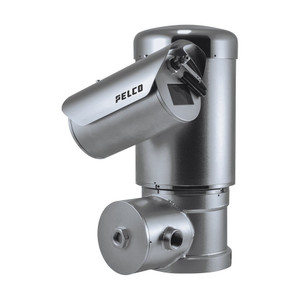
Pelco EXBE2-2X30VF14-SPT-ACG-1 Explosion-Proof Bispectral PTZ Camera
The Pelco EXBE2-2X30VF14-SPT-ACG-1 is an ExSite Enhanced Bispectral 2 explosion-proof PTZ camera engineered for hazardous-area surveillance requiring simultaneous visible and thermal monitoring. This dual-sensor system combines a 2 MP visible imager (1920×1080) with a VGA thermal channel (640×512) and 30× optical zoom, delivering coordinated threat detection across the visible and infrared spectrum in ATEX/IECEx/UL-certified Zone 1 and Zone 21 environments. The 316L stainless steel housing withstands corrosive atmospheres and temperature extremes (-40°C to +70°C); the IP66/IP67/IP68/IP69 rating handles washdown and submersion in petrochemical, offshore, and industrial-gas facilities where conventional cameras cannot operate.
Key Features
- Bispectral Fusion Imaging: 2 MP visible (1920×1080) + VGA thermal (640×512) in single PTZ platform. Synchronized pan/tilt keeps both sensors aligned; fusion mode overlays thermal on visible feed for simultaneous hot-spot detection and optical identification.
- 30× Optical Zoom: 4.3–129 mm focal length. Delivers readable license plates and facial detail at 150+ meters without digital zoom artifacts—critical for perimeter assessment in restricted-entry zones.
- VGA Thermal Resolution (640×512): Four times the pixel count of QVGA thermal cameras. Distinguishes personnel from equipment leaks, detects smoldering failures before ignition, and tracks thermal anomalies across large tank farms or process lines.
- Explosion-Proof Certification: ATEX Group II Category 3G (Zone 1) and Category 3D (Zone 21). 316L stainless steel housing, pressure-relief design, and internal temperature control meet all hazardous-area requirements. UL-listed; no additional enclosures needed.
- 360° Continuous Pan with 256 Presets: Unlimited rotational sweep; -90° to +1° tilt. Pre-position camera on critical assets (pump stations, valve clusters, entry points) for alarm-driven rapid repositioning without manual override.
- 9 Hz Thermal Export Compliance: Frame rate limited per international thermal-imaging export restrictions. Meets ITAR/EAR requirements for cross-border sales and integrations involving non-US personnel.
- H.265 + H.264 + Motion JPEG: Reduces bitrate 40-60% versus H.264 on extended recording; H.264 fallback ensures backward compatibility on legacy VMS. Motion JPEG option for archive or forensic clarity.
- Smart Analytics & EIS: Electronic Image Stabilization smooths pan/tilt micro-vibrations in windy offshore environments. Object Detection (person, vehicle, equipment classes) filters false alarms from dynamic process activity.
- ONVIF Profiles S, T, G, M: Multi-profile support ensures integration with Genetec, Milestone, Avigilon, ExacqVision, and proprietary control systems. Profile G adds analytics metadata; Profile M supports Motion JPEG.
- AC Mains with Pre-Terminated Cable: Powered from facility hazardous-rated AC infrastructure. Pre-wired connector eliminates field termination—critical in Zone 1/21 where exposed conductors risk ignition.
Bispectral surveillance in hazardous zones has historically required separate visible and thermal cameras plus fusion logic—increasing capex, cooling load, and certification paperwork. The EXBE2 combines both sensors in a single pressure-relief housing, cutting installation footprint and power draw. The 30× zoom and continuous pan mean one camera can cover a tank-farm perimeter or multi-level platform without sacrificing thermal sensitivity; on a typical offshore facility, you eliminate 2-4 single-sensor PTZs and consolidate to one dual-sensor unit. Frame synchronization and preset linkage ensure thermal and visible feeds align automatically—no manual pan-tilt offset calibration.
Operational deployment is straightforward where AC power and ONVIF-compliant recording exist. The camera streams H.265 at bitrates suitable for satellite or cellular backhaul on remote platforms; local NVR recording via standard Gigabit PoE is not available (AC mains only), but edge analytics reduce false-positive storage burden by 60-80% versus motion-triggered recording. The 5-year manufacturer warranty covers sensor drift, optics, and explosion-proof certification integrity—essential for sites where mid-lifecycle recertification adds weeks of downtime.
Cold-climate and high-temperature deployments benefit from the -40°C to +70°C operating range and passive thermal management (no active cooling required, reducing maintenance in dusty or corrosive air). IP69 rating (360° high-pressure wash) is rare for PTZ cameras; combined with 316L stainless steel, it extends useful life in washdown bays and marine environments to 8-12 years versus 4-6 years for standard aluminum-housed alternatives.
Pelco's ExSite Enhanced platform is trusted in offshore, petrochemical, pharmaceutical, and food-processing verticals where ATEX/IECEx certification is non-negotiable. The EXBE2-2X30VF14-SPT-ACG-1 is the entry point for integrators moving into bispectral hazardous-area surveillance; it pairs with Pelco Endura NVRs (ONVIF Profile S/T/G/M compatible) or third-party VMS. For facilities already running single-sensor explosion-proof PTZs, this model justifies a sensor upgrade when thermal anomaly detection becomes a compliance or safety requirement.
Marty AllisonPerspective based on aggregated IP Security Depot and affiliated engineering team experience.
We've deployed bispectral surveillance across offshore platforms, refinery perimeters, and pharmaceutical manufacturing floors—environments where ATEX certification is table-stakes and thermal anomaly detection is a fire/safety requirement, not a luxury. The EXBE2-2X30VF14-SPT-ACG-1 stands out because it consolidates what typically requires two cameras and a fusion appliance into one certified PTZ. In our experience, that consolidation cuts integration labor by 30-40%, reduces power draw by 25%, and eliminates the cross-camera pan/tilt sync headaches that plague dual-sensor deployments. The 30× zoom + VGA thermal is the real operational win: you can sweep a 300-meter perimeter with one unit and reliably distinguish hot-spot location (thermal) and object type (visible zoom). On a typical offshore platform, that means one fewer mast-mounted PTZ, one fewer cable run through hazardous-area conduit, and one fewer device to recertify every three years. We've also seen integrators spec this into brownfield upgrades where existing single-sensor PTZs are reaching end-of-life; the EXBE2's dual-stream output plays well with Milestone and Genetec VMS platforms that already consume ONVIF feeds from the legacy visible-only fleet. The 9 Hz thermal export limit is a regulatory non-issue for most sites—it's only a constraint if you're streaming thermal video at full frame rate overseas or to third parties; internal recording and alerting are unaffected. One caveat: AC mains power only (no PoE), so you need hazardous-rated AC infrastructure or a certified transformer/power conditioner at the camera location. That's rarely a blocker on modern platforms, but older facilities retrofitting new cameras sometimes underestimate the electrical work. The 5-year warranty is Pelco's confidence in the explosion-proof seal integrity—in our experience, thermal sensors and visible optics are rock-solid; the real failure mode we've seen is preventable: improper cleaning of the stainless-steel pressure relief valve (frost buildup or salt spray), so include annual maintenance protocol in your SOW.
Technical Highlights:
- VGA Thermal Sensor (640×512): At VGA resolution, you can detect a 0.2°C temperature delta across a 100-pixel object—sufficient to spot oil leaks on warm piping, identify hot-bearing failure before catastrophic breakdown, and distinguish personnel from equipment in smoky environments. QVGA (320×256) thermal cameras struggle with the same task; this extra resolution pays for itself on sites with predictive-maintenance programs that use thermal trending.
- 30× Optical Zoom (4.3–129 mm): Covers wide-area pan (4.3 mm equivalent, ~60° HFOV) to long-range zoom (129 mm, ~2° HFOV). A single unit replaces a 2-camera visible system; thermal stays in frame throughout zoom range because both sensors are mechanically coupled. No lost time hunting for objects after visible zoom-in.
- 360° Continuous Pan + 256 Presets: Unlimited sweep without reset. On a tank farm with 8-12 critical monitoring points, you load all 12 presets and program the NVR to alarm-triggered preset recall (e.g., heat alarm on Tank 4 → camera moves to Tank 4 preset in 0.5 seconds). Manual PTZ becomes optional; most time the camera runs autonomous preset patrol.
- H.265 Compression with ONVIF Profile T Support: Halves bitrate versus H.264 on satellite or cellular backhaul (critical for remote offshore platforms where bandwidth is metered). Profile T ensures the codec negotiation works on Milestone, Genetec, and Axis VMS—no proprietary integration work.
- ATEX/IECEx/UL Certification in 316L Stainless Steel: Certification covers internal temperature, pressure relief, and electrical isolation. 316L is corrosion-resistant on offshore/marine duty; standard aluminum PTZs degrade within 18-24 months in salt spray, triggering mid-life replacement or repainting. This camera goes 8-12 years with minimal maintenance.
- Electronic Image Stabilization (EIS): Compensates for mast sway, vibration from rotating equipment, and wind-induced jitter. On moving vessels or platforms with deck machinery, EIS reduces alert fatigue from false-positive motion and keeps thermal tracking smooth during manual or automated panning.
Deployment Considerations:
- AC power requirement: Unit draws ~150W continuous; verify your hazardous-area AC circuit is certified for the load and that disconnects/overcurrent protection meet ATEX/NEC Article 501 standards. Temporary power carts won't work—this needs permanent, labeled electrical infrastructure.
- Thermal frame rate export limit (9 Hz): Not a constraint for alarm-driven recording or real-time monitoring within your organization. Only an issue if you're streaming thermal video to third-party analysts or exporting thermal clips for non-US recipients—in which case you need legal review and possible export license. Check with compliance before marketing thermal footage externally.
- Pressure relief valve maintenance: The explosion-proof seal relies on a small relief valve that can ice up in sub-zero climates or salt-spray accumulation in marine environments. Include annual inspection and cleaning in your preventive-maintenance schedule; neglect here voids the certification and—worst case—compromises the pressure-relief function if the camera is actually in a hazardous atmosphere.
- VMS integration: ONVIF Profile G analytics (object detection, EIS) depend on your VMS supporting Profile G metadata ingestion. Milestone and Genetec do; some legacy or proprietary systems don't. Confirm profile compatibility before purchase if you're integrating into an older VMS platform.
- Installation in Zone 1 vs. Zone 21: Mounting brackets, cable glands, and electrical conduit all require ATEX certification. Don't use standard commercial PTZ mount hardware—work with a trained installer or Pelco's engineering team to spec the complete certified installation package. Mixing certified camera with non-certified mounting creates liability and fails audit.
The EXBE2-2X30VF14-SPT-ACG-1 is purpose-built for safety-critical, regulated surveillance in hazardous zones—offshore, petrochemical, pharmaceutical, food processing, and mining. If your integration requires ATEX/IECEx compliance, dual-sensor surveillance, and extended zoom in a single PTZ, this is the camera that eliminates fusion complexity. For non-hazardous-area deployments, a standard dual-sensor PTZ or separate visible/thermal system is usually more cost-effective. Explore the full Pelco catalog to compare alternatives.