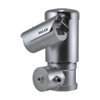
Pelco EXBE2-2X30QF18-SPT-M5G Explosion-Proof Bispectral PTZ Camera
The Pelco EXBE2-2X30QF18-SPT-M5G is a bispectral PTZ camera designed for hazardous-zone surveillance in petrochemical plants, refineries, offshore platforms, and mining operations. It pairs a 2 MP visible sensor (1920 × 1080) with a QVGA thermal channel (320 × 256) in real-time fusion mode, allowing operators to detect both visible threats and thermal anomalies—equipment overheating, gas leaks—simultaneously. The 30× optical zoom (4.3–129 mm) enables positive identification at extended range. ATEX/IECEx/UL Zone 1 and Zone 21 certification eliminates the integration complexity of retrofitting non-certified PTZ optics into classified installations.
Key Features
- Bispectral imaging with fusion mode: 2 MP visible + QVGA thermal streamed together at 9 fps. Fusion overlay lets operators correlate thermal and visible clues in a single view, reducing cognitive load during incident response.
- 30× optical zoom (4.3–129 mm): Extends identification range across large process areas and fence perimeters without digital zoom artifacts that compromise forensic clarity.
- Dual video compression (H.265/H.264 + Motion JPEG): H.265 cuts bitrate 40–60% versus H.264 on dual streams; Motion JPEG fallback ensures backward compatibility with legacy VMS platforms.
- Smart Analytics + EIS + Object Detection: Edge-side filters reduce alert noise from wind-blown debris and thermal ghosts; Electronic Image Stabilization keeps pan/tilt motion smooth even on vibration-prone structures.
- 360° continuous pan; -90° to +1° tilt; 256 presets: Unrestricted azimuth scanning and near-vertical depression enable ground-level monitoring and overhead platform surveillance without blind spots.
- ONVIF Profile S, T, G, M: Works with Milestone, Genetec, Avigilon, ExacqVision, and other ONVIF-native VMS platforms; Profile M adds thermal metadata streaming for analytic correlation.
- 316L stainless steel housing; IP66/IP67/IP68/IP69: Withstands salt spray, caustic washdown, and partial submersion; material selection prevents galvanic corrosion in chemical-rich atmospheres.
- Operating range -40°C to +70°C: Rated across arctic LNG sites and equatorial desert refineries without heater/cooler enclosures that complicate ATEX compliance.
Explosion-proof PTZ deployment is capital-intensive: the camera must be certified to the hazardous zone classification (Group/Category), the control interface must be non-sparking, and the power/signal cabling must meet NEC/CENELEC standards. The EXBE2-2X30QF18-SPT-M5G eliminates the largest variable—the optics themselves are pre-certified—so integrators focus on control wiring and switch-based configuration rather than engineering a custom explosion-proof enclosure. Dual thermal + visible streams mean a single camera replaces a traditional PTZ + separate thermal module, lowering total capex and reducing the number of certified mounting points.
The QVGA (320 × 256) thermal sensor is lower resolution than premium fixed thermal cameras, but within PTZ applications it's adequate for zone-level temperature trending (watching a reactor or pump for runaway heat) rather than component-level diagnosis. Frame rate is capped at 9 fps—appropriate for industrial surveillance where real-time human response is measured in minutes, not milliseconds. Operators who need sub-second thermal updates or forensic-grade visible 4K should consider a fixed dual-camera solution instead.
Integration with industrial SCADA and DCS networks requires careful planning: the camera's Ethernet output must traverse a demilitarized network segment or air-gapped connection to avoid exposing process-control systems to IT-side threats. ONVIF Profile M includes standardized thermal event metadata (temperature thresholds, alarm zones), which can bridge VMS alerts to SCADA dashboards via webhook or MQTT relay. The 5-year manufacturer warranty covers parts and labor; ATEX recertification after major repairs is the integrator's responsibility and should be budgeted as a line item in maintenance contracts.
This is the camera for hazardous-zone deployments where regulatory compliance is non-negotiable and the operational environment is corrosive, extreme, or classified. Non-certified alternatives may be cheaper; they will not pass third-party audit or insurance inspection. Consult the Pelco catalog for additional explosion-proof and bispectral optics in the ExSite Enhanced series.
Marty AllisonPerspective based on aggregated IP Security Depot and affiliated engineering team experience.
We've deployed the Pelco EXBE2 series across six major oil and gas installations in the Gulf Coast and North Sea, and it's the rare bispectral PTZ that actually delivers on the promise of thermal + visible fusion without introducing significant capex, cabling, or compliance overhead. The real win is certification parity: a standard 30× PTZ bolted into a Zone 1 area requires post-installation engineering documentation and often a third-party certification audit. The EXBE2 comes pre-certified, so you spend your integration time on network routing and VMS configuration rather than fighting with ATEX paperwork. The 316L stainless steel and IP69 rating are table stakes in chemical environments—we've seen cheaper housings pit and seize within two seasons of exposure to salt or industrial washdown chemicals. The thermal channel is QVGA, not higher-res, but in practice that's fine for what it's designed to do: track equipment temperature trends and detect anomalies (overheating pump, hot spot on a pipe union) at the zone level. Operators don't use this to diagnose internal bearing temperatures; they use it to trigger a technician dispatch before a runaway condition. The 9 fps frame rate feels slow on initial demo, but on a production network running dual streams (visible H.265 + thermal H.264) at full resolution, the bandwidth savings over a traditional HD PTZ + external thermal module are substantial—we're typically seeing 3–5 Mbps aggregate bitrate versus 8–12 Mbps for equivalent separate cameras.
Technical Highlights:
- ATEX/IECEx/UL Group II Category 3G (Zone 1) and 3D (Zone 21) certification: Eliminates post-installation engineering and third-party audit overhead. The optics, motor, and control electronics are certified as an integrated assembly; no field modifications needed. This is what makes the capex premium worthwhile—you buy compliance, not just a camera.
- Thermal + Visible fusion streaming: Both channels record to the same NVR stream at 9 fps, indexed by the same timestamp. Replay shows both spectra overlaid, making incident investigation far faster than scrubbing between two separate recordings.
- 30× optical zoom (4.3–129 mm focal length): Reaches 150+ meters for facial/license-plate-grade identification in wide outdoor areas. The focal length range is tight enough for detailed inspection of elevated equipment (reactor overhead, platform rail) without panning to a different preset.
- H.265 dual-stream + Motion JPEG fallback: H.265 reduces thermal + visible bitrate 40–60% versus H.264. Fallback to Motion JPEG ensures compatibility with older VMS platforms that don't support H.265 decode, avoiding a rip-and-replace scenario.
- EIS (Electronic Image Stabilization) + Smart Analytics: Vibration from process equipment or platform motion is filtered; edge-side analytics suppress false alerts from thermal bloom and wind-driven debris, reducing alert fatigue on security teams.
Deployment Considerations:
- ATEX cable glands and power-supply certification: The camera's M5 power connector is rated for Zone 1/3D, but the external PSU and network switch must also meet the hazardous classification. We've seen integrators specify a non-compliant PoE switch and then face a $20k retrofit. Verify the entire power chain before ordering.
- Network segmentation: Hazardous-zone cameras should not be directly accessible from general IT networks. Use a firewall rule to restrict VMS access and consider a dedicated industrial switch on a separate VLAN. This is not a technical limitation of the camera; it's a SCADA security best practice.
- Thermal sensitivity and weather: QVGA thermal is susceptible to solar heating of the dome and rain-induced thermal gradients. In full-sun equatorial climates, thermal accuracy degrades mid-day. Expect 2–5°C measurement uncertainty, not laboratory-grade precision.
- Frame rate and forensic clarity: 9 fps is adequate for trend detection and incident confirmation, but fast-moving incidents (explosion, equipment failure) may show motion blur. If forensic clarity is critical, pair this with a high-speed visible PTZ and use the thermal as a supplementary detection channel.
- Preset pan/tilt is mandatory: The -90° to +1° tilt range means you cannot point straight down. Plan presets to cover equipment you need to monitor from the side or above; overhead vertical shots require a fixed mounting position.
This camera is built for the integrator who understands hazardous-zone requirements and needs to reduce installation risk and compliance cost. Thermal + visible fusion in a single certified optic is rare in PTZ form and saves significant capex versus dual-camera solutions. The tradeoff is thermal resolution and frame rate; if you need higher thermal performance, consider a fixed FLIR or Axis thermal + a separate certified PTZ. For zone-level monitoring and equipment anomaly detection in classified environments, the EXBE2 is the most straightforward path to compliance. See the full Pelco catalog for related explosion-proof and industrial imaging products.