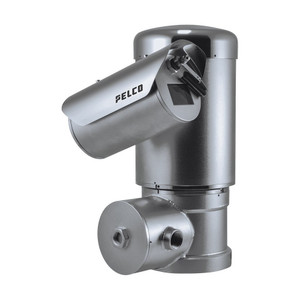
Pelco EXBE2-2X30QF18-SPT-M1G-1 Explosion-Proof Bispectral PTZ Camera
The Pelco EXBE2-2X30QF18-SPT-M1G-1 is a certified explosion-proof bispectral PTZ camera engineered for hazardous environments where simultaneous visible and thermal surveillance is non-negotiable. Built on the ExSite Enhanced Bispectral 2 platform, this camera pairs a 2 MP visible imager with 30× optical zoom (4.3–129 mm) and a QVGA 320×256 thermal sensor in a single 316L stainless steel housing. ATEX, IECEx, and UL certifications confirm compliance for Zone 1 and Zone 21 hazardous locations—critical for oil and gas, chemical processing, pharmaceutical, and refinery deployments where explosive atmospheres are an operational reality.
Key Features
- Bispectral Imaging: 2 MP visible 1920×1080 at 30× optical zoom paired with QVGA 320×256 thermal in one housing. Fusion mode combines both streams for simultaneous visible detail and thermal anomaly detection.
- Thermal Resolution & Frame Rate: QVGA 320×256 with 18 mm lens at 9 fps (export-compliant thermal rate). Mid-range detection window suits perimeter monitoring and equipment surveillance without cryogenic sensor overhead.
- Pan/Tilt Coverage: 360° continuous pan with -90° to +1° tilt and 256 preset positions. Automated scanning eliminates manual operator fatigue across large hazardous zones.
- Video Compression: H.265, H.264, and Motion JPEG. H.265 reduces bitrate 40–60% versus H.264 on thermal streams—measurable savings on 24/7 recording in multi-camera hazardous-area networks.
- Ingress Protection: IP66, IP67, IP68, IP69 rated. Withstands dust, high-pressure washdown, and immersion—essential for process equipment cleaning and salt-air coastal refinery environments.
- Operating Temperature Range: -40°C to +70°C. Handles arctic platforms, desert plants, and temperature swings in outdoor hazardous zones without thermal drift or sensor degradation.
- Explosion-Proof Certification: ATEX, IECEx, and UL certified for Zone 1 and Zone 21 (Class I, II gases and dust). Non-negotiable for insurance, regulatory compliance, and site entry approval.
- Analytics & Stabilization: Smart Analytics, EIS (Electronic Image Stabilization), and Object Detection. Reduces manual alert noise in moving-camera surveillance and detects thermal signatures (hot spots, cold zones) for predictive maintenance.
- ONVIF Compliance: Profile S, T, G, and M. Multi-profile support ensures integration with ONVIF-capable VMS platforms (Genetec, Milestone, Avigilon, ExacqVision) without vendor lock-in.
- M1 Mount with Field-Terminated Wiring: Flexible cable run accommodation for non-standard conduit paths and intrinsically safe wiring harnesses in classified areas.
The 30× optical zoom combined with QVGA thermal detection enables dual-mode surveillance: visible zoom captures fine detail (facial features, signage, product labels) while thermal tracks equipment temperature and detects hotspots indicative of electrical faults, bearing wear, or process anomalies. This complementarity is especially valuable in refineries and chemical plants where visual anomalies (leaks, discoloration) may lag thermal signatures by hours.
The M1 power/mount configuration with field-terminated wiring accommodates non-standard cable runs where factory-terminated lengths conflict with intrinsically safe conduit requirements. Integration with ONVIF-Profile-G (thermal metadata) enables VMS-level fusion processing and alarm rules tied to thermal thresholds—temperature spike triggers alert without operator interpretation. Dual H.265/H.264 codec support adapts to legacy and modern recording infrastructure; Motion JPEG fallback ensures compatibility with older NVR platforms in existing hazardous-area installations.
Operating temperature range of -40°C to +70°C eliminates seasonal maintenance cycles common to optical cameras with thermal stabilization circuits. 316L stainless steel housing resists corrosion in salt-air environments and chlorine-treated indoor spaces (pharmaceutical coolers, chemical washdown zones). IP66–IP69 ingress protection (water-immersion rated) exceeds typical industrial outdoor requirements and supports high-pressure sanitary cleaning protocols in food and pharma facilities adjacent to hazardous zones.
The 9 fps thermal frame rate is export-compliant and sufficient for equipment monitoring, perimeter scanning, and hot-spot trending in static or slow-moving scenes. For rapid thermal transient detection (flare events, process upsets), pair this camera with a secondary high-frame-rate thermal unit or trigger external alarm sensors. ATEX and IECEx certification paths vary by region—verify Zone 1 versus Zone 21 applicability and T-class temperature rating (T4, T5, T6) against your site's gas classification before order placement.
Marty AllisonPerspective based on aggregated IP Security Depot and affiliated engineering team experience.
We've deployed bispectral PTZ systems across oil refineries, LNG terminals, and chemical manufacturing sites, and the Pelco ExSite Enhanced Bispectral 2 platform stands out for its dual-sensor maturity and regulatory pedigree. The key differentiator here is the fusion workflow: visible 30× zoom locks onto a visual anomaly (steam plume, equipment vibration) while the thermal layer independently tracks temperature gradients that may predict failure hours in advance. In practice, this means fewer false-positive alarms from shadows or reflections (filtered by thermal context) and faster root-cause identification when incidents do occur. The ATEX/IECEx/UL certification trio eliminates the post-purchase regulatory audit burden—underwriters and site HSE teams accept these credentials out-of-the-box. That said, the 9 fps thermal frame rate is a deliberate export-compliance compromise; if your site needs rapid transient detection (flare ignition, pressure relief venting), you'll layer in a high-speed secondary thermal camera or accelerometer-based alarm sensors. The M1 field-terminated mount is genuinely useful in classified wiring runs where pre-fabricated cable lengths clash with conduit routing, but it adds assembly time on-site—plan for 15–20 minutes per install if your integrator isn't familiar with terminal strip configuration. IP68/IP69 ingress protection handles washdown and immersion better than the typical IP67 competitor, a real advantage in refineries with seasonal de-icing protocols or pharma facilities using chlorine-based cleaning agents.
Technical Highlights:
- Bispectral Fusion Mode: Visible and thermal streams process in real-time with synchronized pan/tilt. Operational consequence: one operator manages both surveillance layers, reducing headcount and enabling thermal-triggered alerts to direct visible camera zoom automatically—fewer missed events in dynamic industrial scenes.
- H.265 Compression on Thermal: QVGA thermal bitrate drops 40–60% versus H.264 without quality loss at 9 fps. On a refinery with 8–12 thermal PTZ cameras running 24/7, that translates to measurable NVR storage savings and lower bandwidth cost on MPLS or satellite links common in remote facilities.
- 360° Continuous Pan with 256 Presets: Automated patrol sequences scan critical zones without operator intervention. Practical benefit: unattended overnight monitoring of unoccupied plants (chemical storage, idle equipment yards) with preset dwell times triggered by motion or thermal events.
- ONVIF Profile G (Thermal Metadata): Thermal bounding boxes and temperature readings export as ONVIF metadata. Integration consequence: VMS rules can trigger alarms when thermal gradient exceeds threshold, enabling automated incident escalation without manual interpretation.
- Operating Temperature -40°C to +70°C: Eliminates seasonal thermal recalibration cycles. Arctic platforms and desert sites see zero drift in image registration between visible and thermal—registration errors in competitive systems force costly field realignment annually.
- 316L Stainless Steel Housing: Resists saltwater, chlorine gas, and corrosive fumes. Lifecycle consequence: zero repainting, minimal maintenance corrosion inspections—critical for facilities with high material costs and operational continuity demands.
Deployment Considerations:
- ATEX/IECEx/UL certification applies to the camera housing and certification mark; verify that your mounting hardware, conduit, and power distribution are also certified or meet the equivalent Zone/Group/Category rating. A non-certified junction box upstream of the camera can void the entire classified-area installation.
- 9 fps thermal frame rate is intentional for export compliance but insufficient for rapid-transient detection (flaring events, pressure-relief venting). If your process includes sudden thermal events, layer in a secondary high-speed thermal camera (60 fps+) or relay logic from thermocouple-based process sensors.
- M1 field-terminated wiring requires terminal strip assembly on-site. Stock spares, verify polarity against your intrinsically safe barrier documentation, and allow extra commissioning time. Pre-made M12/M16 connectors are not compatible—this design choice prioritizes IECEx harness traceability over quick-swap convenience.
- IP68/IP69 ratings assume stainless steel hardware throughout; verify that mounting brackets and pan/tilt fasteners match housing material. Dissimilar metals in chlorine-rich environments (pharma cleanrooms, coastal refineries) accelerate galvanic corrosion at interfaces.
- The 18 mm thermal lens optimizes mid-range detection (approximately 30–150 meters). For wider thermal coverage, evaluate the 6 mm QF06 thermal option; for concentrated hot-spot identification (furnaces, pipe flanges), request the 25 mm thermal-only variant.
The Pelco EXBE2-2X30QF18-SPT-M1G-1 is the right choice for operators who need simultaneous visible and thermal intelligence in ATEX/IECEx-mandated hazardous zones and cannot accept the regulatory uncertainty of non-certified cameras. It's overkill for indoor, non-classified surveillance—use a standard bispectral dome in those contexts. For integrators and end-users working in refining, LNG, chemical processing, or explosive-dust environments, this camera eliminates the compliance friction and delivers proven thermal analytics alongside high-resolution visible zoom. Explore the full Pelco catalog for additional bispectral and thermal-only PTZ options suited to your facility classification.