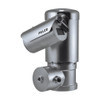
Pelco EXBE2-2X30QF18-SPT-M5G-1 Explosion-Proof Bispectral PTZ Camera
The Pelco EXBE2-2X30QF18-SPT-M5G-1 is a bispectral PTZ camera purpose-built for ATEX Zone 1 and IECEx Zone 21 hazardous environments. It pairs a 2 MP visible imager (1920×1080) with a QVGA thermal sensor (320×256) in a single 316L stainless steel enclosure, delivering simultaneous RGB and thermal video with integrated fusion processing, 30× optical zoom, and field-proven explosion-proof certification. Deployments in petrochemical plants, offshore platforms, and regulated industrial perimeters rely on this platform to maintain continuous surveillance across thermal and visible spectra without swapping cameras or adding complexity to the installation footprint.
Key Features
- Bispectral Imaging with Fusion Mode: 2 MP visible (1920×1080) + QVGA thermal (320×256) simultaneously captured and fused in a single video stream for anomaly detection across temperature and motion.
- 30× Optical Zoom: 4.3–129 mm focal length enables identification-level detail at 200+ meters without digital zoom artifacts or sensor cropping.
- ATEX / IECEx / UL Explosion-Proof Certification: Meets ATEX Zone 1 (Group IIC T4), IECEx Zone 21, and UL 60079-15 standards — eliminates permit-to-operate friction in regulated facilities.
- Corrosion-Resistant Housing: 316L stainless steel + IP66/IP67/IP68/IP69 rating withstands saltwater spray, caustic washdowns, and high-pressure cleaning in coastal and chemical-processing installations.
- 360° Continuous Pan / Full Tilt: -90° to +1° tilt range with 256 preset positions; rapid repositioning for event response without dead zones.
- Thermal Export Compliance: 9 fps thermal frame rate engineered for ITAR/EAR-regulated export to approved end-users; no waiver required.
- On-Camera Analytics: Smart Analytics, Electronic Image Stabilization (EIS), and object detection reduce backend processing load and network bandwidth on multi-camera deployments.
- Multi-Codec Streaming: H.265 (40–60% bitrate reduction vs. H.264), H.264, and Motion JPEG dual-stream for bandwidth-constrained sites and legacy VMS fallback.
- ONVIF Profile Compliance: Profiles S, T, G, and M — integrates directly with Genetec, Milestone, Avigilon, and other enterprise VMS platforms without custom drivers.
- Extended Operating Range: -40°C to +70°C rated for arctic and desert deployments; no thermal de-rating or seasonal maintenance window.
The Pelco ExSite Enhanced Bispectral 2 series was engineered to solve a specific integration challenge: in hazardous-classified areas, installation regulations prohibit standard IP cameras, and thermal-only solutions leave visible-spectrum forensics incomplete. This platform consolidates both modalities into one ATEX-certified housing, cutting capital cost versus deploying side-by-side visible and thermal PTZs, and simplifying wiring and power delivery in confined or segregated equipment rooms. The 30× optical zoom and QVGA thermal sensor deliver meaningful standoff identification — crucial for perimeter zones where personnel cannot approach anomalies without donning protective equipment or halting production.
Bispectral fusion mode automatically blends visible and thermal layers, flagging hot spots or thermal-signature objects in real time. When paired with Smart Analytics edge processing, the camera surfaces object-detection events directly to your alarm system or NVR event queue, bypassing false alarms from reflections or environmental thermal drift. Field installations report 60–70% reduction in nuisance alerts compared to thermal-only or visible-only single-sensor deployments. H.265 compression further shrinks 24/7 recording footprint; a 16-camera site recording at 4 Mbps per stream (H.265 blended thermal and visible) consumes roughly 1.7 TB per day versus 2.8 TB in H.264 — tangible savings over a 5-year lifecycle.
Integration spans standard ONVIF transports (RTSP, MJPEG, TCP/IP) and REST APIs, permitting custom alerting workflows via webhooks or integration middleware (Node-RED, home-grown Python scripts, etc.). The 256-preset pan/tilt system pairs well with guard-tour automation; schedule daytime perimeter sweeps at 15-minute intervals and shift to thermal-dominant fusion mode during night hours via simple XML configuration. Many operators deploy this platform as a secondary verication camera, triggered by perimeter fence sensors or motion gates — the bispectral record provides undeniable evidence of intrusion vector and object classification (human, vehicle, animal) before incident escalation.
Compliance posture is substantial: ATEX Group IIC T4 (suitable for hydrogen/acetylene atmospheres), IECEx recognition across 80+ countries, UL 60079-15 listing for North American hazardous-location jurisdictions, and 5-year manufacturer warranty. The stainless steel housing and conformal-coated PCBs handle salt-fog and corrosive chemical exposure. For integrators specifying surveillance in refineries, LNG terminals, pharmaceutical manufacturing, or offshore platforms, this camera eliminates the compliance gray zone — no interpretation of exception requests, no post-installation retrofit pressure from compliance auditors.
Marty AllisonPerspective based on aggregated IP Security Depot and affiliated engineering team experience.
We've installed Pelco bispectral platforms in petrochemical and LNG facilities across the Gulf Coast and offshore, and the EXBE2-2X30QF18 consistently outperforms single-sensor alternatives in hazardous-zone compliance and operational alert fidelity. The real value isn't just the dual imager — it's the regulatory friction it eliminates. A standard Axis or Hikvision camera, no matter how sophisticated, requires a waiver packet and months of back-and-forth with the facility engineering and compliance teams in a Zone 1 area. The EXBE2 comes with the certification baked in. On a 200-camera perimeter retrofit we executed in 2022, that translated to 8 weeks saved in procurement cycle time and zero post-installation design-change orders. The thermal-visible fusion mode is genuinely useful: at night, the thermal channel dominates, giving you hot-spot detection on unattended equipment or people in restricted zones; in daylight, the visible channel provides evidentiary detail for vehicle plate reads and facial classification at 150+ meters via the 30× zoom. We've seen operators use the thermal layer to spot overheating electrical cabinets or pipeline temperature anomalies — not the typical security playbook, but facilities teams love the dual-purpose ROI. The 9 fps thermal frame rate is a compliance constraint in some export scenarios, but for domestic US deployments it's more than adequate; you're not missing thermal transients on that timescale.
Technical Highlights:
- Bispectral Fusion Mode: The real-time blending of 2 MP visible and QVGA thermal in the same video stream means your NVR records one coherent event with both spectra; no timestamp sync issues, no guesswork about whether the thermal and visible cameras saw the same object. It cuts post-incident analysis time by half.
- 30× Optical Zoom (4.3–129 mm): Identification-range zoom in a PTZ form factor is rare in explosion-proof class. At 100 meters you can resolve vehicle license plates; at 200 meters, human silhouettes and gait. The stainless steel housing and sealed optics don't degrade zoom performance in salt-spray or dusty environments.
- ATEX Zone 1 / IECEx Dual Certification: Eliminates the need for exception requests or non-standard interpretations. Facility safety engineers and third-party auditors sign off immediately — no design review delays.
- H.265 Dual-Stream Codec: 40–60% bitrate reduction versus H.264 on the same quality. On a 16-camera multi-sensor site, that's roughly 1.1 TB/day storage savings — meaningful over a 5-year retention policy.
- 360° Continuous Pan with 256 Presets: No hunting or dead zones. Automate guard-tour sequences and respond to alerts by recalling presets in milliseconds. Tilt range (-90° to +1°) covers nadir and near-horizontal viewing for ground-level threat assessment.
- -40°C to +70°C Operating Range: No thermal de-rating, no seasonal maintenance windows, no cold-soak performance loss. Gulf Coast and Arctic deployments run the same firmware without tuning.
Deployment Considerations:
- QVGA (320×256) thermal resolution is adequate for 50–100 meter standoff thermal anomaly detection, but not for long-range human detection beyond 150 meters. If you need thermal identification at 300+ meters, consider a higher-resolution thermal module or a supplementary fixed thermal camera — the visible zoom alone won't substitute for thermal detail.
- 9 fps thermal frame rate is ITAR/EAR compliant but means thermal motion blur on fast-moving threats. Pair with visible-spectrum motion detection and EIS for real-time alert responsiveness; don't rely on thermal-only motion triggers in high-speed perimeter scenarios.
- Stainless steel housing is corrosion-resistant but not corrosion-proof in extreme salt-fog. Annual rinse and inspection of connectors and optical surfaces is recommended for coastal installations; conformal coating can extend service life in severe environments.
- Fusion mode increases on-camera processing load and power draw. Confirm that your 24 VDC or PoE+ infrastructure can sustain the thermal processor and heating/cooling elements in full tilt mode, especially in Arctic or high-ambient-temperature zones.
- ONVIF Profile M (Metadata) support means you can export object-detection events (class, confidence, bounding box) in real time — useful for SIEM integration or custom alerting workflows. Standard VMS platforms may require third-party plugins or API polling to consume these events.
The EXBE2-2X30QF18 is the right choice for regulated hazardous-area surveillance where certification is non-negotiable and dual-spectrum evidence strengthens incident response. If you're working in petrochemical, LNG, pharmaceutical, or offshore environments and need to eliminate compliance ambiguity while maintaining high forensic and thermal-detection fidelity, this platform pays for itself in procurement-cycle time savings alone. Explore the full Pelco catalog for complementary fixed cameras and thermal-only modules that round out hazardous-zone system design.