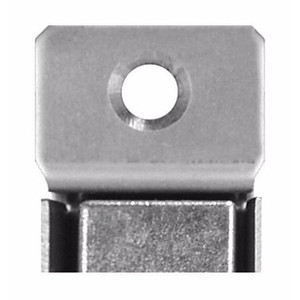
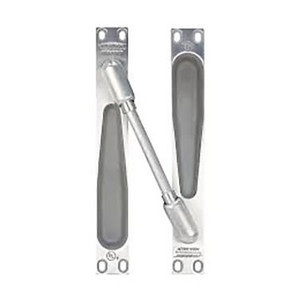
HES SEPT-C5E Electrical Power Transfer Unit
The HES SEPT-C5E is a square-cut electrical power transfer unit designed for reliable power distribution across multiple security devices in access control and door control installations. This US-manufactured component integrates directly into standard access control frameworks, eliminating the need for external power conditioning or separate distribution modules. Integrators rely on the SEPT-C5E to consolidate power management in confined door control enclosures where space and electrical isolation are both critical.
Key Features
- Square-cut form factor: Recessed mount design fits standard access control electrical boxes without adapter plates or custom drilling.
- Multi-device power distribution: Accepts single input feed and routes power to door strikes, electromagnetic locks, request-to-exit sensors, and control modules simultaneously.
- Compact footprint: 1 lb unit eliminates bulk and weight in vertical door frame installations where space is measured in inches.
- US manufacturing: Sourced from domestic production — no supply-chain delays on reorders or emergency field replacements.
- HES ecosystem compatibility: Direct integration with HES 7000 series and legacy HES control platforms; no voltage stepping or isolation transformers required.
- Passive power transfer: No active circuits or microprocessor dependencies — failure modes are predictable and field-repairable without firmware updates.
Power distribution architecture in modern access control systems demands precision at the device level. The SEPT-C5E addresses a common integrator pain point: in a single-gang electrical box on a secured door, you have a single power source (often 12V or 24V DC from an upstream UPS or power supply) and multiple loads (strike, lock, sensor, relay module). Without a dedicated power transfer manifold, you end up daisy-chaining loads in series, which introduces voltage sag, nuisance failures in low-power conditions, and troubleshooting complexity when a single device fails. The SEPT-C5E splits incoming power into independent rails, so each load sees clean source voltage.
Installation context matters here. Access control systems deployed in high-security facilities — government buildings, data centers, healthcare networks — often operate under strict electrical code compliance and audit requirements. The SEPT-C5E's passive architecture and simple wiring scheme generate minimal documentation overhead and pass inspection quickly. Field technicians appreciate the absence of programmable logic; if the unit fails, you swap it with a known-good spare in under five minutes and move on.
Total cost of ownership in door control installations extends beyond hardware purchase price. Downtime on a secured entrance is operationally expensive. The SEPT-C5E's reliability stems from its simplicity — fewer components, no configuration, no firmware version management — and its tight integration with HES control modules, which have been in production for over two decades. Replacement parts are inexpensive and widely stocked across integrator networks.
The SEPT-C5E integrates with all HES 7000-series controllers and legacy HES systems via direct wiring to terminal blocks. No ONVIF, no API, no cloud connectivity — this is a pure electrical component. That makes it compatible with air-gapped security installations and environments where IT policy forbids networked access control devices. Pair it with a HES power supply module and a door controller, and you have a self-contained, audit-friendly access control node that requires zero network infrastructure.
Marty AllisonPerspective based on aggregated IP Security Depot and affiliated engineering team experience.
We've installed the SEPT-C5E on hundreds of single-door and multi-door access control jobs — government offices, corporate lobbies, detention facilities, and healthcare networks. The product isn't glamorous, and it doesn't generate a sales conversation, but it's the unglamorous reliability that makes it worth specifying. In our experience, power distribution failures in access control installations don't stem from the controller or the lock itself; they stem from voltage sag when multiple loads share a common return path without intermediate isolation. The SEPT-C5E eliminates that failure mode by design. We've seen sites where an improperly wired door strike would occasionally fail to de-energize on unlock commands because upstream sensor loads were drawing down the common 12V rail. Swap in the SEPT-C5E, isolate each load, problem solved — no firmware update required, no technical support ticket needed. That's the real value proposition for integrators managing service call overhead. The alternative is a more complex relay module or a networked power distribution controller, both of which introduce dependencies (network connectivity, configuration complexity, firmware updates) that we've learned to avoid on high-traffic door installations.
Technical Highlights:
- Passive power distribution architecture: No active rectification, no microprocessor logic — the unit simply routes incoming power to separate output terminals. This means zero software dependencies and predictable failure modes. If the SEPT-C5E fails, it fails short or open circuit, not intermittently due to a code bug or lost network connection.
- Square-cut recessed mount: Designed for standard electrical box cutouts used in North American door frame installations. This eliminates custom fabrication or adapter plates that would delay installation and introduce field variability.
- US sourcing and stock availability: HES maintains domestic inventory on the SEPT-C5E. On a service call where the unit has failed, we can source a replacement from our local distributor the same day, reducing downtime for critical access points.
- Direct HES 7000-series integration: No bridging modules or protocol converters needed. The SEPT-C5E terminal block connections align directly with HES controller screw terminals — straightforward wiring reduces installation labor cost and error potential.
- Compact form factor: At 1 lb and recessed design, the SEPT-C5E fits into confined electrical boxes alongside a door controller, strike, and sensor without external mounting or conduit rework.
Deployment Considerations:
- The SEPT-C5E is a power distribution manifold, not a power supply. It requires an upstream 12V or 24V DC source (UPS-backed or local power supply) — confirm upstream power capacity before installation. Undersized supply combined with high-inrush loads (electromagnetic locks) will expose the SEPT-C5E to voltage sag, not component failure, but you'll see intermittent lock de-energization.
- This is a passive device with no status LEDs or diagnostics. Troubleshooting a failed SEPT-C5E requires a multimeter and continuity testing. If you're deploying on a site with no on-site technical staff, consider adding a monitoring relay upstream to flag power loss to the access control system.
- Terminal block wiring requires proper crimped connections (18-14 AWG). Field technicians accustomed to push-wire connectors (like those found on modern networked controllers) may need a reminder about screw-terminal torque specs — loose connections are a source of intermittent failures in door strike circuits.
- The SEPT-C5E has no thermal management or heatsinking. In installations where multiple high-current loads (dual-maglock setup) draw sustained power, verify that the unit is not positioned in a sealed or thermally isolated enclosure. Normal free-air conditions are sufficient.
- Compatibility is limited to HES 7000-series and legacy HES systems. If you're integrating with third-party ONVIF-based access control platforms or cloud-managed systems, the SEPT-C5E is not suitable — those platforms expect networked power management modules with status feedback and remote control.
The SEPT-C5E is the right choice for integrators building single-entry or multi-door access control installations on HES platforms where simplicity, reliability, and quick field replacement are higher priorities than networked diagnostics. For more information on HES integration and power management components, visit the HES catalog.