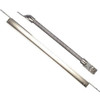
HES EL-EPT Electrical Power Transfer Accessory
The HES EL-EPT is a specialized electrical power transfer accessory engineered as a power management bridge within HES security control deployments. It centralizes power distribution across multiple security subsystems—access control readers, surveillance infrastructure, and integrated perimeter systems—without requiring separate power supplies scattered across zones. For integrators managing multi-zone facilities or geographically distributed security architectures, this means simplified installation, reduced cable runs, and a single point of power monitoring rather than field-level troubleshooting across dozens of powered endpoints.
Key Features
- Centralized Power Management: Consolidates power distribution to access control and surveillance devices into one manageable unit, reducing per-zone power supply redundancy and cutting field installation labor.
- Failover & Redundancy Architecture: Supports both primary and backup power pathways, ensuring continuous operation during power transitions or equipment failures—critical for facilities where security downtime creates liability or compliance risk.
- HES System Integration: Purpose-built for HES security control ecosystems, eliminating vendor-mixing complexity and ensuring power signaling compatibility with HES readers, locks, and sensors.
- Indoor Installation Rated: Engineered for climate-controlled security rooms, server closets, or equipment racks—not rated for outdoor or harsh environment mounting. Pair with appropriate enclosures if installed in less-controlled spaces.
- Networked Security Infrastructure Support: Functions as a power management bridge in IP-based security architectures, allowing centralized power monitoring and control alongside your surveillance and access control network.
- Multi-Zone & Enterprise Scalability: Designed to handle power allocation across geographically distributed or multi-zone facilities, supporting enterprise-grade building security without point-of-failure single-unit bottlenecks.
Integration & Compatibility
The EL-EPT (often searched as EL EPT) integrates directly into HES control system deployments, functioning as the centralized power distribution hub. It works alongside access control systems, surveillance infrastructure, and integrated security architectures built on the HES platform. When combined with a dedicated backup power supply or UPS, the EL-EPT ensures that power transitions—whether routine maintenance or unexpected utility failures—do not interrupt access control or surveillance recording. Integrators should verify that this unit's power outputs match the voltage and current draw specifications of the devices it will serve; undersizing leads to voltage drop and device malfunction, oversizing wastes capacity and budget.
Deployment Considerations
The EL-EPT is best suited to enterprises or mid-market facilities with multiple security zones, existing HES infrastructure, or plans to consolidate fragmented power distribution. Smaller single-zone installations may find direct PoE or local 12VDC supplies more cost-effective. Because this unit handles failover and redundancy at the power-management level, it pairs well with sites already running network video recorders or managed surveillance switches that need coordinated power resilience. Install it in a secure, climate-controlled equipment room with adequate ventilation and accessibility for maintenance. Do not rely on the EL-EPT alone for redundancy—pair it with a properly sized battery backup system to meet your facility's uptime requirements.
Frequently Asked Questions
Q: Is the EL-EPT compatible with non-HES access control systems?
A: The EL-EPT is engineered specifically for HES security control systems. Compatibility with third-party readers, locks, or panel vendors is not documented. Contact your integrator or HES directly to confirm interoperability before purchase.
Q: What happens to connected devices if the EL-EPT loses primary power?
A: The EL-EPT supports failover and redundancy pathways, meaning it can switch to backup power sources if configured properly. However, the unit itself requires external backup power (such as a UPS or battery system) to sustain that failover; it does not provide on-board battery storage.
Q: Can the EL-EPT be wall-mounted, or does it require a rack?
A: The EL-EPT is rated for indoor installation in controlled environments such as security rooms and equipment racks. Specific mounting options (wall, DIN rail, or cabinet) are not detailed in available documentation. Consult the installation guide or your integrator for mounting configuration.
Q: Does the EL-EPT require network connectivity or a management interface?
A: The EL-EPT functions as a power distribution bridge compatible with networked security infrastructure and centralized HES control. Network monitoring or management capabilities are not detailed in current specifications.
Q: What power inputs does the EL-EPT accept—120V, 240V, or both?
A: Input voltage and current specifications are not documented in available evidence. Confirm power requirements and available facility power with the manufacturer or your system integrator before purchase.
Q: Is there a warranty on the EL-EPT?
A: Warranty terms are not specified in current documentation. Check with the dealer or manufacturer for coverage details and any extended service options.
Ted PerryPerspective based on aggregated IP Security Depot and affiliated engineering team experience.
I've specified a lot of access control and surveillance power schemes over the years, and the HES EL-EPT solves a real problem: fragmented power distribution at scale. If you're building out a multi-zone facility—say, a warehouse with five different access control zones plus distributed IP cameras—you end up with local 12VDC supplies scattered across each zone, which means maintenance headaches, voltage drop over long runs, and no single point of failover logic. The EL-EPT (often searched as EL EPT) centralizes that into one intelligent power bridge in your main security room.
Technical Highlights:
- Centralized Power Switching: Replaces multiple field-level power supplies with a single management point, reducing per-location maintenance overhead and simplifying troubleshooting when a reader or sensor stops responding due to power glitch.
- Failover & Redundancy Pathways: Supports primary and backup power routes, meaning if your main utility feed dips or fails, the EL-EPT can flip to a battery-backed secondary without devices going dark. That's compliance-critical for sites where access control downtime triggers audit or insurance questions.
- HES-Native Architecture: Purpose-built for HES ecosystems, not a generic 12V power supply with a fancy label. You get power signaling intelligence designed for HES readers and lock control, not post-hoc vendor adaptation.
Deployment Considerations:
- The EL-EPT does NOT include on-board battery storage—you must pair it with a proper UPS or backup power system to realize the failover benefit. Don't treat it as a standalone redundancy solution.
- Input and output voltage/current specs are not publicly detailed in available docs. Before you order, confirm that your facility's available power (e.g., 120V, 240V, local UPS output) matches what the EL-EPT accepts, and that the unit's output can feed your device load. Undersizing causes voltage sag and lockouts; oversizing wastes budget.
- Indoor-rated only. It belongs in a climate-controlled security room or equipment closet, not in a garage, outdoor cabinet, or unheated warehouse section. If your security equipment is distributed in harsh zones, you'll still need localized surge protection or environmental enclosures.
Best fit: mid-market to enterprise facilities with existing HES infrastructure, multiple security zones, and a genuine need to consolidate power distribution and failover logic. If you're running a single-zone access control panel with a few door readers, this is overkill; standard 12VDC or PoE will do. But if you're integrating surveillance, multiple access zones, and perimeter readers across a campus or multi-building site, the EL-EPT eliminates the single biggest operational pain point—scattered power supplies with no redundancy strategy.