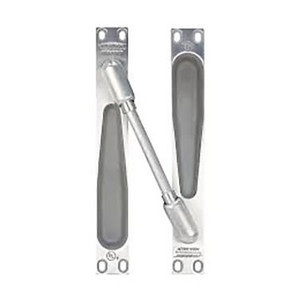
HES CEPT-10 Electrical Power Transfer Module
The HES CEPT-10 is a dedicated electrical power transfer module engineered to distribute power across multi-door and multi-unit HES access control installations. If you're deploying a facility-wide access control system with multiple entry points, a single control module's power capacity often becomes a chokepoint — the CEPT-10 (often searched as CEPT 10) eliminates that by acting as a centralized power routing hub, letting you scale without rewiring or replacing core infrastructure.
Overview
Power bottlenecks in access control are real: a single HES control module powering six or eight door strikes simultaneously will either throttle current delivery or force you to run separate power circuits to each door — both expensive and difficult to troubleshoot. The CEPT-10 solves this by consolidating power distribution in one location, then routing that power to multiple control modules in parallel. This matters in warehouses, office complexes, and institutional facilities where a single power failure shouldn't cascade across an entire floor. You install the module in your wiring closet or equipment rack alongside your primary HES power supply, wire it once, and then each new control module connects to the CEPT-10 rather than back to the power supply directly — reducing voltage drop across long cable runs and eliminating the need for oversized feeder conductors.
Key Features
- Multi-unit power distribution: Routes power from a central HES supply to multiple control modules simultaneously, preventing the bottleneck that occurs when all door controllers draw from a single source. This eliminates the performance trade-off between adding doors and maintaining stable voltage at each controller.
- Direct HES system integration: Designed to work natively with HES control modules and power supplies — no third-party adapters, converters, or interface boards required. Native integration reduces integration troubleshooting time by weeks and speeds commissioning because you're not reverse-engineering undocumented pinouts or voltage mappings.
- Scalable architecture: Supports both multi-door and multi-unit topologies, so you can add additional doors or control nodes without replacing the power backbone. Particularly valuable in phased deployments where you're expanding access control across a campus or multi-building site over time — you install the CEPT-10 once and expand controller capacity incrementally.
- Professional-grade construction: Built for commercial and institutional environments where reliability is non-negotiable. Suitable for installation in secure equipment enclosures and wiring closets where space and thermal management matter — no consumer-grade power supplies or improvised distribution panels.
- Centralized management point: Consolidates power delivery in one location — simplifies audits, troubleshooting, and future reconfiguration compared to distributed single-unit power setups. If a door strike draws unusual current or a controller goes offline, you're looking at one central hub, not hunting through eight distributed power sources.
- Wiring closet and rack-mount ready: Designed for installation in standard equipment racks and secure enclosures, so you can co-locate power distribution with networking and access control logic in a single secure location. This is the standard architecture in modern deployments — everything lives in one climate-controlled space.
Integration & Compatibility
The CEPT-10 integrates directly with the HES access control module family and HES-branded power supplies. If you're designing a new HES access control deployment, this module should be part of your architecture review from the start — it's not an afterthought. Retrofit installations in systems with single-unit power supplies will benefit from a planned upgrade path. The module is vendor-neutral with respect to door hardware (strikes, readers, request-to-exit devices) and plays well with third-party access management software communicating via standard protocols to HES controllers. Consult your access control integrator about topology options if you're bridging legacy systems.
When to Choose a Different Approach
If your facility requires only one or two doors with independent access control, the CEPT-10 adds unnecessary complexity — a single HES control module with its native power supply is sufficient and keeps costs down. For installations where power redundancy or failover is a hard requirement, consult with your integrator about whether a second CEPT-10 module or a separate UPS/backup supply strategy is appropriate. The CEPT-10 is a power *distribution* tool, not a power *backup* tool — it does not include battery, UPS, or uninterruptible supply functionality. If your facility cannot tolerate any loss of access control during a main power event, you'll need a complementary UPS or generator strategy.
Deployment Context
Typical deployments include multi-story office buildings (four or more controlled entry points per floor), warehouse receiving areas with multiple dock doors, and corporate campuses where access control spans multiple buildings. The module pays for itself in saved labor during system expansion and reduced troubleshooting time when a single power circuit no longer strangles performance across the access network. Installers report significantly faster commissioning when expanding from a two-door pilot system to a full campus rollout because the power backbone is already in place.
Frequently Asked Questions
Q: Does the CEPT-10 include backup power or UPS capability?
A: No. The CEPT-10 is a power distribution module only — it routes power from your primary HES power supply to multiple control modules. It does not include battery, capacitor, or uninterruptible supply functionality. If you need power continuity during a main power event, add a separate UPS or battery system in parallel with your primary HES supply.
Q: Can I use the CEPT-10 with non-HES access control systems?
A: The CEPT-10 is engineered for direct integration with HES control modules and power supplies. Use with third-party systems requires custom interfacing and is not recommended without explicit documentation from both the CEPT-10 manufacturer and your third-party controller vendor.
Q: What's the maximum number of control modules the CEPT-10 can support?
A: That depends on your total power budget from the primary HES supply and the current draw of each control module. Your integrator will size the system during design. The CEPT-10 itself is a distribution hub; the limit is set by upstream power capacity, not the module's switching capacity.
Q: Can I install the CEPT-10 outdoors or in a harsh environment?
A: The CEPT-10 is designed for installation in secure equipment enclosures and wiring closets — controlled indoor environments. Do not install in direct weather, high humidity, or temperature extremes without a protective enclosure. Consult the manufacturer for environmental ratings if your deployment is in a non-standard location.
Q: Does the CEPT-10 simplify future expansion?
A: Yes. Once installed, adding new doors or control modules means running cable from the CEPT-10 to the new controller, not running power all the way back to your primary supply. This saves cable, labor, and reduces voltage drop — especially valuable in large facilities or campus deployments.
Ted PerryPerspective based on aggregated IP Security Depot and affiliated engineering team experience.
I've seen too many access control deployments start with a single HES control module and a standard power supply, then hit a wall when the customer wants to add a third or fourth door. They either run more power feeder cable (expensive), daisy-chain supplies (unreliable), or accept voltage sag at the far end (the readers and strikes perform poorly). The CEPT-10 changes that equation. It's not glamorous — it's a power distribution hub — but it's the architectural decision that separates a scalable system from a kludge. Install it at the beginning, not as an afterthought.
Technical Highlights:
- Multi-unit distribution topology: Direct HES integration means no loss of voltage specification or signal integrity across multiple control modules — each module sees clean power as if it were connected directly to the primary supply, without the cumulative voltage drop you'd see in a daisy-chain or long-feeder scenario.
- Centralized power management: One wiring closet hub eliminates the need for distributed power supplies across multiple rooms or floors — reduces hardware count, simplifies troubleshooting, and gives you one point to audit for power quality and overload protection.
- Scalable architecture for phased rollouts: Install the CEPT-10 once and expand door controllers incrementally as budget allows. You're not re-architecting power delivery every time you add two more doors.
Deployment Considerations:
- The CEPT-10 is a distribution module, not a backup system — if your facility requires power continuity during mains failure, you must add a separate UPS or battery system upstream of the CEPT-10. Many integrators make this mistake: they assume the module includes battery backup. It doesn't.
- Sizing the upstream HES power supply is critical. The CEPT-10 can distribute whatever power arrives; if your primary supply is undersized for future growth, the module won't save you. During design, account for the total sustained current draw of all control modules plus a 20% headroom margin.
Deploy the CEPT-10 in any facility with four or more controlled doors planned within the first three years. For warehouse receiving areas or multi-building campuses, it's a no-brainer — you'll add doors, the CEPT-10 lets you do that cleanly. For a single-door entry, it's overkill; for a 20-door airport terminal, it's mandatory. The inflection point is around three to four doors, phased over time.