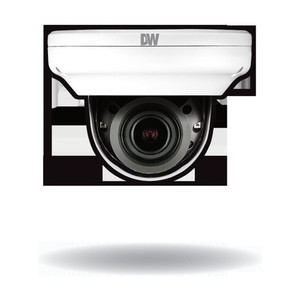
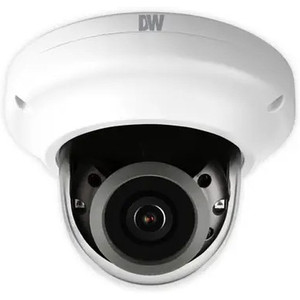
Digital Watchdog DWC-V6863WTIRW 8MP Star-Light IR Outdoor Dome Camera
The Digital Watchdog DWC-V6863WTIRW is a purpose-built outdoor dome camera for facilities where night-time clarity and all-weather durability matter more than marketing. Built on an 8MP 1/1.8" CMOS sensor paired with a varifocal 3.6–10mm lens, it delivers roughly 4x the pixel density of a typical 2MP analog dome—meaning you can actually read faces, license plates, or serial numbers on equipment without cropping the entire scene. The real standout is the combination of Star-Light low-light technology and 100-foot Smart IR, which means the camera produces usable color footage down to 0.1 lux (roughly moonlight levels) before switching to monochrome, then continues into complete darkness via infrared. For parking lots, building perimeters, and outdoor loading docks, that translates to legitimate 24/7 surveillance without the false-color artifacts or bloom you get from older fixed-gain IR systems.
Key Features
- 8MP resolution (3864 × 2176): Captures roughly 4x the detail of standard 2MP analog domes, so zooming into recorded footage to identify individuals or read labels remains practical without excessive pixelation.
- Star-Light technology (x2–x32 sense-up): Electronically amplifies low-light signals in color, usable down to 0.1 lux—meaningful for twilight and early-morning scenes where IR alone produces flat, featureless footage. Note: sense-up is disabled at full 4K resolution, so peak low-light color requires 1080p mode.
- 120dB True WDR (Wide Dynamic Range): Handles extreme backlit scenes—think sun glare on a loading dock or headlights washing out a parking-lot entrance—by separately exposing shadows and highlights in real time. Prevents the blown-out white or crushed-black artifacts that plague standard cameras in high-contrast outdoor lighting.
- 100-foot Smart IR with auto-adjusting intensity: Infrared range extends to 100 feet with adaptive power control that prevents overexposure in near-field scenes and maintains visibility in distant areas. Eliminates the guesswork of manual IR adjustment.
- Varifocal 3.6–10mm lens with P-iris: Shift the field of view from 100.3° (wide overview) down to 46.4° (targeted monitoring) without swapping lenses. The motorized iris adjusts aperture automatically to maintain exposure consistency—important for consistent frame rates and detail across changing light.
- IP66/IK10 weatherproof aluminum die-cast housing: Direct rain, dust, and snow will not degrade performance or corrode connectors. IK10 impact rating resists vandalism and accidental impacts. At 5.7" H × 4.26" W and 1.98 lbs, the compact dome mounts on ceilings or walls with minimal visual footprint.
- PoE or 12VDC power (3.96–6.98W typical): Draws under 7W, so a standard 802.3af PoE switch supplies full power without consuming extra budget or requiring a separate 12V supply. Low wattage also reduces heat dissipation inside the dome, improving lifespan in hot climates.
- 24 programmable privacy zones with motion detection: Mask sensitive areas (adjacent properties, windows) and configure motion-triggered recording to reduce file size and storage cost on 24/7 systems. De-fog algorithm helps when condensation builds on the dome in high-humidity environments.
- Multi-signal output support (CVBS, HD-CVI, HD-TVI, HD-Analog, Universal HD over Coax): Integrates with existing hybrid analog systems—useful if you're migrating gradually from older coax infrastructure without ripping out wiring. Saves installation time and labor on retrofit projects.
- Progressive scan with 50/60Hz frequency selection: Adapts to regional AC mains to avoid flicker in artificial lighting, and progressive scan eliminates motion blur compared to interlaced sensors.
- Smart DNR 3D digital noise reduction: Reduces video grain in low light without mushing fine detail—important for maintaining legibility in nighttime footage.
- Operating range -4°F to 122°F: Rated for industrial temperature extremes, so the camera remains functional in unheated warehouses, walk-in coolers, or hot rooftop installations.
Integration & Compatibility
The DWC-V6863WTIRW (often searched as DWC V6863WTIRW) supports analog video output standards alongside IP-over-coax protocols, making it suitable for hybrid deployments where legacy analog recorders coexist with modern network infrastructure. For pure IP deployments, the IP camera connects to standard network switches or dedicated PoE switches for simplified cabling. If you're building out a larger surveillance system, pair this camera with a network video recorder (NVR) or video management platform that supports ONVIF or the manufacturer's proprietary protocol for centralized configuration and playback.
When to Choose a Different Model
If your deployment requires below-freezing operation (lower than -4°F), or if you need a higher megapixel count for extreme facial detail at distance, consider a specialized low-temperature variant or a higher-megapixel model in the Digital Watchdog IP cameras family. If indoor low-light monitoring is your priority, a fixed-lens indoor dome will save cost and reduce complexity. If you require integrated video analytics (people counting, loitering detection, or object tracking), verify that your chosen video management system supports the analytics package or consider a camera with on-board edge processing.
Frequently Asked Questions
Q: Does the DWC-V6863WTIRW work with standard PoE switches?
A: Yes. At 3.96–6.98W typical draw, it operates on 802.3af standard PoE (15.4W budget). No PoE+ or PoE++ required, so your existing PoE infrastructure will support it without reconfiguration.
Q: What's the difference between Star-Light and regular infrared night vision?
A: Star-Light amplifies available light (moonlight, street lights, building lights) to deliver color footage at very low illumination, whereas infrared uses active LEDs that only produce monochrome grayscale. Star-Light is superior for detail and color information but requires some ambient light; IR works in absolute darkness. The DWC-V6863WTIRW does both.
Q: Is the lens truly adjustable without opening the housing?
A: Yes. The varifocal lens (3.6–10mm) and motorized iris adjust via on-camera menus or remote configuration, so you can reposition the field of view after installation without breaking the weatherproof seal.
Q: Will this camera perform in a humid outdoor environment, like a greenhouse or coastal area?
A: The IP66 rating means water won't enter the housing, and the de-fog algorithm mitigates condensation buildup on the lens itself. However, in extreme humidity (saltwater spray, tropical climates), confirm that the mounting location allows airflow and that the dome is not facing into direct spray without additional housing.
Q: Can I use this with an older analog DVR system?
A: Yes. The DWC-V6863WTIRW supports CVBS and hybrid analog output modes (CVI, TVI), so it can connect to legacy DVRs. However, you lose the benefits of IP-based features like remote access and metadata.
Q: What's the actual IR range in practice?
A: The 100-foot specification assumes a reflective target (white surface). In typical outdoor scenes with mixed reflectivity, expect reliable monochrome IR coverage to roughly 60–80 feet depending on ambient infrared scatter and fog.
James EverettPerspective based on aggregated IP Security Depot and affiliated engineering team experience.
The DWC-V6863WTIRW is an old-school outdoor dome done right. The 8MP sensor with Star-Light addresses a real pain point: standard low-light cameras either produce grayscale mush or blow through bandwidth with aggressive noise reduction. This unit delivers recognizable color footage down to 0.1 lux before pivoting to monochrome with 100-foot Smart IR. For parking lots, building perimeters, and industrial yards, that's the difference between identifying a person and seeing a heat blob.
Technical Highlights:
- 120dB True WDR: Solves the backlit-scene problem entirely. Sun-facing entrances and loading docks no longer produce blown-out highlights or crushed shadows—the camera exposes both simultaneously and merges them in real time. Frame rates stay consistent across brightness extremes.
- Varifocal 3.6–10mm with P-iris: Covers wide overview (100.3°) down to targeted zooms (46.4°) without lens swaps. The motorized iris maintains proper exposure as field of view narrows, eliminating the exposure hunting that plagues fixed-iris varifocals. Post-installation adjustment happens via remote menu, so re-aiming doesn't require climbing a ladder.
- Sub-7W power draw on PoE: A meaningful spec if you're deploying dozens of cameras on existing PoE infrastructure. No power supply per camera, no switch upgrades, no power-budget spreadsheets. Standard 802.3af handles full functionality.
- IP66/IK10 with aluminum die-cast chassis: These ratings matter in the field. Direct rain, dust storms, and impact-prone environments (loading docks, high-traffic areas) won't trigger premature failures. Aluminum doesn't corrode like plastic, and the compact footprint (5.7" × 4.26") resists obvious tampering.
Deployment Considerations:
- Star-Light sense-up is disabled at full 4K resolution—if ultra-low-light color is critical, you'll operate at 1080p, trading pixel density for dynamic amplification. Plan accordingly in wide-area surveillance where every megapixel counts.
- The 100-foot Smart IR spec is reflective-target performance. In real scenes with vegetation, asphalt, or distant structures, reliable IR coverage drops to 60–80 feet. Over-promise on IR range and you'll face pushback during commissioning.
- Multi-signal output (CVBS, CVI, TVI) is a strength if you're migrating hybrid systems, but it adds complexity in spec-out. Make sure your NVR or DVR supports the output mode you plan to use; not all recorders are flexible on signal type.
Best fit: outdoor facilities with 24/7 monitoring requirements, mixed lighting (natural and artificial), and existing PoE infrastructure. Parking facilities, industrial yards, and building perimeters benefit most from the WDR and Star-Light combination. If you need tighter integration with IP-first VMS platforms, confirm ONVIF support upfront.
Key Specifications:
Field of View: 100.3° ~ 46.4°
Color: White