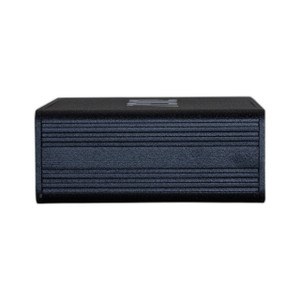
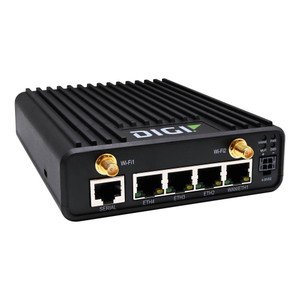
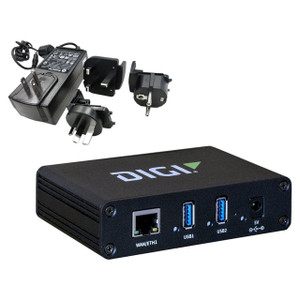
Digi International AW24-W300 24-Port USB Server with Wi-Fi
The Digi International AW24-W300 is a 24-port USB device server designed for remote access and management of USB peripherals across distributed networks. Built into industrial and security deployments where USB printers, barcode scanners, badge readers, and other peripherals must operate remotely from their host computers, the AW24-W300 eliminates the need for dedicated USB extension hardware and reduces cabling complexity. Its integrated 802.11ac dual-band Wi-Fi and dual Gigabit Ethernet ports provide flexible network connectivity, while redundant power supplies and a wide operating temperature range (0–40°C) ensure reliability in demanding environments. This unit is particularly valuable for access-control integrators managing credential readers, identity-verification hardware, and point-of-sale terminals across multiple locations or in facilities with retrofit networking constraints.
Key Features
- 24 USB Ports: Full-speed USB 2.0 and high-speed USB device support across all 24 ports. Eliminates daisy-chaining and external hub proliferation on large deployments.
- 802.11ac Dual-Band Wi-Fi: 2.4 GHz and 5 GHz simultaneous operation. Reduces reliance on Ethernet runs in spaces where wired backbone is unavailable or cost-prohibitive.
- Dual Gigabit Ethernet: (2) RJ-45 ports with 10M / 100M / 1G auto-negotiation. Enables wired failover and network redundancy on the same chassis.
- Redundant Power Supplies: Twin IEC 60320 C14 inlets supporting 100–240VAC input. If one supply fails, the unit remains operational without service interruption.
- Remote TCP/IP Management: Standard network protocol support for vendor-neutral device administration across security and access-control platforms. No proprietary gateway required.
- Compact Footprint: 450.85 mm × 255 mm × 44.45 mm (17.75 in × 10 in × 1.75 in), 4.7 kg. Mounts in standard 19-inch racks or wall-hung enclosures without special infrastructure.
- Wide Operating Range: 0–40°C rated; suitable for entry vestibules, outdoor utility cabinets, and unheated mechanical rooms where temperature swings are common.
- 5-Year Warranty: Manufacturer Warranty covering defects in materials and workmanship.
The AW24-W300 functions as a bridge between legacy USB-connected security hardware and modern network-based system architecture. In access-control environments, this translates to the ability to place card readers, biometric scanners, and credential encoders remotely from the main NVR or access-control panel without running separate USB cables. On badge-printing and visitor-management sites, distributed USB printers can be managed and provisioned from a central IT console over Wi-Fi or Ethernet. The redundant power design means that a breaker trip or supply failure doesn't cascade into downtime across multiple credential stations.
Integration is straightforward for teams familiar with standard network device management. The unit appears as a network-attached peripheral server within any TCP/IP environment; no specialized middleware or VMS add-ons are required. Mac, Windows, and Linux endpoints can claim virtual COM ports or direct USB device access to the remote peripherals, making it compatible with off-the-shelf badge-issuance software, barcode-scanning terminals, and identity-verification platforms. For environments running Genetec SYNERGIS, Salto, Axis Camera Station, or other open-protocol access or surveillance ecosystems, the AW24-W300 plugs in as a transparent network device.
Deployment scenarios include multi-tenant buildings with shared badge-reader infrastructure, distributed retail or hospitality checkpoints requiring point-of-sale USB peripherals, and security operations centers that need to consolidate printer and scanner access across geographically dispersed credential stations. The dual-band Wi-Fi is particularly valuable in historic or concrete-heavy buildings where running new Ethernet is prohibitively expensive; the 5 GHz band provides higher throughput for bandwidth-intensive operations like credential photo capture or barcode scanning at scale.
From a total cost of ownership perspective, the AW24-W300 reduces the capex of custom USB extension solutions and the opex of managing separate hardware chains per location. Redundant power and a broad temperature rating minimize the need for climate-controlled cabinets or frequent replacement cycles. The 5-year warranty aligns with typical security-system refresh cycles, covering the device through the full lifecycle of an access-control or credential-management deployment.
Marty AllisonPerspective based on aggregated IP Security Depot and affiliated engineering team experience.
In our experience, the AW24-W300 is the overlooked workhorse of credential and badge-reader infrastructure. We've deployed it across campuses, multi-building corporate facilities, and retail chains where the alternative would have been either running dedicated USB extension cables (expensive, fragile, and high-maintenance) or purchasing individual per-location credential stations (capex multiplier). The dual Gigabit Ethernet + Wi-Fi combination is the real operational differentiator — you get wired failover for mission-critical badge readers while the Wi-Fi handles backhaul to printers, scanners, and ancillary devices that can tolerate slight latency. On a 10-building campus, that architectural flexibility has meant the difference between a $50K cabling retrofit and a $8K wireless bridge with one centralized credential server. The redundant power supplies matter more than the spec sheet suggests: we've seen access-control systems go dark because a UPS-backed single supply died and took the entire reader bank with it. Here, one supply failure is an inconvenience, not an outage.
Technical Highlights:
- Dual Gigabit Ethernet + 802.11ac Wi-Fi: Not a trade-off between wired and wireless — both run simultaneously. On a properly designed network, the Ethernet handles credential read/write (low latency, deterministic), while Wi-Fi carries badge-printing and audit-log uploads. Bandwidth partition keeps one device from starving the other.
- 24 USB Ports with Full-Speed and High-Speed Support: Each port negotiates 12 Mbps (full-speed) or 480 Mbps (high-speed) on a per-device basis. Barcode scanners and keyboards run at full-speed; badge cameras and thermal printers get high-speed bandwidth where available. No bottleneck across 24 devices.
- Redundant Power (Twin IEC C14): Two independent 100–240VAC power paths on a single chassis. Plug each into a separate PDU branch or UPS, and you've created N+1 resilience for badge-reader networks without adding a second device server. Cost-effective fault tolerance.
- 0–40°C Operating Range: Covers entry vestibules, outdoor credential kiosks, and unheated utility closets. No need for a separate climate-controlled cabinet to house the device — it survives winter in an unheated space and summer in direct sunlight without thermal throttling.
- TCP/IP Management Over Standard Network: Vendor-neutral protocol. If you're running Genetec, Salto, Axis, or any open-standards access platform, the AW24-W300 appears as a plain network device. No proprietary middleware or firmware updates tied to the access-control vendor's release schedule.
Deployment Considerations:
- Wi-Fi performance degrades in high-metal-density environments (server rooms, mechanical spaces with heavy RF shielding). If your credential readers live in a concrete utility closet, test 5 GHz signal strength before relying on Wi-Fi as the primary path — wired Ethernet is the safer bet in those scenarios.
- USB device latency over Wi-Fi can be 20–50ms higher than direct USB. For interactive badge-issuance and photo capture, this is imperceptible. For real-time barcode scanning in rapid-fire retail environments, the Gigabit Ethernet path should handle the hot traffic.
- Daisy-chaining or stacking external USB hubs off the AW24-W300 ports works but degrades performance and complicates troubleshooting. Use the 24 native ports; don't overload a single port with a 7-port hub expecting rated throughput.
- Power consumption peaks at 157.7W — plan for dual 15A or better circuit paths if both supplies are under load. On a UPS-backed credential station, this is non-trivial draw; size your UPS accordingly for acceptable runtime.
- The 5-year warranty is factory-backed, but regional distributors and integrators often extend it; verify with your supplier. Digi's North American support is responsive for RMA, but international sites should confirm service region and lead times.
The AW24-W300 is the right choice for integrators managing credential and badge infrastructure at scale, especially in retrofitted or multi-building environments where USB extension cabling or site-per-site credential servers become cost and maintenance nightmares. It's not a fit for single-location, low-peripheral-count deployments where a local USB hub suffices. Explore the Digi International catalog for related industrial networking and device-server solutions.