
Zebra ZD4A023-D01X01EZ vs TSC 99-082A101-1001: Specification Comparison
Both the Zebra ZD4A023-D01X01EZ and the TSC 99-082A101-1001 are compact, direct thermal mobile printers designed for untethered label and receipt printing in warehouse, field service, and logistics environments. This comparison evaluates them across the three dimensions most critical to mobile printer buyers: print performance and media handling, connectivity and platform integration, and memory, scanning capability, and warranty coverage. Neither unit requires ink ribbons or toner, and both support Wi-Fi for wireless job submission.
In This Guide
- How do print resolution, speed, and media handling differ between the ZD4A023-D01X01EZ and the 99-082A101-1001?
- Which unit offers stronger connectivity and platform integration for enterprise and iOS deployments?
- How do onboard intelligence, integrated scanning, and warranty terms compare?
- Which should you choose: the ZD4A023-D01X01EZ or the 99-082A101-1001?
- Side-by-Side Specs
- FAQ
How do print resolution, speed, and media handling differ between the ZD4A023-D01X01EZ and the 99-082A101-1001?
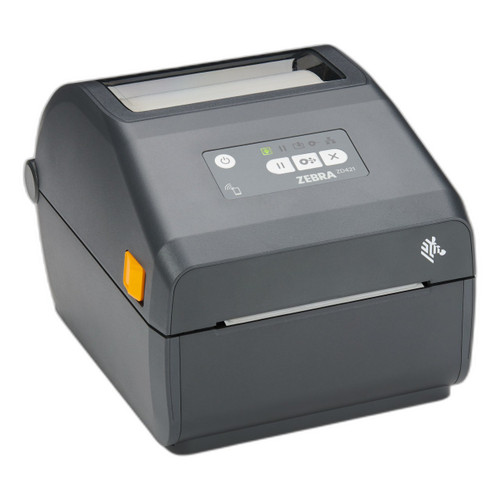
The Zebra ZD4A023-D01X01EZ prints at 300 dpi and 4 in./sec (102 mm/sec). The TSC 99-082A101-1001 prints at 203 dpi and 4 ips (102 mm/sec). Both units deliver identical throughput, but the Zebra's 300 dpi resolution produces noticeably sharper barcodes and fine text — a meaningful difference for high-density 2D symbologies or small-font compliance labels.
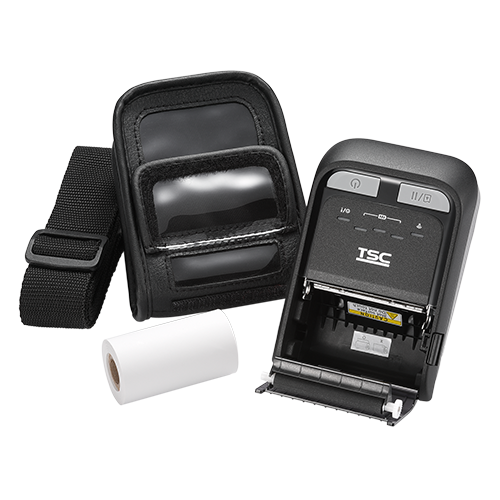
On media flexibility, the TSC 99-082A101-1001 explicitly supports labels, receipts, and linerless media, with a documented print width of 2.83 inches (72 mm) and a paper width range of 20 mm to 70 mm (80 mm max without hanger). The Zebra ZD4A023-D01X01EZ lists labels as its primary media; its spec does not enumerate receipt or linerless support. An optional field-installable cutter is noted for the Zebra. TSC's programming language support (TSPL-EZC and ESC-POS) gives it broader compatibility with receipt-printing and POS-adjacent workflows.
Print width for the Zebra ZD4A023-D01X01EZ is not explicitly stated in the provided specifications, while the TSC unit's 2.83-inch maximum print width is documented. Buyers requiring confirmed print-width figures for the Zebra should consult the full datasheet.
Which unit offers stronger connectivity and platform integration for enterprise and iOS deployments?
The TSC 99-082A101-1001 ships with Wi-Fi, Bluetooth 4.2, and USB, and its Bluetooth is explicitly certified MFi — Apple's Made for iPhone/iPad program. This makes it a validated choice for iOS-based WMS apps, route accounting software, or field service tools running on iPad or iPhone fleets. The TSPL-EZC and ESC-POS language support further broadens compatibility with third-party middleware.
The Zebra ZD4A023-D01X01EZ offers Wi-Fi and Bluetooth Low Energy (BLE) with NFC via an included Print Touch tag. Zebra's Link-OS operating environment provides a mature enterprise management layer (remote configuration, firmware updates, diagnostics) that is well-established in large Zebra-centric deployments. BLE is not the same as Bluetooth Classic or Bluetooth 4.2; buyers using iOS apps that require a standard Bluetooth serial or HID profile should verify ZD4A023-D01X01EZ compatibility, as BLE pairing behavior differs.
USB is confirmed for the TSC; the Zebra spec does not explicitly list USB in the provided data. Both support Wi-Fi as their primary wireless channel. For mixed Android/Windows enterprise environments standardized on Zebra's ecosystem, the ZD4A023-D01X01EZ integrates naturally. For iOS-centric or mixed-OS field teams, the TSC's MFi certification is a documented advantage.
How do onboard intelligence, integrated scanning, and warranty terms compare?
The Zebra ZD4A023-D01X01EZ includes an integrated 2D scan engine supporting QR Code, Data Matrix, PDF417, Code 128, Code 39, UPC, and EAN. This turns the device into a combined print-and-scan unit, eliminating the need for a separate handheld scanner in workflows where workers must scan a source item and immediately print a label. The TSC 99-082A101-1001 does not include an integrated scan engine per the provided specifications.
Memory also diverges significantly: the Zebra ZD4A023-D01X01EZ provides 512 MB Flash and 256 MB SDRAM — substantial on-device storage for large label format libraries, firmware, and Link-OS applications. The TSC 99-082A101-1001 is specified at 32 MB RAM and 16 MB Flash, which is sufficient for standard label and receipt templates but limits complex application hosting.
Warranty terms favor the TSC: the 99-082A101-1001 carries a 2-year warranty versus the Zebra ZD4A023-D01X01EZ's 1-year warranty. For cost-sensitive or high-turnover deployments where long coverage matters, this difference directly affects total cost of ownership. Battery capacity is documented only for the Zebra at 2,750 mAh (rated 8–10 hours per shift); battery capacity for the TSC is not stated in the provided specifications.
Which should you choose: the ZD4A023-D01X01EZ or the 99-082A101-1001?
Our take: The ZD4A023-D01X01EZ is the stronger choice when a deployment demands integrated scan-and-print capability, higher-resolution output, and a large memory footprint for complex label formats within a Zebra Link-OS enterprise environment. Its 300 dpi resolution outpaces the TSC's 203 dpi, its 512 MB Flash / 256 MB SDRAM dwarfs the TSC's 32 MB RAM / 16 MB Flash, and the built-in 2D scan engine (QR, Data Matrix, PDF417) eliminates the need for a separate scanner. Conversely, the TSC 99-082A101-1001 is the better fit for iOS-centric field teams requiring MFi-certified Bluetooth 4.2, multi-format media handling including linerless and receipt stock, ESC-POS compatibility, and a 2-year warranty at what is typically a lower acquisition cost. Platform alignment is the deciding factor: Zebra-standardized enterprise warehouses should favor the ZD4A023-D01X01EZ; iOS-driven field service or mixed-platform receipt/label environments will find the TSC 99-082A101-1001 better suited.
Side-by-Side Comparison
Spec-for-spec, from manufacturer data.
| Specification | Zebra ZD4A023-D01X01EZ | TSC 99-082A101-1001 |
|---|---|---|
| Print Method | Direct Thermal | Direct Thermal |
| Print Resolution | 300 dpi (12 dots/mm) | 203 dpi (8 dots/mm) |
| Print Speed | 4 in./sec (102 mm/sec) | 4 ips (102 mm/sec) |
| Max Print Width | — | 2.83 in. (72 mm) |
| Media Types Supported | Labels | Labels, Receipts, Linerless |
| Wi-Fi | Yes | Yes |
| Bluetooth | BLE + NFC (Print Touch) | Bluetooth 4.2 MFi |
| USB | — | Yes |
| Integrated Scan Engine | 2D (QR, Data Matrix, PDF417, Code 128, Code 39, UPC, EAN) | — |
| RAM | 256 MB SDRAM | 32 MB RAM |
| Flash Storage | 512 MB | 16 MB |
| Programming Languages | Link-OS | TSPL-EZC, ESC-POS |
| Battery Capacity | 2,750 mAh (8–10 hrs/shift) | — |
| Display | — | LCD with buttons |
| Warranty | 1 year | 2 years |
| Form Factor | Compact handheld | Mobile handheld |
Frequently Asked Questions
Which should you choose: the ZD4A023-D01X01EZ or the 99-082A101-1001?
The ZD4A023-D01X01EZ is the stronger choice when a deployment demands integrated scan-and-print capability, higher-resolution output, and a large memory footprint for complex label formats within a Zebra Link-OS enterprise environment. Its 300 dpi resolution outpaces the TSC's 203 dpi, its 512 MB Flash / 256 MB SDRAM dwarfs the TSC's 32 MB RAM / 16 MB Flash, and the built-in 2D scan engine (QR, Data Matrix, PDF417) eliminates the need for a separate scanner. Conversely, the TSC 99-082A101-1001 is the better fit for iOS-centric field teams requiring MFi-certified Bluetooth 4.2, multi-format media handling including linerless and receipt stock, ESC-POS compatibility, and a 2-year warranty at what is typically a lower acquisition cost. Platform alignment is the deciding factor: Zebra-standardized enterprise warehouses should favor the ZD4A023-D01X01EZ; iOS-driven field service or mixed-platform receipt/label environments will find the TSC 99-082A101-1001 better suited.
Is the ZD4A023-D01X01EZ or the 99-082A101-1001 better for printing receipts and linerless media?
The TSC 99-082A101-1001 is the documented choice here. Its specifications explicitly list receipts and linerless media as supported types, and it includes ESC-POS language support common in receipt-printing workflows. The Zebra ZD4A023-D01X01EZ's provided specifications do not confirm receipt or linerless media support, so buyers requiring those formats should verify against the full Zebra datasheet before specifying it.
Can I use either printer with Apple iPhone or iPad-based apps without a separate adapter?
The TSC 99-082A101-1001 carries MFi (Made for iPhone/iPad) certification for its Bluetooth 4.2 connection, making it a validated choice for iOS app integration out of the box. The Zebra ZD4A023-D01X01EZ uses Bluetooth Low Energy (BLE) rather than Bluetooth Classic or a full Bluetooth 4.x profile; iOS compatibility depends on whether the specific app supports BLE-based printer communication. Buyers should confirm with their WMS or field service software vendor before deploying the Zebra on an iOS-only fleet.
Does the ZD4A023-D01X01EZ or the 99-082A101-1001 offer better long-term coverage and lower maintenance overhead?
The TSC 99-082A101-1001 carries a 2-year warranty versus the Zebra ZD4A023-D01X01EZ's 1-year warranty, providing an additional year of covered repairs or replacement. For battery life, the Zebra specifies 2,750 mAh rated at 8–10 hours per shift; the TSC's battery capacity is not stated in the available specifications. The Zebra's substantially larger memory (512 MB Flash vs. 16 MB Flash) may reduce firmware and format-management friction over time, while the TSC's longer warranty directly reduces out-of-pocket service costs during the second year.
More Label Printer Comparisons
- TSC 99-082A101-1001 vs Zebra ZD4A042-301X01EZ
- TSC 99-082A101-1001 vs Zebra ZD4A042-D01X01EZ
- TSC 99-082A101-1001 vs Zebra ZD4AH42-D01X01EZ
- TSC 99-082A101-1001 vs Zebra ZD4A022-D01X01EZ
- TSC 99-082A101-1001 vs TSC 99-083A501-0011
- TSC 99-082A101-1001 vs TSC 99-052A003-0411
Label Printer Buying Guides
Get a Second Opinion on Your Camera Choice
Share your site layout, coverage goals, and budget. Our team will validate the camera selection, flag anything we would change, and recommend products that match the use case.