
Zebra RS51C0-LBSNIK vs Zebra ZQ32-A0E04T0-00: Specification Comparison
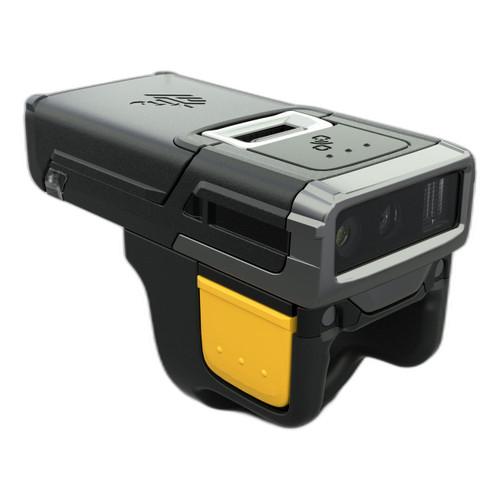
Both the Zebra RS51C0-LBSNIK and the Zebra ZQ32-A0E04T0-00 are mobile computers built for barcode scanning in warehouse and logistics environments, and both support an overlapping 1D/2D symbology set. However, they serve distinctly different deployment models: the RS51C0-LBSNIK is a finger-mounted, wired scanner optimized for hands-free picking, while the ZQ32-A0E04T0-00 is a handheld device with wireless connectivity and a substantially larger battery. This comparison evaluates form factor and ergonomics, environmental ruggedness and battery endurance, and connectivity and integration capabilities.
In This Guide
- Which form factor and scan engine better match the intended workflow?
- How do the two units compare on environmental ruggedness and battery endurance?
- Which unit offers broader connectivity and integration options for enterprise deployment?
- Which should you choose: the RS51C0-LBSNIK or the ZQ32-A0E04T0-00?
- Side-by-Side Specs
- FAQ
Which form factor and scan engine better match the intended workflow?
The RS51C0-LBSNIK uses a finger-mounted form factor, leaving both hands free during scan-intensive tasks such as pick-and-pack or sortation. It supports both 1D and 2D scanning via SE4710 or SE4770 scan engines and reads Code 128, Code 39, UPC, EAN, QR Code, Data Matrix, and PDF417. Its wired direct-connect interface means it must be tethered to a host device—typically a wrist-worn terminal—and weighs just 70 g (2.47 oz) with dimensions of 2.67 in. L × 1.10 in. W × 0.83 in. D.
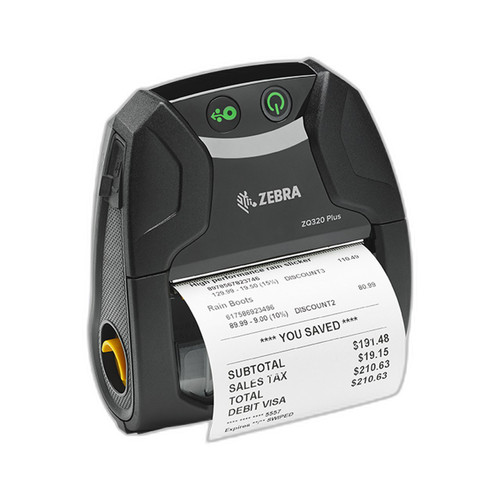
The ZQ32-A0E04T0-00 is a conventional handheld mobile computer with a 2D imager. It reads the same core symbology set (QR Code, Data Matrix, PDF417, Code 128, Code 39, UPC, EAN) and adds wireless freedom via Wi-Fi (802.11) and Bluetooth 4.1 (Classic and BLE). The handheld form factor suits general-purpose scanning tasks where the operator is not simultaneously handling goods. Memory is specified at 256 MB RAM and 512 MB Flash. No weight or physical dimensions are provided in the available specifications.
How do the two units compare on environmental ruggedness and battery endurance?
The RS51C0-LBSNIK carries an IP65 rating, meaning it is fully dust-tight and protected against low-pressure water jets—a higher ingress-protection class than its counterpart. It is rated for 1,000 tumbles at 0.5 m and stores (including battery) across a wide temperature range of -40 °C to 60 °C. Battery capacity is 480 mAh lithium-ion; no runtime estimate in hours is provided in the available specifications. The 480 mAh capacity reflects the compact, finger-mounted form factor and its reliance on a host device for sustained operation.
The ZQ32-A0E04T0-00 carries an IP54 rating—dust-protected (not dust-tight) and splash-resistant—which is a step below IP65. No tumble or drop survival specification is stated in the available data. Its 3250 mAh battery is approximately 6.8× larger than the RS51C0-LBSNIK's cell, and an 8–10 hour continuous scanning runtime is noted. The unit is flagged for outdoor-environment suitability. No operating temperature range is specified in the provided data.
Which unit offers broader connectivity and integration options for enterprise deployment?
The RS51C0-LBSNIK connects via a wired direct-connect interface and communicates using HID Device Profile and Service Discovery & Application Profile (SDAP). There is no Wi-Fi, Bluetooth, or Ethernet capability listed in the specifications. Integration is therefore dependent on the host mobile computer to which it is tethered; the scanner itself does not operate as a standalone networked device.
The ZQ32-A0E04T0-00 supports USB, Bluetooth 4.1 (Classic and BLE), 802.11 Wi-Fi, and an Ethernet cradle interface, enabling direct network connectivity without a separate host device. This wireless stack allows the unit to connect independently to enterprise WLAN infrastructure or pair with peripherals via Bluetooth. Memory (256 MB RAM / 512 MB Flash) is specified, supporting on-device applications. The ZQ32-A0E04T0-00 therefore carries a substantially broader integration surface for enterprise IT environments.
Which should you choose: the RS51C0-LBSNIK or the ZQ32-A0E04T0-00?
Our take: The RS51C0-LBSNIK is the stronger choice when hands-free, high-throughput scanning in a controlled indoor warehouse environment is the primary requirement. Its IP65 dust-and-water rating surpasses the ZQ32-A0E04T0-00's IP54, and its 1,000-tumble durability at 0.5 m provides a quantified mechanical resilience spec that is absent for the ZQ32. However, the ZQ32-A0E04T0-00 holds decisive advantages in two other dimensions: its 3250 mAh battery versus the RS51C0-LBSNIK's 480 mAh cell—roughly 6.8× more capacity, with a stated 8–10 hour runtime—and its native Wi-Fi 802.11 plus Bluetooth 4.1 wireless stack versus the RS51C0-LBSNIK's wired-only interface. Buyers deploying standalone handheld scanners on a wireless network should favour the ZQ32-A0E04T0-00. Buyers integrating finger scanners into an existing wrist-terminal ecosystem where IP65 and hands-free ergonomics are non-negotiable should select the RS51C0-LBSNIK.
Side-by-Side Comparison
Spec-for-spec, from manufacturer data.
| Specification | Zebra RS51C0-LBSNIK | Zebra ZQ32-A0E04T0-00 |
|---|---|---|
| Product Type | Mobile Computer (Finger Scanner) | Mobile Computer (2D Scanner) |
| Form Factor | Finger-mounted | Handheld |
| Scan Engine | 1D/2D (SE4710 or SE4770) | 2D Imager |
| Symbologies 1D | Code 128; Code 39; UPC; EAN | Code 128; Code 39; UPC; EAN |
| Symbologies 2D | QR Code; Data Matrix; PDF417 | QR Code; Data Matrix; PDF417 |
| IP Rating | IP65 | IP54 |
| Drop / Tumble Rating | 1,000 tumbles at 0.5 m | — |
| Storage Temperature | -40 °C to 60 °C (incl. battery) | — |
| Battery Capacity | 480 mAh | 3250 mAh |
| Battery Runtime | — | ~8–10 hours |
| Connectivity | Wired (direct-connect) | USB; Bluetooth 4.1; Wi-Fi 802.11; Ethernet (cradle) |
| Bluetooth | — | Bluetooth 4.1 (Classic and BLE) |
| Memory | — | 256 MB RAM; 512 MB Flash |
| Weight | 70 g (2.47 oz) | — |
| Environment Rating | — | Outdoor |
| Warranty | 1-year | 1-year |
Frequently Asked Questions
Which should you choose: the RS51C0-LBSNIK or the ZQ32-A0E04T0-00?
The RS51C0-LBSNIK is the stronger choice when hands-free, high-throughput scanning in a controlled indoor warehouse environment is the primary requirement. Its IP65 dust-and-water rating surpasses the ZQ32-A0E04T0-00's IP54, and its 1,000-tumble durability at 0.5 m provides a quantified mechanical resilience spec that is absent for the ZQ32. However, the ZQ32-A0E04T0-00 holds decisive advantages in two other dimensions: its 3250 mAh battery versus the RS51C0-LBSNIK's 480 mAh cell—roughly 6.8× more capacity, with a stated 8–10 hour runtime—and its native Wi-Fi 802.11 plus Bluetooth 4.1 wireless stack versus the RS51C0-LBSNIK's wired-only interface. Buyers deploying standalone handheld scanners on a wireless network should favour the ZQ32-A0E04T0-00. Buyers integrating finger scanners into an existing wrist-terminal ecosystem where IP65 and hands-free ergonomics are non-negotiable should select the RS51C0-LBSNIK.
Is the RS51C0-LBSNIK or the ZQ32-A0E04T0-00 better suited for all-day shift scanning without recharging?
Based on the available specifications, the ZQ32-A0E04T0-00 is the stronger option for full-shift operation. Its 3250 mAh battery carries a stated 8–10 hour runtime. The RS51C0-LBSNIK has a 480 mAh cell and no runtime estimate is provided in its specifications; it also relies on a host device for sustained power.
Which unit can connect directly to our warehouse Wi-Fi network without additional hardware?
The ZQ32-A0E04T0-00 supports 802.11 Wi-Fi natively and can connect directly to a WLAN. The RS51C0-LBSNIK uses a wired direct-connect interface only; it has no Wi-Fi or Bluetooth capability listed in its specifications and requires a host mobile terminal to reach the network.
Does either scanner offer better protection against dust and liquid ingress for harsh dock environments?
The RS51C0-LBSNIK is rated IP65—fully dust-tight and jet-water resistant. The ZQ32-A0E04T0-00 is rated IP54—dust-protected (not dust-tight) and splash-resistant. For environments with heavy particulate or directed water exposure, the RS51C0-LBSNIK's IP65 rating provides a higher level of protection per the IEC 60529 standard.
More Mobile Computer Comparisons
- Datalogic 944850001 vs Honeywell CK67-X0N-5EC1C2G
- Datalogic 944850001 vs Honeywell CK67-X1N-58A1B1G
- Datalogic 944850001 vs Honeywell CK67-X1N-58A1A1G
- Datalogic 944850001 vs Honeywell CK67-X1N-58A1C1G
- Datalogic 944850001 vs Datalogic 944950001
- Datalogic 944850001 vs Datalogic 944900004
Mobile Computer Buying Guides
Get a Second Opinion on Your Camera Choice
Share your site layout, coverage goals, and budget. Our team will validate the camera selection, flag anything we would change, and recommend products that match the use case.