
Zebra ET80A-0P5A2-000 vs Zebra ET60AW-0SQAGN00A0-NA: Specification Comparison
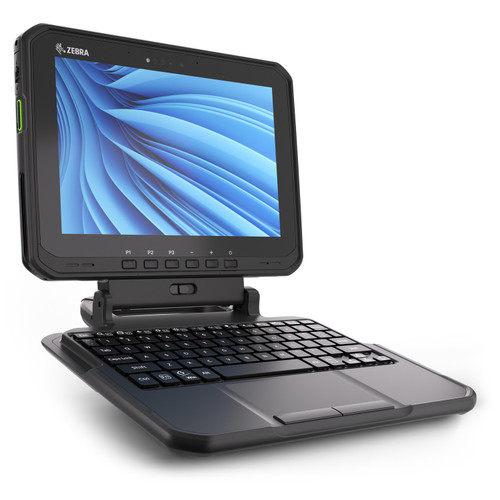
Both the Zebra ET80A-0P5A2-000 and the Zebra ET60AW-0SQAGN00A0-NA are enterprise-grade rugged tablets intended for demanding field and operational environments, placing them squarely in the same broad product class. However, they diverge sharply in operating system, display size, CPU architecture, and integrated scanning capability. The ET80A is a 12.1-inch Windows 11-class IoT tablet built around an Intel Core i5, while the ET60AW is a 10.1-inch Android tablet with an integrated 1D/2D scan engine. This comparison examines computing platform and performance, display and ruggedness, and scanning and connectivity to guide cross-shop decisions.
In This Guide
- Which tablet delivers the computing platform and performance your workflows require?
- How do display quality and physical ruggedness compare between these two models?
- Which device better supports barcode scanning, wireless connectivity, and peripheral integration?
- Which should you choose: the ET80A-0P5A2-000 or the ET60AW-0SQAGN00A0-NA?
- Side-by-Side Specs
- FAQ
Which tablet delivers the computing platform and performance your workflows require?
The ET80A-0P5A2-000 runs Windows 10 IoT Enterprise 64-bit on an 11th-generation Intel Core i5-1130G7, pairing it with 8 GB of RAM. This x86 platform supports legacy Windows line-of-business applications, full desktop software stacks, and enterprise management tooling native to Windows environments. No internal storage capacity figure is specified in the provided data.
The ET60AW-0SQAGN00A0-NA runs Android (listed as Android 16 in one spec field, upgradable to Android 16 in another) on a Qualcomm Snapdragon 6490 octa-core processor clocked at 2.7 GHz, also paired with 8 GB of RAM and 128 GB of UFS internal storage, expandable via MicroSD up to 2 TB. The ARM-based Android platform is optimized for warehouse management systems, barcode-centric apps, and Android enterprise mobility management (EMM) frameworks such as Android Enterprise or Zebra's own OEMConfig.
Both devices share 8 GB RAM. The ET80A's Intel i5 targets compute-intensive Windows workloads; the ET60AW's Snapdragon 6490 targets high-throughput Android scanning and mobility applications. Storage capacity is specified only for the ET60AW (128 GB UFS + up to 2 TB MicroSD); the ET80A's internal storage is not stated in the provided specifications.
How do display quality and physical ruggedness compare between these two models?
The ET80A-0P5A2-000 features a 12.1-inch display at 2160×1440 resolution, rated at 800 nits brightness, with Corning Gorilla Glass and a sunlight-viewable designation. Its drop rating is 4 ft. (1.2 m) bare, 5 ft. (1.5 m) with a rugged boot, and 3 ft. (0.9 m) with keyboard attached. No IP ingress protection rating is specified in the provided data.
The ET60AW-0SQAGN00A0-NA offers a 10.1-inch WUXGA (1920×1200) display at 1,000 nits brightness—200 nits higher than the ET80A per provided specs—and carries an IP66 rating for complete dust ingress protection and powerful water jet resistance. No drop rating figure is specified in the provided data for the ET60AW.
The ET80A wins on screen real estate (12.1 in. vs. 10.1 in.) and resolution (2160×1440 vs. 1920×1200), and provides explicit drop-rating data. The ET60AW surpasses it on stated brightness (1,000 nits vs. 800 nits) and adds a defined IP66 environmental seal, which is absent from the ET80A's provided spec sheet. Buyers working in wet or dusty environments will find the ET60AW's IP66 rating a meaningful differentiator, while those needing a larger, higher-resolution screen for desktop-class tasks favor the ET80A.
Which device better supports barcode scanning, wireless connectivity, and peripheral integration?
The ET60AW-0SQAGN00A0-NA integrates a 1D/2D area imager scan engine directly into the tablet body, supporting standard 1D and 2D symbologies (QR Code, Data Matrix, PDF417) plus optional OCR—eliminating the need for a separate handheld scanner in barcode-intensive workflows such as warehouse receiving, order picking, or asset tracking. It also includes NFC (ISO 14443 Type A/B, FeliCa, ISO 15693) and a MicroSD expansion slot. Wireless is Wi-Fi 6E (802.11ax) with channel bandwidths up to 160 MHz, Bluetooth 5.2 Class 1 BLE, and NFC.
The ET80A-0P5A2-000 does not include an integrated barcode scan engine per the provided specifications. Its connectivity suite includes Wi-Fi 6E and Bluetooth 5.2 (2×2 MIMO), USB-C 3.2 Gen2 with DisplayPort output and USB-PD charging, and two USB 3.2 Gen2 Type-A ports—a richer wired port selection than the ET60AW, which lists only USB Type-C. No NFC or MicroSD expansion is specified for the ET80A.
For scan-heavy operations, the ET60AW's integrated 1D/2D engine and NFC are decisive. For workflows requiring wired peripheral connectivity—external displays via DisplayPort, USB-A accessories, or USB-PD charging discipline—the ET80A's three-port USB configuration and DisplayPort output provide advantages the ET60AW does not specify.
Which should you choose: the ET80A-0P5A2-000 or the ET60AW-0SQAGN00A0-NA?
Our take: The ET80A-0P5A2-000 is the stronger choice when the deployment runs Windows line-of-business software on a large-format, high-resolution display and demands rich wired connectivity. The ET60AW-0SQAGN00A0-NA is the stronger choice when the workflow centers on barcode scanning, Android-based WMS applications, or environmentally sealed operation. Three concrete spec deltas: the ET60AW includes an integrated 1D/2D scan engine that the ET80A does not specify; the ET60AW carries an IP66 environmental rating absent from the ET80A's provided specs; and the ET60AW's display is rated 200 nits brighter (1,000 vs. 800 nits). Conversely, the ET80A provides a 12.1-inch 2160×1440 display versus the ET60AW's 10.1-inch 1920×1200 panel, explicit drop-rating data, and three USB ports versus one. Platform choice—Windows x86 versus Android ARM—is ultimately the primary fork: legacy enterprise software drives the ET80A; scan-centric Android EMM environments drive the ET60AW.
Side-by-Side Comparison
Spec-for-spec, from manufacturer data.
| Specification | Zebra ET80A-0P5A2-000 | Zebra ET60AW-0SQAGN00A0-NA |
|---|---|---|
| Operating System | Windows 10 IoT Enterprise 64-bit | Android 16 |
| Processor | Intel Core i5-1130G7 (11th Gen) | Qualcomm Snapdragon 6490, octa-core, 2.7 GHz |
| RAM | 8 GB | 8 GB |
| Internal Storage | — | 128 GB UFS |
| Storage Expansion | — | MicroSD up to 2 TB |
| Display Size | 12.1 in. | 10.1 in. |
| Display Resolution | 2160×1440 | 1920×1200 (WUXGA) |
| Display Brightness | 800 nits | 1,000 nits |
| Display Protection | Corning Gorilla Glass, Sunlight Viewable | — |
| IP Rating | — | IP66 |
| Drop Rating (bare) | 4 ft. (1.2 m) | — |
| Integrated Scan Engine | — | 1D/2D Area Imager |
| NFC | — | ISO 14443 A/B, FeliCa, ISO 15693 |
| Wireless | Wi-Fi 6E, Bluetooth 5.2, 2×2 MIMO | Wi-Fi 6E (802.11ax), Bluetooth 5.2 Class 1 BLE, NFC |
| USB Ports | 1× USB-C 3.2 Gen2, 2× USB-A 3.2 Gen2 | USB Type-C |
| Battery Capacity | 5,180 mAh (39.8 Whr, 7.7 V Li-Polymer) | 920 mAh |
Frequently Asked Questions
Which should you choose: the ET80A-0P5A2-000 or the ET60AW-0SQAGN00A0-NA?
The ET80A-0P5A2-000 is the stronger choice when the deployment runs Windows line-of-business software on a large-format, high-resolution display and demands rich wired connectivity. The ET60AW-0SQAGN00A0-NA is the stronger choice when the workflow centers on barcode scanning, Android-based WMS applications, or environmentally sealed operation. Three concrete spec deltas: the ET60AW includes an integrated 1D/2D scan engine that the ET80A does not specify; the ET60AW carries an IP66 environmental rating absent from the ET80A's provided specs; and the ET60AW's display is rated 200 nits brighter (1,000 vs. 800 nits). Conversely, the ET80A provides a 12.1-inch 2160×1440 display versus the ET60AW's 10.1-inch 1920×1200 panel, explicit drop-rating data, and three USB ports versus one. Platform choice—Windows x86 versus Android ARM—is ultimately the primary fork: legacy enterprise software drives the ET80A; scan-centric Android EMM environments drive the ET60AW.
Which tablet is better suited for warehouse barcode scanning operations?
The ET60AW-0SQAGN00A0-NA is designed for exactly this use case. It integrates a 1D/2D area imager scan engine directly into the tablet, supports QR Code, Data Matrix, PDF417, and optional OCR symbologies, includes NFC, and carries an IP66 rating for dust and water resistance—all per its provided specifications. The ET80A-0P5A2-000 does not specify an integrated scan engine, so a warehouse deployment on that platform would require a separate scanning peripheral.
Can the ET80A-0P5A2-000 run our existing Windows desktop applications?
Yes, based on its provided specifications. The ET80A runs Windows 10 IoT Enterprise 64-bit on an 11th-generation Intel Core i5-1130G7—an x86-64 platform fully compatible with standard Windows application binaries. The ET60AW-0SQAGN00A0-NA runs Android on an ARM-based Qualcomm Snapdragon 6490 and cannot natively execute Windows x86 software.
Which tablet handles outdoor or harsh-environment use better?
Based on provided specifications, the ET60AW-0SQAGN00A0-NA has the advantage in defined environmental protection: it is IP66-rated (sealed against dust and powerful water jets) and its display is rated at 1,000 nits—200 nits above the ET80A's 800-nit panel. The ET80A specifies drop ratings (4 ft. bare, 5 ft. with rugged boot) and Corning Gorilla Glass, but no IP ingress protection rating is listed in its provided data. If IP-rated sealing against moisture and dust is a deployment requirement, the ET60AW is the documented choice.
More Mobile Computer Comparisons
- Zebra ET60AW-0HQAGN00A0-NA vs Zebra ET60AW-0SQAGN00A0-NA
- Zebra ET60AW-0HQAGN00A0-NA vs Zebra ET60AW-0SQAGSK0A0-NA
- Zebra ET60AW-0SQAGN00A0-NA vs Zebra ET60AW-0SQAGSK0A0-NA
- Zebra ET85B-3P5A2-000 vs Zebra ET60AW-0HQAGN00A0-NA
- Zebra ET85B-3P5A2-000 vs Zebra ET60AW-0SQAGN00A0-NA
- Zebra ET80A-0P5A2-000 vs Zebra ET60AW-0HQAGN00A0-NA
Mobile Computer Buying Guides
Get a Second Opinion on Your Camera Choice
Share your site layout, coverage goals, and budget. Our team will validate the camera selection, flag anything we would change, and recommend products that match the use case.