
Zebra DS3678-XR3RF50AS1W vs Honeywell 520-36/48-H3: Specification Comparison
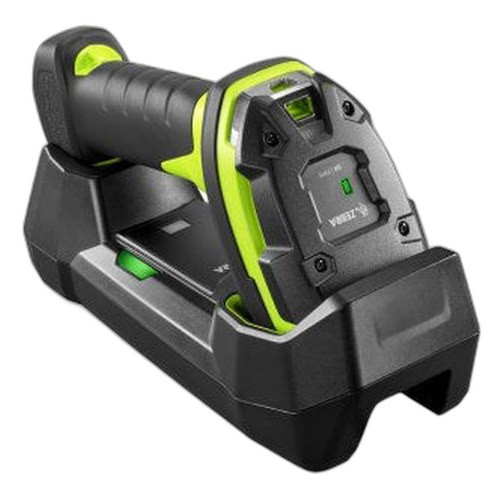
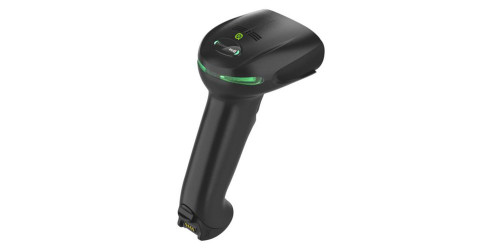
Both the Zebra DS3678-XR3RF50AS1W and the Honeywell 520-36/48-H3 (Xenon XP 1952g) are cordless handheld 1D/2D imager barcode scanners rated IP65, targeting warehouse, retail, and general-purpose scanning environments. A buyer evaluating either unit is choosing between wireless protocol implementations, durability profiles, and ecosystem fit within the same scanner class. This comparison covers wireless connectivity and data transmission, environmental and physical durability, and scan engine capability and working range—the three axes most likely to drive a purchase decision in this category.
In This Guide
- Which scanner offers the right wireless protocol and data transmission method for your infrastructure?
- How do the two scanners compare on physical durability, drop protection, and environmental sealing?
- What does each scanner actually read, and over what working distance?
- Which should you choose: the DS3678-XR3RF50AS1W or the 520-36/48-H3?
- Side-by-Side Specs
- FAQ
Which scanner offers the right wireless protocol and data transmission method for your infrastructure?
The Zebra DS3678-XR3RF50AS1W connects via Wi-Fi (802.11), transmitting data in real time as keyboard input directly to WMS or POS systems over standard enterprise wireless networks. This means no intermediate access point pairing or Bluetooth receiver dongle is required—the scanner joins the existing Wi-Fi infrastructure directly. The spec also references Bluetooth 4.0 for data capture, though the primary stated connectivity mode is Wi-Fi.
The Honeywell 520-36/48-H3 connects via Bluetooth 4.2, a newer Bluetooth revision than the Zebra's 4.0 reference, and also supports USB. Bluetooth 4.2 offers improved data transfer speed and enhanced privacy features over 4.0. However, Bluetooth operation typically requires a base station or USB dongle paired to the host, rather than direct enterprise Wi-Fi network integration. USB connectivity provides a wired fallback option not mentioned for the Zebra.
For sites already running a managed Wi-Fi infrastructure (802.11), the Zebra's native Wi-Fi avoids Bluetooth pairing complexity. For single-workstation or smaller deployments where Bluetooth simplicity and USB backup are valued, the Honeywell's Bluetooth 4.2 plus USB combination may be preferable.
How do the two scanners compare on physical durability, drop protection, and environmental sealing?
Both scanners share an IP65 rating, meaning both are certified tolerant of water spray from any direction and fully dust-tight. Neither unit will ingest dust particles, and both can withstand direct water spray—relevant for loading docks, outdoor receiving areas, or washdown-adjacent environments.
Where the units diverge is drop rating. The Honeywell 520-36/48-H3 carries a stated 2.0 m (6.5 ft) drop rating. No drop rating is specified in the provided specifications for the Zebra DS3678-XR3RF50AS1W. Buyers in high-drop-risk environments—concrete warehouse floors, elevated pick locations—should treat the Honeywell's documented 2.0 m drop tolerance as a meaningful differentiator, while acknowledging the Zebra's drop performance cannot be assessed from available spec data.
Neither scanner's specifications include operating temperature range or humidity tolerance beyond the IP65 seal, so no further environmental comparison can be drawn from the data provided.
What does each scanner actually read, and over what working distance?
Both units deploy 1D/2D imaging engines capable of reading linear (1D) and two-dimensional (2D) symbologies in a single pass. The Zebra DS3678-XR3RF50AS1W is described as a single-pass scanner with a handheld trigger-grip form factor; no specific symbology list or working range is provided in the available specifications.
The Honeywell 520-36/48-H3 explicitly lists supported symbologies—EAN, UPC, Code 128, QR Code, and Data Matrix—and provides a defined working range of 2.5 to 50.8 cm (1 to 20 in). This working range is specified for the unit's area imager engine.
Because the Zebra's symbology list and working range are absent from the provided spec data, a direct numeric comparison on scan performance depth is not possible. Buyers requiring verified symbology coverage or a documented decode distance should consult the Zebra DS3678-XR3RF50AS1W datasheet directly before assuming equivalence.
Which should you choose: the DS3678-XR3RF50AS1W or the 520-36/48-H3?
Our take: The 520-36/48-H3 is the stronger choice when documented drop durability and explicit symbology coverage are required, while the DS3678-XR3RF50AS1W is the stronger choice for sites deploying over an existing managed Wi-Fi 802.11 infrastructure. Three concrete spec deltas: (1) Drop rating—Honeywell specifies 2.0 m; Zebra provides no drop rating in available specs. (2) Wireless protocol—Zebra connects natively over Wi-Fi 802.11, eliminating Bluetooth base-station dependency; Honeywell uses Bluetooth 4.2 (a newer revision than Zebra's referenced 4.0) plus USB backup. (3) Symbologies and range—Honeywell explicitly documents EAN, UPC, Code 128, QR, and Data Matrix with a 2.5–50.8 cm working range; Zebra's equivalent data is absent from provided specs. Both carry IP65 sealing and 1D/2D imaging. Warranty favors the Honeywell at 3 years versus Zebra's 1 year. Platform qualifier: Wi-Fi-heavy warehouse deployments lean Zebra; Bluetooth-paired or mixed-host environments with drop-risk lean Honeywell.
Side-by-Side Comparison
Spec-for-spec, from manufacturer data.
| Specification | Zebra DS3678-XR3RF50AS1W | Honeywell 520-36/48-H3 |
|---|---|---|
| Product Type | Handheld Scanner | Handheld Scanner |
| Series / Family | DS3678-XR | Xenon XP 1952g |
| Scan Engine | 1D/2D Imaging | Area Imager (1D/2D) |
| Scan Pattern | Single-pass | — |
| Primary Wireless | Wi-Fi (802.11) | Bluetooth 4.2 |
| Bluetooth Version | 4.0 (referenced) | 4.2 |
| USB Connectivity | — | Yes |
| IP Rating | IP65 | IP65 |
| Drop Rating | — | 2.0 m (6.5 ft) |
| Working Range | — | 2.5–50.8 cm (1–20 in) |
| Symbologies (listed) | — | EAN, UPC, Code 128, QR Code, Data Matrix |
| Data Transmission | Real-time keyboard input to WMS/POS | — |
| Application | Warehouse / mobility | General purpose |
| Warranty | 1 year | 3 years |
| Form Factor | Handheld Trigger-Grip | Handheld |
| Part Number | DS3678-XR3RF50AS1W | 520-36/48-H3 |
Frequently Asked Questions
Which should you choose: the DS3678-XR3RF50AS1W or the 520-36/48-H3?
The 520-36/48-H3 is the stronger choice when documented drop durability and explicit symbology coverage are required, while the DS3678-XR3RF50AS1W is the stronger choice for sites deploying over an existing managed Wi-Fi 802.11 infrastructure. Three concrete spec deltas: (1) Drop rating—Honeywell specifies 2.0 m; Zebra provides no drop rating in available specs. (2) Wireless protocol—Zebra connects natively over Wi-Fi 802.11, eliminating Bluetooth base-station dependency; Honeywell uses Bluetooth 4.2 (a newer revision than Zebra's referenced 4.0) plus USB backup. (3) Symbologies and range—Honeywell explicitly documents EAN, UPC, Code 128, QR, and Data Matrix with a 2.5–50.8 cm working range; Zebra's equivalent data is absent from provided specs. Both carry IP65 sealing and 1D/2D imaging. Warranty favors the Honeywell at 3 years versus Zebra's 1 year. Platform qualifier: Wi-Fi-heavy warehouse deployments lean Zebra; Bluetooth-paired or mixed-host environments with drop-risk lean Honeywell.
Is the DS3678-XR3RF50AS1W or the 520-36/48-H3 better for a warehouse already running enterprise Wi-Fi?
The DS3678-XR3RF50AS1W is better suited for that environment. It connects natively over Wi-Fi 802.11 and transmits data in real time as keyboard input to WMS or POS systems without requiring a Bluetooth base station or receiver dongle. The 520-36/48-H3 uses Bluetooth 4.2, which typically requires pairing to a host-side receiver or base unit.
Which scanner has better drop protection?
Based on the provided specifications, the Honeywell 520-36/48-H3 has a documented drop rating of 2.0 m (6.5 ft). No drop rating is stated in the available specifications for the Zebra DS3678-XR3RF50AS1W, so a direct comparison cannot be made from spec data alone. Buyers in high-drop-risk environments should verify the Zebra's drop tolerance in its official datasheet.
Which scanner comes with a longer warranty?
The Honeywell 520-36/48-H3 carries a 3-year warranty per its specification. The Zebra DS3678-XR3RF50AS1W specifies a 1-year warranty. For cost-of-ownership calculations in larger deployments, the Honeywell's longer warranty coverage is a meaningful advantage as stated in the provided specs.
More Barcode Scanner Comparisons
- Zebra DS3678 vs Honeywell 520-36/48-H3
- Zebra DS3678 vs CipherLab A2564S2BS0001
- Zebra DS3678 vs Honeywell 1962H-WC-CUP
- Zebra DS3678 vs Socket Mobile CX4238-3326
- Zebra DS3678 vs Zebra DS3678
- Zebra DS3678 vs Zebra DS8178-SRSF007ZZWW
Barcode Scanner Buying Guides
Get a Second Opinion on Your Camera Choice
Share your site layout, coverage goals, and budget. Our team will validate the camera selection, flag anything we would change, and recommend products that match the use case.