
Zebra DS3678 vs Honeywell 520-36/48-H3: Specification Comparison
Both the Zebra DS3678-HP2F003VZWW and the Honeywell Xenon XP 1952g (520-36/48-H3) are cordless 1D/2D area-imager barcode scanners aimed at mobile scan workflows. The Zebra targets harsh industrial and warehousing environments with its ultra-rugged FIPS-certified design, while the Honeywell is positioned as a general-purpose wireless scanner suited to retail and light-warehouse use. This comparison evaluates the three dimensions most critical to scanner buyers: scan performance and range, durability and environmental resilience, and connectivity plus management ecosystem.
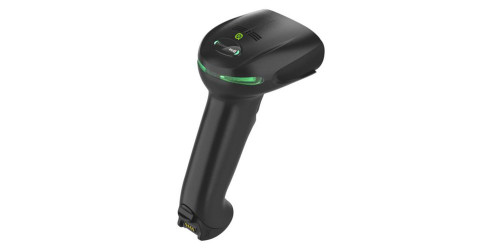
In This Guide
- Which scanner delivers superior read performance and range for the workflows you need?
- Which scanner is built to survive tougher physical and environmental conditions?
- Which scanner integrates more readily into enterprise wireless and device-management infrastructure?
- Which should you choose: the DS3678 or the 520-36/48-H3?
- Side-by-Side Specs
- FAQ
Which scanner delivers superior read performance and range for the workflows you need?
The Zebra DS3678 is rated for a scanning range of near contact to 7 ft (2.1 m) and achieves up to 100 scans per second with a 1280 x 800 pixel sensor, a 42° H x 32° V field of view, and a minimum 1D resolution of 1 mil and 2D resolution of 6.6 mil. It also supports multi-code capture of up to 20 barcodes simultaneously and adds extended capabilities including OCR, photo capture, document scanning, and signature capture.
The Honeywell 520-36/48-H3 specifies a working range of only 2.5 to 50.8 cm (1 to 20 in), which is considerably shorter. Its symbology list is provided as EAN, UPC, Code 128, QR Code, and Data Matrix. Scan rate, sensor resolution, field of view, minimum resolution, and multi-code capture count are not stated in the available specifications.
For applications requiring long-range reads, high scan throughput, or multi-barcode capture in a single pass, the Zebra DS3678 provides specific numerical backing. The Honeywell's working range is materially shorter and several key performance metrics are absent from its published specs.
Which scanner is built to survive tougher physical and environmental conditions?
The Zebra DS3678 carries an ultra-rugged rating with dual IP67 and IP65 certification, a drop specification of 8 ft (2.4 m) to concrete, and a 5,000-tumble specification at 3.3 ft (1 m). Its operating temperature range spans -4°F to 122°F (-20°C to 50°C) and storage temperature covers -40°F to 158°F (-40°C to 70°C), with 5% to 95% non-condensing humidity tolerance.
The Honeywell 520-36/48-H3 is rated IP65 (single rating) with a drop tolerance of 2.0 m (6.5 ft). Operating and storage temperature ranges, humidity tolerance, and tumble specifications are not provided in the available data.
On the data available, the Zebra exceeds the Honeywell on both sealing (IP67+IP65 vs IP65 only) and tumble endurance (5,000 cycles specified vs not stated). The Honeywell's 2.0 m drop spec (6.5 ft) is comparable to the Zebra's 8 ft (2.4 m), though the Zebra's drop target is the more demanding concrete surface. Temperature and humidity envelope details for the Honeywell are absent, limiting a full environmental comparison.
Which scanner integrates more readily into enterprise wireless and device-management infrastructure?
The Zebra DS3678 is described as cordless but its specific wireless protocol version is not called out in the provided specs. It is supported by Zebra's 123Scan configuration utility and the Scanner Management Service (SMS) for enterprise fleet management. It also carries FIPS 140-2 Level 1 compliance, a federally mandated encryption standard relevant to government and regulated-industry deployments.
The Honeywell 520-36/48-H3 specifies Bluetooth 4.2 as its wireless protocol, with USB also listed as a connectivity option. Compatible accessories include a Bluetooth Access Point, a Smart Battery Pack, and power supplies in NA and EU plug variants. A 3-year warranty is stated. Management software, configuration tools, and security certifications are not specified in the available data.
The Honeywell is explicit about its Bluetooth version (4.2) and accessory ecosystem. The Zebra differentiates on software depth (123Scan + SMS fleet management) and FIPS 140-2 compliance for security-sensitive environments, though its wireless protocol version is not specified in the provided data.
Which should you choose: the DS3678 or the 520-36/48-H3?
Our take: The DS3678 is the stronger choice when the deployment demands long scan range, high-volume throughput, or rugged industrial endurance. It reads barcodes at up to 100 scans/second at distances to 7 ft (2.1 m) versus the Honeywell's maximum stated range of 50.8 cm (20 in) — a 4× range advantage. Its dual IP67/IP65 sealing and 5,000-tumble rating exceed the Honeywell's single IP65 rating and unstated tumble spec. FIPS 140-2 Level 1 compliance and the 123Scan/SMS management stack make it the clear fit for government, defense, or regulated-industry operations. The Honeywell 520-36/48-H3 is a defined general-purpose scanner with a stated 3-year warranty and explicit Bluetooth 4.2 plus USB connectivity, but critical performance metrics (scan rate, sensor resolution, temperature range) are absent from its spec sheet, making a fully symmetric comparison impossible. Buyers on retail or light-duty workflows who require verified Bluetooth 4.2 and a broad accessory range should evaluate the Honeywell on its full datasheet.
Side-by-Side Comparison
Spec-for-spec, from manufacturer data.
| Specification | Zebra DS3678 | Honeywell 520-36/48-H3 |
|---|---|---|
| Scanner Type | 1D/2D High Performance Area Imager | 1D/2D Area Imager |
| Connectivity | Cordless (protocol version not specified) | Bluetooth 4.2 + USB |
| Scanning / Working Range | Near contact to 7 ft (2.1 m) | 2.5 to 50.8 cm (1 to 20 in) |
| Scan Rate | Up to 100 scans/second | — |
| Image Sensor Resolution | 1280 x 800 pixels | — |
| Field of View | 42° H x 32° V | — |
| Minimum Resolution (1D / 2D) | 1 mil / 6.6 mil | — |
| Multi-Code Capture | Up to 20 barcodes | — |
| IP Rating | IP67 and IP65 | IP65 |
| Drop Specification | 8 ft (2.4 m) to concrete | 2.0 m (6.5 ft) |
| Tumble Specification | 5,000 tumbles at 3.3 ft (1 m) | — |
| Operating Temperature | -4°F to 122°F (-20°C to 50°C) | — |
| Battery Life | Up to 100 hours | — |
| Charge Time | 2.5 hours | — |
| Security Certification | FIPS 140-2 Level 1 | — |
| Warranty | — | 3-year |
Frequently Asked Questions
Which should you choose: the DS3678 or the 520-36/48-H3?
The DS3678 is the stronger choice when the deployment demands long scan range, high-volume throughput, or rugged industrial endurance. It reads barcodes at up to 100 scans/second at distances to 7 ft (2.1 m) versus the Honeywell's maximum stated range of 50.8 cm (20 in) — a 4× range advantage. Its dual IP67/IP65 sealing and 5,000-tumble rating exceed the Honeywell's single IP65 rating and unstated tumble spec. FIPS 140-2 Level 1 compliance and the 123Scan/SMS management stack make it the clear fit for government, defense, or regulated-industry operations. The Honeywell 520-36/48-H3 is a defined general-purpose scanner with a stated 3-year warranty and explicit Bluetooth 4.2 plus USB connectivity, but critical performance metrics (scan rate, sensor resolution, temperature range) are absent from its spec sheet, making a fully symmetric comparison impossible. Buyers on retail or light-duty workflows who require verified Bluetooth 4.2 and a broad accessory range should evaluate the Honeywell on its full datasheet.
Is the DS3678 or the 520-36/48-H3 better for reading barcodes at a distance in a warehouse?
Based on the provided specs, the DS3678 is the clear choice: its rated scanning range extends to 7 ft (2.1 m), while the Honeywell 520-36/48-H3's stated working range tops out at 50.8 cm (20 in). For any application where items are on elevated shelves or moving conveyors beyond arm's reach, the DS3678 is the only option of the two with a supporting spec.
Which scanner holds up better in a harsh or outdoor environment?
The DS3678 provides more published environmental data: dual IP67/IP65 sealing, 8 ft concrete drop tolerance, 5,000 tumbles at 3.3 ft, and a documented operating range of -4°F to 122°F. The Honeywell specifies IP65 and a 2.0 m drop rating but does not publish tumble, temperature, or humidity specs in the available data. On the data provided, the DS3678 has the stronger documented ruggedness profile.
Does either scanner support government or regulated-industry security requirements?
Yes — the DS3678 carries FIPS 140-2 Level 1 certification, a U.S. government encryption compliance standard required in many federal and defense procurement contexts. The Honeywell 520-36/48-H3 does not list any equivalent security certification in its available specifications. If FIPS compliance is a procurement requirement, the DS3678 is the only option of the two that satisfies it.
More Barcode Scanner Comparisons
- Zebra DS3678 vs CipherLab A2564S2BS0001
- Zebra DS3678 vs Honeywell 1962H-WC-CUP
- Zebra DS3678 vs Socket Mobile CX4238-3326
- Zebra DS3678 vs Zebra DS3678
- Zebra DS3678 vs Zebra DS8178-SRSF007ZZWW
- Honeywell 520-36/48-H3 vs Socket Mobile CX4238-3326
Barcode Scanner Buying Guides
Get a Second Opinion on Your Camera Choice
Share your site layout, coverage goals, and budget. Our team will validate the camera selection, flag anything we would change, and recommend products that match the use case.