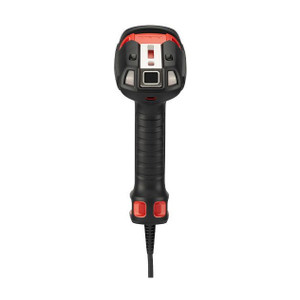
Honeywell 520-36/48-H3 Wireless Area Imager Barcode Scanner
The Honeywell 520-36/48-H3 is an area imager barcode scanner built for retail, warehouse, and field service operations where both ruggedness and read accuracy matter. This device captures 1D and 2D barcodes across EAN, UPC, Code 128, QR Code, and Data Matrix formats — allowing a single SKU to replace separate laser and imaging scanners in mixed-symbology environments. The area imager optical engine means no moving parts to wear out, and it handles standard and high-density barcodes with minimal first-pass read failures, even under poor lighting or at awkward angles.
Key Features
- Area Imager (1D/2D Technology): Captures all common barcode symbologies in one device — eliminates the cost and logistics complexity of managing separate laser scanners for 1D and imaging scanners for 2D codes across different departments or store locations.
- IP65 Environmental Rating: Dust and moisture won't degrade performance in warehouse receiving areas, outdoor loading docks, or retail stockrooms prone to humidity. Not rated for submersion — if full washdown or submersion is required, check for IP67 alternatives in the Honeywell scanner portfolio.
- 2.0 m (6.5 ft) Drop Rating: Survives accidental drops from waist height onto concrete or tile — common in fast-paced picking and checkout environments where scanner durability directly impacts uptime and total cost of ownership.
- Bluetooth 4.2 Wireless Connectivity: Removes the tether of a wired connection, enabling mobile scanning during cycle counts, receiving operations, or point-of-sale transactions without line-of-sight constraints. Bluetooth 4.2 balances range, power efficiency, and modern compatibility — verify battery life against your shift duration if operators carry the scanner continuously.
- Wide Working Range (2.5 to 50.8 cm / 1 to 20 in): Handles both close-proximity POS scanning (items at checkout counter) and mid-range shelf-label or pallet-code capture without refocusing. Extreme near-field (<1 in) or long-range (>20 in) applications fall outside this band and require alternative models.
- Optional USB Interface: Pairs Bluetooth mobility with wired fallback — useful for stationary scanning stations that benefit from continuous power and data without battery management overhead.
Typical Use Cases
Point-of-sale retail checkout and transaction processing; warehouse receiving, putaway, and inventory cycle counting; shipping, logistics, and proof-of-delivery operations; manufacturing quality assurance and traceability tracking; asset management and fixed-asset inventory audits; healthcare and pharmaceutical inventory management.
Integration Considerations
The 520-36/48-H3 (often searched as 520 36/48 H3) integrates via standard Bluetooth 4.2 pairing to tablets, mobile computers, or wireless-capable workstations. USB connectivity is available for installations requiring hardwired configuration or backup connectivity. Multi-symbology support reduces the need to reconfigure scanning logic across departments — a single fleet of devices handles EAN, UPC, Code 128, QR, and Data Matrix without firmware changes. Organizations deploying this scanner across retail and warehouse environments should plan for standardized battery charging and Bluetooth device management, particularly if operators rotate equipment across shifts.
When to Choose a Different Model
If your primary need is single-format 1D barcode scanning (pure UPC/EAN) with minimal cost, a dedicated laser scanner in the Honeywell lineup may be more economical. If you require IP67 submersion tolerance or extreme near-field scanning (<1 in), consider Honeywell's purpose-built variants. If your application demands 30+ meter working range or ultra-high-density code capture in harsh outdoor light, consult the Honeywell product selector or contact presales engineering.
Frequently Asked Questions
Q: What's the maximum range at which the 520-36/48-H3 can read a standard barcode?
A: The working range is 2.5 to 50.8 cm (1 to 20 inches). At the maximum distance, barcode size and contrast affect read reliability — high-contrast, full-size EAN-13 codes read more reliably than small or faded codes.
Q: Does the 520-36/48-H3 require line-of-sight for Bluetooth pairing?
A: No. Bluetooth 4.2 does not require line-of-sight, though walls and metal obstacles reduce range. Typical indoor range is 30–50 feet in open warehouse or retail settings.
Q: Can the 520-36/48-H3 survive being dropped onto concrete?
A: Yes. The 2.0 m (6.5 ft) drop rating means the scanner is engineered to survive accidental drops from waist height onto hard surfaces without functional damage. Repeated drops or drops from greater heights may cause failure.
Q: Is the 520-36/48-H3 rated for wet environments like grocery store produce sections or warehouse washdown areas?
A: The IP65 rating protects against dust and water spray, making it suitable for wet retail and warehouse environments. However, it is not rated for full submersion (IP67). Avoid prolonged water exposure or high-pressure washdown.
Q: Does this scanner support both 1D barcodes like UPC and 2D codes like QR?
A: Yes. The area imager engine captures EAN, UPC, Code 128, QR Code, and Data Matrix in a single device. This eliminates the need to carry or switch between separate laser and imaging scanners.
Q: What's the battery life on the 520-36/48-H3 during a typical shift?
A: Battery life depends on usage patterns, Bluetooth duty cycle, and ambient temperature. Consult the datasheet or contact the manufacturer for specific runtime estimates under your expected workload.
Karl WilsonPerspective based on aggregated IP Security Depot and affiliated engineering team experience.
The Honeywell 520-36/48-H3 strikes a practical balance for organizations running mixed retail and warehouse operations that need one barcode scanner model to handle 1D and 2D symbologies without sacrificing drop tolerance or environmental protection. The area imager design removes the cost and inventory headache of maintaining parallel fleets of laser and imaging scanners — a real operational win for larger deployments. The IP65 rating and 2.0 m drop rating give you confidence in high-velocity environments where gear takes a beating; the 2.5–50.8 cm working range covers both POS checkout distance and mid-range shelf/pallet scanning without refocus.
Technical Highlights:
- Area Imager (1D/2D): Single optical engine replaces separate laser and 2D scanners across departments — reduces SKU consolidation burden and training overhead.
- IP65 + 2.0 m Drop Rating: Dust and moisture tolerance plus concrete-impact durability mean lower replacement costs and fewer service interruptions in high-traffic retail and warehouse zones.
- Bluetooth 4.2 Wireless: No tethers required for mobile scanning operations (cycle counts, receiving, POS), and 4.2 balances power efficiency against typical 8–12 hour shift runtimes — though you'll want to validate battery life for continuous-use deployments.
- 2.5–50.8 cm Working Range: Covers close counter-top scanning and mid-range label capture without optics adjustment, but falls short if you need extreme near-field (<1 in) or long-range (>20 in) performance.
Deployment Considerations:
- Bluetooth device management: plan for standardized pairing, charging infrastructure, and firmware updates if deploying 50+ units across multiple shifts or locations.
- IP65 is not submersion-rated — avoid high-pressure washdown bays; if your environment requires regular full-water exposure, move to an IP67 variant.
- Multi-symbology support is a genuine operational advantage in mixed retail/warehouse networks, but realize that scan-enable/disable logic still lives in middleware or WMS — the scanner itself handles all formats.
Best fit: multi-department retail chains or 3PLs running a unified scanning standard across checkout, backroom cycle counts, and receiving operations, where device durability and barcode format flexibility matter more than lowest per-unit cost.