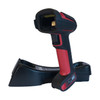
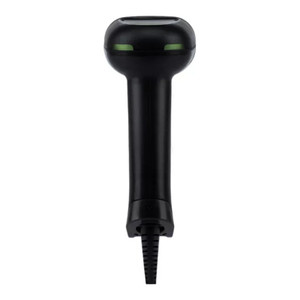
Honeywell 1991ISR-3-N Granit XP 199Xi Area Imager Barcode Scanner
The Honeywell 1991ISR-3-N is a wired area imager scanner built for high-wear warehouse, retail, and field service environments where equipment durability directly impacts uptime and throughput. This corded device captures 1D and 2D barcodes with precision optics and advanced image processing, tolerating the physical abuse and environmental challenges that typical laser scanners cannot handle.
Key Specifications & Deployment Benefits
- Area Imager (1D/2D barcode capture): Unlike laser scanners, the 1991ISR-3-N reads damaged, wet, poorly printed, or angled barcodes reliably—critical in logistics environments where label condition varies significantly. Reduces read failures and operator frustration during high-velocity scanning operations.
- IP65 Ingress Protection: Dust and moisture won't disable the scanner. You can deploy it in wet environments (cross-docks, refrigerated warehouses, outdoor retail) without enclosures. Skip this model only if you need full submersion protection (IP67).
- 2.0 m (6.5 ft) drop rating: Survives repeated drops from typical hand-scanning height onto hard flooring. Meaningful in facilities where equipment turnover is high and damage claims cut into margin.
- Wired RS-232/USB connectivity: Eliminates battery management, wireless pairing complexity, and RF interference concerns. Stable, latency-free communication with POS systems, WMS platforms, and inventory software. Install once, no recurring pairing or authentication overhead.
- Close-range working distance (5–80 cm): Optimized for point-of-sale checkout and warehouse pallet/case scanning. Minimizes read cycles per item and reduces operator strain during extended shifts. Not suitable for long-distance label capture (consider a different model if you need >2 meter scanning distance).
- Multi-symbology support: EAN, UPC, Code 128, QR Code, Data Matrix, and others. Flexibility to handle retail, logistics, and asset-tracking workflows without device swaps.
- Compact, lightweight form factor: Reduces hand and wrist fatigue during all-day scanning. Matters more in high-throughput retail and warehouse environments where operators scan hundreds or thousands of items per shift.
Typical Deployment Scenarios
The 1991ISR-3-N excels in retail point-of-sale checkout lines, warehouse receiving and putaway operations, shipping and proof-of-delivery workflows, manufacturing quality control, asset management, and field service environments. The rugged construction and area imager architecture make it particularly valuable in cross-dock facilities and busy retail floors where barcodes experience real-world wear and handling.
Integration & Connectivity
Wired integration via RS-232 or USB ensures stable communication with legacy and modern systems. No wireless battery drain or interference issues. Works with standard POS hardware, WMS platforms (SAP, Oracle, Manhattan, Infor), and inventory management software that accept keyboard-emulation or serial input.
Potential Limitations
This is a corded device—cable management and routing must be planned during installation. Working distance is close-range only; if you need to scan labels from >1 meter away, explore a long-range model or a different family. Wireless mobility is not an option with this model; for mobile warehouse scanning, consider a paired handheld or mobile terminal.
When to Choose a Different Model
If you require wireless connectivity and battery autonomy, select a cordless variant in the Granit XP family. If barcode scanning range must exceed 80 cm, evaluate a long-range or fixed-mount scanner. For applications requiring extreme submersion, consider an IP67-rated scanner. For very high-speed conveyor sorting, evaluate inline fixed-mount imagers designed for throughput >200 items/minute.
Frequently Asked Questions
Q: What barcodes does the 1991ISR-3-N read?
A: 1D codes (EAN, UPC, Code 128, Code 39, Interleaved 2 of 5, and others) and 2D codes (QR Code, Data Matrix, PDF417). Consult the datasheet for the full symbology list.
Q: Can I use the 1991ISR-3-N in a wet environment?
A: Yes. The IP65 rating means dust and water spray won't damage the scanner. It's suitable for cross-dock facilities, refrigerated warehouses, and covered outdoor retail areas. It is not rated for submersion.
Q: Does the 1991ISR-3-N work with my legacy POS system?
A: If your POS accepts RS-232 or USB keyboard input, the 1991ISR-3-N will integrate. Wired connectivity means no pairing overhead. Verify your POS documentation for serial or USB barcode scanner support.
Q: What is the maximum scanning range?
A: Close-range operation: 5–80 cm (approximately 2–31 inches). If you need to scan labels from further than 80 cm away, this model is not suitable; consider a long-range imager or fixed-mount device.
Q: Will the 1991ISR-3-N survive a drop?
A: The 2.0 m drop rating means the scanner is designed to survive drops from typical hand-scanning height onto hard flooring. Repeated drops from height or drops onto concrete may eventually exceed the rated tolerance; physical damage claims and repair costs should factor into your total cost of ownership.
Q: Is there a wireless version of this scanner?
A: The 1991ISR-3-N is wired only. For cordless operation, Honeywell offers wireless variants in the Granit XP family; consult product selection guides or your integrator.
Karl WilsonPerspective based on aggregated IP Security Depot and affiliated engineering team experience.
The Honeywell 1991ISR-3-N represents a pragmatic choice for organizations standardizing on rugged, wired scanning infrastructure in high-wear environments. The combination of area imager architecture, IP65 environmental protection, and 2.0 m drop tolerance positions this scanner as a long-term asset in cross-dock facilities, busy retail floors, and logistics operations where barcode labels are frequently wet, damaged, or presented at extreme angles. Unlike laser scanners, which struggle with these real-world label conditions, the 1991ISR-3-N's image processing engine reliably decodes what others fail on—reducing read cycles, operator frustration, and downstream data quality issues.
Technical Highlights:
- Area imager vs. laser: Reads damaged and angled barcodes that laser scanners miss. In high-throughput logistics, this translates to fewer manual retries, faster throughput, and fewer barcode exceptions escalated to exception handlers.
- IP65 + 2.0 m drop rating: Built for physical punishment. Deployment cost per scanner remains low because replacements are infrequent; contrast with lower-rated devices that may require annual refresh cycles in harsh environments.
- Wired RS-232/USB: Zero battery overhead, no wireless pairing complexity. Critical in legacy system environments or facilities with dense RF traffic where wireless reliability becomes questionable. Stable, predictable latency ensures POS transactions and WMS events fire without delay.
- 5–80 cm working distance: Optimized for checkout and hand-scanning workflows. Operator hand positioning becomes second nature; read reliability stays high because label distance is controlled and predictable.
Deployment Considerations:
- Cable routing and management must be planned upfront. Breakage or kinks in the cord can interrupt service; budget for cable conduit or protection in high-traffic areas.
- Close-range working distance is a deliberate design choice for POS and warehouse hand-scanning. Do not select this scanner for applications requiring long-distance or remote label capture.
- Wired-only connectivity means no mobile flexibility; if operators need to roam freely away from a fixed checkout or receiving station, pair with a mobile device or cordless variant instead.
The 1991ISR-3-N is ideally suited for standardized, fixed-location scanning workflows in retail and warehouse operations where environmental durability, read accuracy on imperfect labels, and long equipment lifespan justify the simplicity of a corded device. It is not a universal scanner; it is a specialist tool for specific, high-volume, high-wear deployment scenarios.