
Zebra DS3608 vs Honeywell 1202G-2USB-5BF-N: Specification Comparison
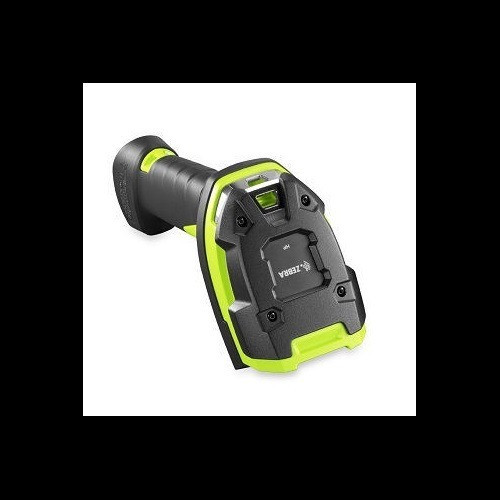
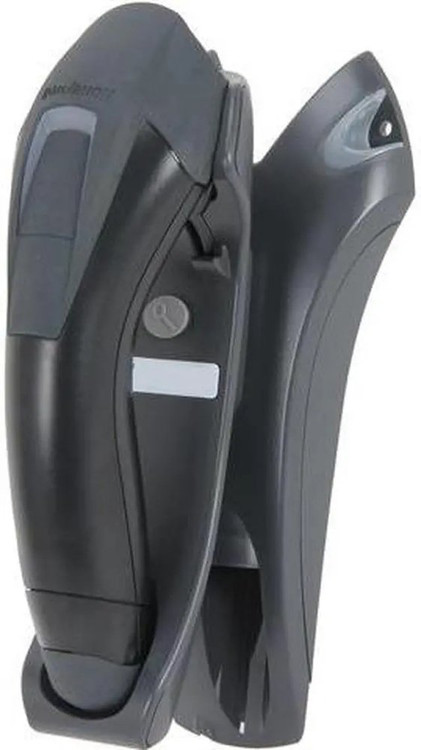
Both the Zebra DS3608-HD20003VZWW and the Honeywell 1202G-2USB-5BF-N (Xenon XP 1952g) are handheld 1D/2D area-imager barcode scanners with Bluetooth connectivity and IP65-rated sealing, making them legitimate cross-shop candidates for buyers evaluating cordless industrial scanning solutions. The Zebra targets heavy industrial and outdoor environments with an extended ruggedness profile, while the Honeywell positions itself as a general-purpose wireless scanner suited to warehouse and retail settings. This comparison examines decode performance and range, ruggedness and environmental resilience, and connectivity and power endurance.
In This Guide
- Which scanner delivers broader decode range and symbology coverage?
- Which unit is better built for harsh or industrial deployment environments?
- How do the two scanners compare on wireless connectivity, battery life, and interface options?
- Which should you choose: the DS3608 or the 1202G-2USB-5BF-N?
- Side-by-Side Specs
- FAQ
Which scanner delivers broader decode range and symbology coverage?
The Zebra DS3608 provides detailed decode-range data by symbology and density. For Code 128 at 5 mil, it reads from 1.3 to 6.7 in. (3.3–17 cm); at 20 mil, from 2.8 to 28.0 in. (7.1–71.1 cm); and at 40 mil, from 1.7 to 60 in. (4.4–152.4 cm). For Data Matrix at 10 mil, the range is 1.4–8.6 in. (3.5–21.8 cm). Its image sensor is 1,280 × 800 pixels with a 42° H × 28° V field of view and a minimum print contrast of 15%. It supports an extensive 1D symbology list including Code 39, Code 128, Code 93, Codabar/NW7, Code 11, MSI Plessey, UPC/EAN, I 2 of 5, Korean 3 of 5, GS1 DataBar, and Base 32, plus 2D formats including Data Matrix.
The Honeywell 1202G-2USB-5BF-N specifies a working range of 2.5 to 50.8 cm (1 to 20 in.) but does not break this down by symbology, density, or mil size. Its sensor resolution, field of view, and minimum print contrast are not specified. Symbology support listed is EAN, UPC, Code 128, Code 39, QR Code, and Data Matrix — a shorter published list than the Zebra's, though Honeywell's full datasheet may include additional codes not captured in the provided specs.
For buyers requiring verified decode distances at specific label densities — common in manufacturing, logistics, or warehouse racking scenarios — the Zebra's granular range data provides concrete planning inputs. The Honeywell's 50.8 cm maximum working range is within the Zebra's 20-mil Code 128 envelope, but no direct density-matched comparison can be made from the available specs.
Which unit is better built for harsh or industrial deployment environments?
The Zebra DS3608 is rated IP65 and IP67 (scanner body) with IP65 on the cradle. It withstands multiple drops from 8.0 ft. (2.4 m) to concrete and survives 5,000 tumbles at 3.3 ft. (1 m). Operating temperature range (cordless) is -4°F to 122°F (-20°C to 50°C); storage temperature is -40°F to 158°F (-40°C to 70°C). ESD protection is rated at ±25 kV air discharge and ±10 kV direct/indirect discharge. Humidity tolerance is 5%–95% condensing. The unit carries heavy-industrial EMI immunity (EN 61000-6-2) and meets medical electrical equipment standards (EN 60601-1-2), indicating a broad regulatory compliance posture.
The Honeywell 1202G-2USB-5BF-N is rated IP65 and is drop-tested to 2.0 m (6.5 ft.) to concrete. Operating temperature is 0°C to 50°C (32°F to 122°F); storage temperature is -20°C to 60°C (-4°F to 140°F). Tumble rating, ESD specification, humidity tolerance, and EMI/RFI certifications are not provided in the available specs.
The Zebra holds a measurable edge across every documented ruggedness axis: dual IP65/IP67 sealing versus IP65 only; 8.0 ft. vs. 6.5 ft. drop rating; a lower cold operating limit (-20°C vs. 0°C); a wider storage range (-40°C vs. -20°C); and a documented ESD rating absent from the Honeywell spec set. Buyers deploying into outdoor cold-chain, manufacturing floors with ESD exposure, or environments with wash-down risk should note these differences.
How do the two scanners compare on wireless connectivity, battery life, and interface options?
The Zebra DS3608 uses Bluetooth Class 1, Version 4.0 LE, supporting both serial port and HID profiles. Its wireless range reaches up to 300 ft. (100 m). Classic Bluetooth data rate is 3 Mbit/s (2.1 Mbit/s effective); BLE is 1 Mbit/s (0.27 Mbit/s effective). The rechargeable PowerPrecision+ 3,100 mAh Li-Ion battery delivers 70,000+ scans per full charge. Supported host interfaces include USB, RS232, and Keyboard Wedge. User feedback options are LED, beeper, and vibration.
The Honeywell 1202G-2USB-5BF-N uses Bluetooth 4.2 and USB. Wireless range is not specified. Battery capacity and scans-per-charge are not provided in the available specs. The unit weighs 125 g (4.4 oz.), compared to the Zebra's cordless weight of 14.4 oz. (407 g), making the Honeywell substantially lighter. Input voltage is 5 V ±5% versus the Zebra's USB host-powered range of 4.5–5.5 VDC — broadly similar USB power requirements.
The Zebra's Bluetooth 4.0 LE radio specification is slightly older than the Honeywell's 4.2, which adds improved privacy features and faster connection establishment defined in the 4.2 standard. However, the Zebra's 300 ft. (100 m) documented range and 70,000+ scans-per-charge are concrete operational metrics the Honeywell spec set does not match with equivalent data. Buyers managing large floor areas or high-volume scan throughput will find the Zebra's figures more actionable; the Honeywell's advantage in weight (125 g vs. 407 g) is significant for prolonged handheld use.
Which should you choose: the DS3608 or the 1202G-2USB-5BF-N?
Our take: The DS3608 is the stronger choice when the deployment demands verified industrial ruggedness, broad-area wireless coverage, and high-volume scanning endurance. The Zebra documents IP65/IP67 dual sealing versus the Honeywell's IP65 only, a drop rating of 8.0 ft. versus 6.5 ft., a cold operating floor of -20°C versus 0°C, a wireless range of 300 ft. versus unspecified, and 70,000+ scans per charge versus no published figure. For heavy manufacturing, cold-chain logistics, or outdoor yard operations, these spec differentials represent meaningful operational risk reduction. The Honeywell 1202G-2USB-5BF-N is the more appropriate candidate for general-purpose retail or light-warehouse deployments where operator fatigue matters: at 125 g (4.4 oz.) it is less than one-third the cordless weight of the Zebra (407 g), and its Bluetooth 4.2 radio is a newer revision. Buyers whose priority is all-day comfort in a temperature-controlled environment should evaluate the Honeywell; buyers who need certified industrial resilience and documented scan-range data by density tier should select the DS3608.
Side-by-Side Comparison
Spec-for-spec, from manufacturer data.
| Specification | Zebra DS3608 | Honeywell 1202G-2USB-5BF-N |
|---|---|---|
| Scan Type | 2D Area Imager | 2D Area Imager |
| Bluetooth Version | 4.0 LE (Class 1) | 4.2 |
| Wireless Range | Up to 300 ft. (100 m) | — |
| IP Rating (Scanner) | IP65 and IP67 | IP65 |
| Drop Rating | 8.0 ft. (2.4 m) to concrete | 2.0 m (6.5 ft.) to concrete |
| Tumble Spec | 5,000 tumbles @ 3.3 ft. (1 m) | — |
| Operating Temp (Min) | -20°C (-4°F) | 0°C (32°F) |
| Operating Temp (Max) | 50°C (122°F) | 50°C (122°F) |
| Storage Temp Range | -40°C to 70°C | -20°C to 60°C |
| Battery Capacity | 3,100 mAh Li-Ion | — |
| Scans per Charge | 70,000+ | — |
| Weight (Cordless/Unit) | 407 g (14.4 oz.) | 125 g (4.4 oz.) |
| Host Interfaces | USB, RS232, Keyboard Wedge | USB, Bluetooth 4.2 |
| Image Sensor | 1,280 × 800 pixels | — |
| Field of View | 42° H × 28° V | — |
| Warranty | 3 years | 3 years |
Frequently Asked Questions
Which should you choose: the DS3608 or the 1202G-2USB-5BF-N?
The DS3608 is the stronger choice when the deployment demands verified industrial ruggedness, broad-area wireless coverage, and high-volume scanning endurance. The Zebra documents IP65/IP67 dual sealing versus the Honeywell's IP65 only, a drop rating of 8.0 ft. versus 6.5 ft., a cold operating floor of -20°C versus 0°C, a wireless range of 300 ft. versus unspecified, and 70,000+ scans per charge versus no published figure. For heavy manufacturing, cold-chain logistics, or outdoor yard operations, these spec differentials represent meaningful operational risk reduction. The Honeywell 1202G-2USB-5BF-N is the more appropriate candidate for general-purpose retail or light-warehouse deployments where operator fatigue matters: at 125 g (4.4 oz.) it is less than one-third the cordless weight of the Zebra (407 g), and its Bluetooth 4.2 radio is a newer revision. Buyers whose priority is all-day comfort in a temperature-controlled environment should evaluate the Honeywell; buyers who need certified industrial resilience and documented scan-range data by density tier should select the DS3608.
Is the DS3608 or 1202G-2USB-5BF-N better for larger warehouse deployments?
Based on available specs, the DS3608 documents a Bluetooth range of up to 300 ft. (100 m), which is a concrete planning figure for large floor layouts. The Honeywell 1202G-2USB-5BF-N does not specify a wireless range in the provided spec data, so a direct range comparison cannot be made. The Zebra also lists 70,000+ scans per charge, supporting high-throughput shifts without mid-day recharging. For large-footprint warehouses, the Zebra's documented figures give it a clear planning advantage.
Which scanner is better suited for all-day handheld use by an operator?
The Honeywell 1202G-2USB-5BF-N weighs 125 g (4.4 oz.), while the Zebra DS3608 in cordless configuration weighs 407 g (14.4 oz.) — more than three times heavier. For operators scanning continuously over an 8-hour shift in a retail or light-duty environment, the Honeywell's substantially lower weight reduces fatigue. The Zebra's heavier build reflects its ruggedized construction, which is appropriate for industrial environments but adds ergonomic burden in lighter-duty settings.
Can either scanner operate in freezing or cold-storage environments?
The Zebra DS3608 (cordless) is rated for operation down to -4°F (-20°C) and storage down to -40°F (-40°C), making it suitable for cold-chain and refrigerated warehouse environments. The Honeywell 1202G-2USB-5BF-N is specified for operation from 32°F (0°C) and storage from -4°F (-20°C). Based on the provided specs, the Honeywell is not rated for below-freezing operation, whereas the Zebra is. Buyers with freezer or cold-storage requirements should select the DS3608.
More Barcode Scanner Comparisons
- Zebra DS8108 vs Datalogic GBT4600-HC-BTK1-HP
- Zebra DS8108 vs Datalogic GD4590-HCK10-HDR-B
- Zebra DS8108 vs Honeywell 1202G-2USB-5BF-N
- Zebra DS8108 vs Datalogic GBT4500-BK-BTK1DRA
- Zebra DS8108 vs Zebra DS3608
- Zebra DS8108 vs Zebra LI3608
Barcode Scanner Buying Guides
Get a Second Opinion on Your Camera Choice
Share your site layout, coverage goals, and budget. Our team will validate the camera selection, flag anything we would change, and recommend products that match the use case.