
Wasp WWS652 vs Honeywell 520-36/48-H3: Specification Comparison
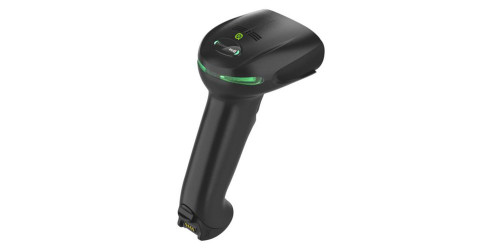
The Wasp WWS652 and Honeywell Xenon XP 1952g are both cordless 2D area-imaging barcode scanners aimed at mobile capture workflows in warehousing, retail, and asset-management environments. Both connect via Bluetooth and USB and read the full range of 1D and 2D symbologies. This comparison evaluates the two on scan engine capability and symbology coverage, wireless connectivity and host interface breadth, and physical durability with environmental protection ratings—the three dimensions that most directly affect deployment decisions for B2B buyers and integrators.

In This Guide
- Which scanner reads a broader symbology set and offers better positional flexibility?
- Which scanner offers broader host interface options and wireless protocol support?
- Which scanner is better protected against drops and environmental conditions?
- Which should you choose: the WWS652 or the 520-36/48-H3?
- Side-by-Side Specs
- FAQ
Which scanner reads a broader symbology set and offers better positional flexibility?
The WWS652 uses a 2D wireless area imager that auto-discriminates all standard 1D codes including GS1DataBar linear Suite 400, plus 2D symbologies. Wasp specifies omnidirectional reading at ±65° pitch/yaw and 360° roll tolerance, which reduces label-alignment delays at the point of capture. The Honeywell Xenon XP 1952g also uses a 1D/2D area imager and explicitly lists EAN, UPC, Code 128, QR Code, and Data Matrix. Neither datasheet provides a full symbology count for direct numeric comparison. The Honeywell does not publish pitch/yaw/roll tolerances in the provided specs; the Wasp does not publish a minimum or maximum working distance. The Honeywell specifies a working range of 2.5 to 50.8 cm (1 to 20 in), giving buyers a concrete read-distance figure the Wasp spec sheet does not supply.
Which scanner offers broader host interface options and wireless protocol support?
The Wasp WWS652 supports Bluetooth 4.0 Class 1 alongside USB-C, RS-232 serial, and USB Keyboard Wedge—four distinct host interface modes. The Aladdin 3.0 app allows field programming via smartphone without a PC. The Honeywell Xenon XP 1952g supports Bluetooth 4.2 and USB; no RS-232 or keyboard wedge interface is listed in the provided specifications. Bluetooth 4.2 (Honeywell) is a later revision than 4.0 (Wasp), offering incremental protocol improvements, but both operate in the same 2.4 GHz band for practical purposes. Buyers with legacy RS-232 hosts or keyboard-wedge POS terminals will find the WWS652's multi-interface design the more flexible option; buyers standardized on USB-only infrastructure will find both units compatible.
Which scanner is better protected against drops and environmental conditions?
The Honeywell Xenon XP 1952g carries an IP65 ingress-protection rating (dust-tight, protected against low-pressure water jets) and a published 2.0 m (6.5 ft) drop rating, along with a stated 3-year warranty. The Wasp WWS652 does not specify an IP rating, a drop rating, or a warranty duration in the provided specifications. For deployments on warehouse floors, manufacturing lines, or outdoor receiving docks where moisture, dust, or accidental drops are routine, the Honeywell's verified environmental ratings represent a concrete, documentable advantage. The absence of published durability data for the Wasp does not confirm the unit is fragile, but it means integrators cannot make a spec-based durability commitment for that model without consulting additional Wasp documentation.
Which should you choose: the WWS652 or the 520-36/48-H3?
Our take: The Honeywell Xenon XP 1952g is the stronger choice when the deployment environment demands documented environmental protection and drop resilience: it carries an IP65 rating and a 2.0 m drop tolerance versus no published IP or drop rating for the Wasp WWS652. The Honeywell also backs the unit with a stated 3-year warranty while the Wasp warranty is unspecified. Conversely, the WWS652 provides four host interfaces—USB-C, RS-232, USB Keyboard Wedge, and Bluetooth 4.0—against the Honeywell's two (Bluetooth 4.2 and USB), making it the more versatile option for mixed or legacy host infrastructure. The Honeywell publishes a concrete working range of 2.5–50.8 cm; the Wasp does not. Choose the Xenon XP 1952g for rugged or semi-outdoor environments and clean warranty terms; choose the WWS652 for sites with RS-232 or keyboard-wedge hosts, or where smartphone-based field programming via Aladdin 3.0 reduces IT overhead.
Side-by-Side Comparison
Spec-for-spec, from manufacturer data.
| Specification | Wasp WWS652 | Honeywell 520-36/48-H3 |
|---|---|---|
| Scanner Type | 2D Wireless Area Imager | 1D/2D Area Imager |
| Model | WWS652 | Xenon XP 1952g |
| Part Number | 633809014413 | 520-36/48-H3 |
| Bluetooth Version | 4.0 Class 1 | 4.2 |
| Additional Interfaces | USB-C, RS-232, USB Keyboard Wedge | USB only |
| Symbologies (listed) | All standard 1D incl. GS1DataBar linear Suite 400; 2D | EAN, UPC, Code 128, QR Code, Data Matrix |
| Working Range | — | 2.5–50.8 cm (1–20 in) |
| Omnidirectional Tolerance | ±65° pitch/yaw; 360° roll | Not specified |
| IP Rating | — | IP65 |
| Drop Rating | — | 2.0 m (6.5 ft) |
| Weight | 206.5 g (7.3 oz) | — |
| Dimensions | 6.2 × 2.7 × 4.2 in | — |
| Field Programming | Aladdin 3.0 app (smartphone) | Not specified |
| Warranty | — | 3 years |
| Primary Use | Mobile inventory & asset capture | General purpose |
| Connectivity | Bluetooth, USB, Serial | Bluetooth, USB |
Frequently Asked Questions
Which should you choose: the WWS652 or the 520-36/48-H3?
The Honeywell Xenon XP 1952g is the stronger choice when the deployment environment demands documented environmental protection and drop resilience: it carries an IP65 rating and a 2.0 m drop tolerance versus no published IP or drop rating for the Wasp WWS652. The Honeywell also backs the unit with a stated 3-year warranty while the Wasp warranty is unspecified. Conversely, the WWS652 provides four host interfaces—USB-C, RS-232, USB Keyboard Wedge, and Bluetooth 4.0—against the Honeywell's two (Bluetooth 4.2 and USB), making it the more versatile option for mixed or legacy host infrastructure. The Honeywell publishes a concrete working range of 2.5–50.8 cm; the Wasp does not. Choose the Xenon XP 1952g for rugged or semi-outdoor environments and clean warranty terms; choose the WWS652 for sites with RS-232 or keyboard-wedge hosts, or where smartphone-based field programming via Aladdin 3.0 reduces IT overhead.
Can either scanner connect to a legacy RS-232 POS or host terminal?
Only the Wasp WWS652 lists RS-232 as a supported interface in its specifications. The Honeywell Xenon XP 1952g specifies Bluetooth 4.2 and USB only; RS-232 compatibility is not stated in the provided data.
Which scanner is better suited for warehouse or dock environments with dust and moisture exposure?
The Honeywell Xenon XP 1952g is rated IP65 (dust-tight, water-jet resistant) with a 2.0 m drop tolerance. The Wasp WWS652 does not publish an IP rating or drop rating, so a durability comparison cannot be made from available specifications alone.
What is the warranty coverage for each scanner?
The Honeywell Xenon XP 1952g carries a stated 3-year warranty. The Wasp WWS652 warranty duration is not specified in the provided product data; buyers should confirm coverage directly with Wasp or the reseller before purchase.
More Barcode Scanner Comparisons
- Zebra DS3678 vs Honeywell 520-36/48-H3
- Zebra DS3678 vs CipherLab A2564S2BS0001
- Zebra DS3678 vs Honeywell 1962H-WC-CUP
- Zebra DS3678 vs Socket Mobile CX4238-3326
- Zebra DS3678 vs Zebra DS3678
- Zebra DS3678 vs Zebra DS8178-SRSF007ZZWW
Barcode Scanner Buying Guides
Get a Second Opinion on Your Camera Choice
Share your site layout, coverage goals, and budget. Our team will validate the camera selection, flag anything we would change, and recommend products that match the use case.