
Vivotek ND9426P vs Vivotek ND9425P: Specification Comparison
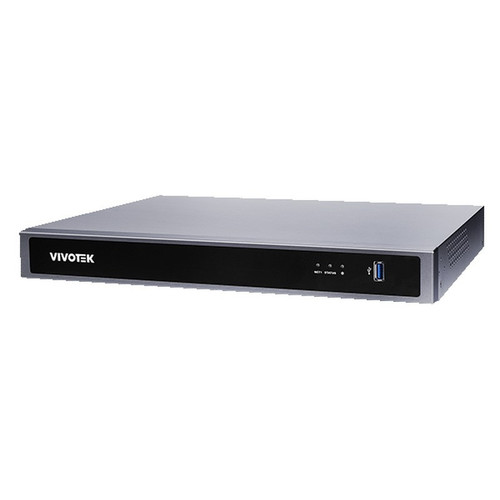
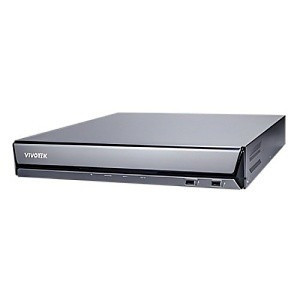
Both the Vivotek ND9426P and ND9425P are 16-channel, PoE+ NVRs targeting mid-size IP surveillance deployments. Each supports 4K display output via HDMI and VGA, H.265/H.264/MJPEG video formats, dual 3.5-inch internal HDD bays with RAID 0/1, and ONVIF Profile S camera integration. This comparison evaluates the three dimensions that most directly affect purchasing decisions for this class of recorder: throughput and decoding performance, physical and environmental specifications, and software ecosystem and event intelligence capabilities.
In This Guide
- Which NVR delivers greater recording throughput and decoding headroom?
- How do the two units compare on physical build, power envelope, and operating environment?
- Which unit offers broader event intelligence, VCA analytics, and software platform support?
- Which should you choose: the ND9426P or the ND9425P?
- Side-by-Side Specs
- FAQ
Which NVR delivers greater recording throughput and decoding headroom?
The ND9426P specifies a recording throughput of 192 Mbps versus the ND9425P's 64 Mbps — three times higher. For deployments mixing 4K cameras with high frame-rate 1080p channels, this gap is operationally significant: at 192 Mbps the ND9426P can sustain simultaneous full-resolution recording across all 16 channels at realistic 4K bitrates (typically 8–16 Mbps per channel), whereas the ND9425P's 64 Mbps budget limits average per-channel bitrate to 4 Mbps before the ceiling is reached.
Decoding capability follows the same pattern. The ND9426P's hardware decoder supports H.265/H.264 at 3840×2160 @ 120 fps aggregate or 1920×1080 @ 480 fps, and its maximum decoded resolution reaches 7680×2560. The ND9425P's hardware decoder is specified at 3840×2160 @ 30 fps for a single channel, or 1920×1080 @ 120 fps across four channels simultaneously, with a maximum decoding resolution of 3840×2160. For live-view or playback workloads involving multiple 4K streams, the ND9426P provides substantially more headroom.
Network throughput reflects the same asymmetry: the ND9426P provides dual Gigabit Ethernet ports with a combined input/output total of 224 Mbps, while the ND9425P has a single Gigabit port and a combined throughput cap of 88 Mbps. The dual-NIC architecture on the ND9426P also enables network redundancy or traffic segregation between camera and management networks, a configuration the single-port ND9425P cannot replicate.
How do the two units compare on physical build, power envelope, and operating environment?
The two units are dimensionally close. The ND9426P measures 365 × 315 × 44 mm and weighs 2.78 kg; the ND9425P measures 366 × 320.3 × 46 mm and weighs 2.5 kg (the ND9425P weight is specified without HDDs, so a loaded comparison would narrow this gap). Both occupy a 1U rack footprint.
Maximum power draw differs: the ND9426P is rated at 270 W versus 255 W for the ND9425P. Both accept 100–240 V AC at 50/60 Hz. The practical difference of 15 W is minor at the rack-circuit level, but integrators sizing PoE budgets should consult each unit's per-port PoE allocation specifications, which are not itemized in the provided data.
Operating temperature range is a meaningful differentiator. The ND9426P is specified for −10 °C to 55 °C (14 °F to 131 °F), while the ND9425P is specified for 0 °C to 40 °C (32 °F to 104 °F). The ND9426P's broader envelope makes it more suitable for installations in unconditioned equipment rooms, outdoor-adjacent closets, or facilities where summer ambient temperatures may exceed 40 °C. Both units share the same humidity range (0–95%) and safety certifications (CE, FCC, VCCI, C-Tick, UL, CB, BSMI, BIS). The ND9426P specifies a reset button; the ND9425P spec does not mention one.
Which unit offers broader event intelligence, VCA analytics, and software platform support?
The ND9426P lists a wider event trigger set, adding Cyber Attack detection and Video Loss to the ND9425P's event list. For event actions, the ND9426P adds ePTZ, NVR DO, Camera DO, and APP triggers beyond the ND9425P's video recording, email, buzzer, PTZ, and FTP actions. The ND9426P also explicitly lists Object Search (People, Vehicle), Scene Search (Line Crossing, Intrusion, Loitering), and Attribute Search (gender, age, clothing color, accessories for people; type and color for vehicles), plus Smart Search II — none of these analytic search capabilities appear in the ND9425P specification.
On the software platform side, the ND9426P is listed as compatible with Shepherd and VSS (VAST Security Station), the current-generation Vivotek VMS. The ND9425P lists Shepherd and VAST 2, an older Vivotek platform. Both support VIVOCloud, Trend Micro IoT Security, and VCA Counting Solution, though VIVOCloud is a standalone field in the ND9425P spec rather than appearing under the mobile app entry.
Mobile app support also diverges: the ND9426P lists iViewer, VIVOCloud, and VORTEX for Android and iOS. The ND9425P lists only iViewer for Android and iOS, with VIVOCloud noted separately. The ND9426P also explicitly specifies Chrome as its web browser; the ND9425P lists Internet Explorer 10 (32-bit) or later, which signals a firmware generation difference. The ND9425P adds a Crowd Control Solution feature not listed for the ND9426P, and includes a Watermark spec for recorded video; neither appears in the ND9426P specification.
Which should you choose: the ND9426P or the ND9425P?
Our take: The ND9426P is the stronger choice when recording throughput, decoding performance, operating temperature tolerance, or advanced VCA analytics are primary requirements. Concretely: recording throughput is 192 Mbps versus 64 Mbps — a 3× advantage that matters in dense 4K deployments; aggregate network throughput is 224 Mbps via dual GbE ports versus 88 Mbps on a single port; and the operating temperature ceiling is 55 °C versus 40 °C, a critical delta for non-climate-controlled spaces. The ND9426P also adds Object, Scene, and Attribute Search analytics and VSS platform compatibility not present in the ND9425P spec. The ND9425P remains a viable option for cost-sensitive, lower-density deployments operating in controlled environments under 40 °C where 64 Mbps throughput is sufficient and VAST 2 platform alignment is acceptable. Buyers already invested in the VAST 2 ecosystem should confirm VSS backward compatibility before migrating to the ND9426P.
Side-by-Side Comparison
Spec-for-spec, from manufacturer data.
| Specification | Vivotek ND9426P | Vivotek ND9425P |
|---|---|---|
| Channels | 16 | 16 |
| Recording Throughput | 192 Mbps | 64 Mbps |
| Network Throughput (In/Out Total) | 224 Mbps | 88 Mbps |
| Ethernet Ports | Dual 10/100/1000 Mbps (RJ-45) | Single 10/100/1000 Mbps (RJ-45) |
| Decoding Capability (4K) | 3840×2160 @ 120 fps aggregate | 3840×2160 @ 30 fps (1-CH) |
| Max Decoding Resolution | 7680×2560 | 3840×2160 |
| Video Formats | H.265, H.264, MJPEG | H.265, H.264, MJPEG |
| HDD Bays | 2× internal 3.5" | 2× internal 3.5" |
| RAID Support | RAID 0, 1 | RAID 0, 1 |
| Max Power Draw | 270 W | 255 W |
| Operating Temperature | -10 °C to 55 °C | 0 °C to 40 °C |
| Alarm Inputs / Outputs | 4 in / 1 out | 4 in / 1 out |
| USB Ports | Front: 1× USB 3.0; Rear: 2× USB 2.0 | Front: 1× USB 3.0; Rear: 1× USB 2.0 |
| VMS Platform | Shepherd, VSS (VAST Security Station) | Shepherd, VAST 2 |
| Object / Scene / Attribute Search | Supported | — |
| Operating Temperature | -10 °C to 55 °C (14 °F to 131 °F) | 0 °C to 40 °C (32 °F to 104 °F) |
Frequently Asked Questions
Which should you choose: the ND9426P or the ND9425P?
The ND9426P is the stronger choice when recording throughput, decoding performance, operating temperature tolerance, or advanced VCA analytics are primary requirements. Concretely: recording throughput is 192 Mbps versus 64 Mbps — a 3× advantage that matters in dense 4K deployments; aggregate network throughput is 224 Mbps via dual GbE ports versus 88 Mbps on a single port; and the operating temperature ceiling is 55 °C versus 40 °C, a critical delta for non-climate-controlled spaces. The ND9426P also adds Object, Scene, and Attribute Search analytics and VSS platform compatibility not present in the ND9425P spec. The ND9425P remains a viable option for cost-sensitive, lower-density deployments operating in controlled environments under 40 °C where 64 Mbps throughput is sufficient and VAST 2 platform alignment is acceptable. Buyers already invested in the VAST 2 ecosystem should confirm VSS backward compatibility before migrating to the ND9426P.
Can the ND9425P keep up with all 16 cameras recording at 4K?
Based on the provided specifications, the ND9425P has a recording throughput of 64 Mbps. A 4K H.265 stream typically requires 8–16 Mbps per channel; at 16 channels that aggregate can reach 128–256 Mbps, which exceeds the ND9425P's 64 Mbps ceiling. The ND9426P's 192 Mbps throughput provides more headroom for high-bitrate multi-channel 4K recording, though neither spec explicitly states per-channel PoE camera bitrate limits.
Will either NVR work in a server room that gets above 40 °C in summer?
The ND9426P is rated for operation up to 55 °C, so it can tolerate ambient temperatures that exceed 40 °C. The ND9425P is specified only to 40 °C (104 °F). For installations in unconditioned or poorly cooled equipment rooms, the ND9426P's broader temperature rating is the safer choice based on the provided specifications.
Does the ND9426P support the same VMS software as the ND9425P?
The specifications list different VMS platforms: the ND9426P is listed with Shepherd and VSS (VAST Security Station), while the ND9425P is listed with Shepherd and VAST 2. VSS is Vivotek's current-generation platform and VAST 2 is an older generation. Whether VSS is backward compatible with existing VAST 2 configurations is not determinable from the provided specifications and should be confirmed directly with Vivotek or the integrator before deployment.
Get a Second Opinion on Your Camera Choice
Share your site layout, coverage goals, and budget. Our team will validate the camera selection, flag anything we would change, and recommend products that match the use case.