
Vivotek ND9426P vs Hanwha PRN-1600B2: Specification Comparison
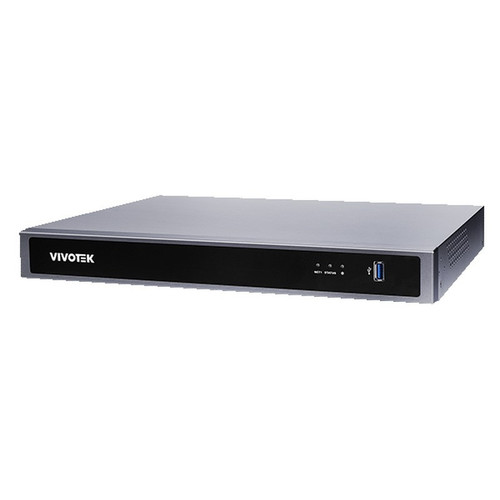
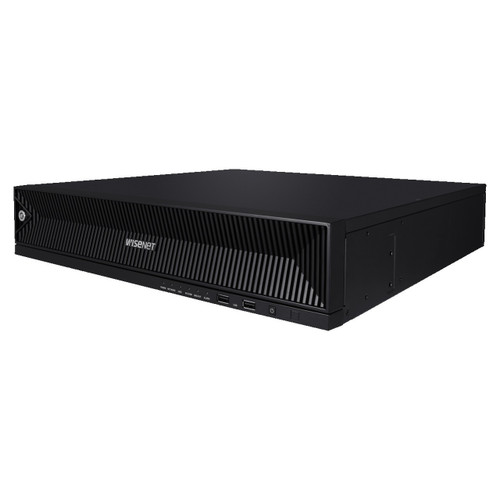
Both the Vivotek ND9426P and Hanwha PRN-1600B2 are 16-channel IP network video recorders targeting professional surveillance installations. The ND9426P is a 1U PoE-integrated unit aimed at mid-scale deployments requiring on-board camera power delivery, while the PRN-1600B2 is a rackmount AI-capable NVR with higher storage density, RAID redundancy, and broader enterprise integration features. Buyers cross-shopping these units are typically evaluating recording bandwidth, storage scalability, PoE convenience versus external camera power, and VMS/AI analytics integration depth.
In This Guide
- Which NVR delivers greater recording bandwidth, storage capacity, and channel scalability?
- How do the two units compare in integrated PoE power delivery, physical build, and operating environment?
- Which unit offers stronger AI analytics, VMS integration, and cybersecurity management?
- Which should you choose: the ND9426P or the PRN-1600B2?
- Side-by-Side Specs
- FAQ
Which NVR delivers greater recording bandwidth, storage capacity, and channel scalability?
Recording bandwidth is a critical differentiator: the Hanwha PRN-1600B2 supports up to 250 Mbps recording throughput versus 192 Mbps on the Vivotek ND9426P — a 30% advantage that becomes meaningful when recording multiple 4K or higher-resolution streams simultaneously. The PRN-1600B2 also supports camera input resolutions up to 32MP, whereas the ND9426P is specified to 8MP (4K) maximum resolution.
Storage scalability strongly favors the PRN-1600B2. It accommodates 8 internal SATA HDDs supporting up to 10TB each, for a maximum of 80TB raw capacity, with RAID 5 and RAID 6 support enabling fault tolerance across multiple drives. The ND9426P provides only 2 internal 3.5" HDD bays with RAID 0 and RAID 1 — a maximum of two-drive mirroring, with no specified per-drive capacity ceiling beyond general HDD compatibility. External storage on the PRN-1600B2 extends via iSCSI; the ND9426P offers USB 3.0 external storage and FTP schedule backup. For high-density, long-retention deployments, the PRN-1600B2's eight-bay architecture is substantively different.
Both units support 16 camera channels. Simultaneous playback on the PRN-1600B2 reaches 64 channels across local and remote sessions (16 local, up to 3 remote users at 16CH each), while the ND9426P specifies 4-channel simultaneous local playback. The PRN-1600B2's playback bandwidth in RAID mode reaches 64 Mbps; the ND9426P does not specify a dedicated playback bandwidth figure separately from its recording throughput.
How do the two units compare in integrated PoE power delivery, physical build, and operating environment?
The most consequential physical difference is the ND9426P's integrated 16-port PoE+ (802.3at) switch. This eliminates the need for a separate PoE switch in deployments of up to 16 cameras, simplifying cabling infrastructure and reducing rack space. The PRN-1600B2 has no integrated PoE capability as specified; cameras must be powered by external switches or injectors, adding cost and complexity.
Physical size and weight differ considerably. The ND9426P measures 365 × 315 × 44 mm and weighs 2.78 kg — a compact, lightweight 1U form factor. The PRN-1600B2 is 438 × 434.9 × 86 mm and weighs approximately 9.1 kg without HDDs, reflecting its eight-bay chassis. Maximum power draw is 270W for the ND9426P (which includes PoE delivery) versus 205W for the PRN-1600B2 with eight 10TB HDDs installed.
Operating temperature range also diverges: the ND9426P is rated for -10°C to 55°C, giving it a wider thermal envelope suitable for non-climate-controlled environments. The PRN-1600B2 is rated 0°C to 40°C, a narrower range more typical of controlled data center or server room installations. Humidity tolerance is 0–95% (ND9426P) versus 20–85% RH (PRN-1600B2). The ND9426P carries CE, FCC, UL, CB, and additional safety certifications; the PRN-1600B2's safety certifications are not listed in the provided specifications.
Which unit offers stronger AI analytics, VMS integration, and cybersecurity management?
AI and analytics capabilities are more explicitly specified on the PRN-1600B2. It provides AI search with object attribute detection covering Human, Face, Vehicle, and License Plate (LPR in English/numeric via Wisenet AI cameras), and supports Smart Search across these attributes. The ND9426P specifies Object Search (People, Vehicle), Scene Search (Line Crossing, Intrusion, Loitering), Attribute Search (gender, age, clothing color, accessories, vehicle type/color), VCA Counting, and Smart Search II — a comparably broad feature set, though its LPR capability is not specified.
VMS ecosystem support differs by platform alignment. The PRN-1600B2 integrates with Hanwha's WAVE and SSM VMS platforms plus SUNAPI for third-party VMS via CGI, and supports ONVIF Profile S. It also specifies N+1 failover redundancy and Automatic Recovery Backup (ARB) — enterprise resiliency features absent from the ND9426P's specification. The ND9426P integrates with Vivotek's Shepherd and VSS (VAST Security Station) platforms and supports ONVIF Profile S; its mobile apps include iViewer, VIVOCloud, and VORTEX.
Cybersecurity posture: the ND9426P lists Trend Micro IoT Security integration and a dedicated Cybersecurity Management module, alongside hardware and software watchdog. The PRN-1600B2 specifies IP address filtering, user access logging, 802.1x port authentication, encrypted device certificates (Hanwha Techwin Root CA), and signed firmware — a strong, standards-based security stack. PTZ presets are specified at 300 on the PRN-1600B2; the ND9426P supports PTZ direction control, home, iris, preset, and patrol but does not specify a preset count.
Which should you choose: the ND9426P or the PRN-1600B2?
Our take: The PRN-1600B2 is the stronger choice when storage depth, high-resolution camera support beyond 8MP, enterprise RAID redundancy, and Hanwha/WAVE VMS ecosystem alignment are the primary requirements. Concretely: its 250 Mbps recording bandwidth exceeds the ND9426P's 192 Mbps by 30%; its eight-bay HDD chassis supports up to 80TB versus the ND9426P's two-bay maximum; and it adds RAID 5/6 with N+1 failover and ARB — none of which are present on the ND9426P. Conversely, the ND9426P is the stronger choice for deployments prioritizing integrated PoE+ camera power (eliminating a separate PoE switch for up to 16 cameras), a wider operating temperature range (-10°C to 55°C vs. 0°C to 40°C), and Vivotek/VSS platform integration with Trend Micro IoT Security. Buyers in controlled server rooms with large camera counts and long retention requirements should favor the PRN-1600B2; installers deploying in space-constrained or thermally variable environments with Vivotek cameras will find the ND9426P more practical.
Side-by-Side Comparison
Spec-for-spec, from manufacturer data.
| Specification | Vivotek ND9426P | Hanwha PRN-1600B2 |
|---|---|---|
| Product Type | NVR (1U, PoE-integrated) | NVR (2U, 8-bay) |
| Max Camera Channels | 16 | 16 |
| Max Camera Resolution | 8MP (4K) | 32MP |
| Recording Bandwidth | 192 Mbps | 250 Mbps |
| Internal HDD Bays | 2 x 3.5" | 8 x SATA (up to 10TB each) |
| Max Internal Storage | Not specified | 80TB |
| RAID Support | RAID 0, 1 | RAID 5, 6 |
| External Storage | USB 3.0 | iSCSI |
| Integrated PoE | Yes — 16-port PoE+ (802.3at) | Not specified |
| Video Outputs | HDMI (4K) x1, VGA x1 | HDMI 4K@30Hz x1, HDMI 1080p@60Hz x1 |
| Alarm Inputs / Outputs | 4 In / 1 Out | 8 In / 4 Out |
| N+1 Failover / ARB | Not specified | Yes (N+1 + ARB) |
| AI Search Attributes | Human, Vehicle, Face, Clothing, Age, Gender | Human, Face, Vehicle, License Plate (LPR) |
| Operating Temperature | -10°C to 55°C | 0°C to 40°C |
| Max Power Draw | 270W (includes PoE delivery) | 205W (with 8x 10TB HDDs) |
| Weight (no HDDs) | 2.78 kg | ~9.1 kg |
Frequently Asked Questions
Which should you choose: the ND9426P or the PRN-1600B2?
The PRN-1600B2 is the stronger choice when storage depth, high-resolution camera support beyond 8MP, enterprise RAID redundancy, and Hanwha/WAVE VMS ecosystem alignment are the primary requirements. Concretely: its 250 Mbps recording bandwidth exceeds the ND9426P's 192 Mbps by 30%; its eight-bay HDD chassis supports up to 80TB versus the ND9426P's two-bay maximum; and it adds RAID 5/6 with N+1 failover and ARB — none of which are present on the ND9426P. Conversely, the ND9426P is the stronger choice for deployments prioritizing integrated PoE+ camera power (eliminating a separate PoE switch for up to 16 cameras), a wider operating temperature range (-10°C to 55°C vs. 0°C to 40°C), and Vivotek/VSS platform integration with Trend Micro IoT Security. Buyers in controlled server rooms with large camera counts and long retention requirements should favor the PRN-1600B2; installers deploying in space-constrained or thermally variable environments with Vivotek cameras will find the ND9426P more practical.
Is the ND9426P or PRN-1600B2 better for larger deployments with longer video retention?
The PRN-1600B2 is better suited for large, long-retention deployments. It supports up to 80TB across eight internal SATA drives (up to 10TB each) with RAID 5 or RAID 6 fault tolerance, plus iSCSI external storage expansion. The ND9426P is limited to two internal HDDs with RAID 0 or RAID 1, offering far less raw capacity. The PRN-1600B2 also records at up to 250 Mbps versus 192 Mbps, accommodating higher-bitrate streams from more cameras simultaneously.
Do I need a separate PoE switch if I buy the PRN-1600B2?
Yes. The PRN-1600B2 does not include integrated PoE ports based on the provided specifications — cameras must be powered via external PoE switches or injectors. The ND9426P, by contrast, includes 16 integrated PoE+ (802.3at) ports, so cameras can draw power directly from the NVR over a single cable run, reducing the need for separate switching hardware in installations of up to 16 cameras.
Which NVR supports higher camera resolutions — the ND9426P or the PRN-1600B2?
The PRN-1600B2 supports camera input and recording resolutions up to 32MP, with decoding specified at 32M@15fps, 12M@30fps, and 8.3M@120fps. The ND9426P's maximum specified resolution is 8MP (3840×2160 / 4K), with decoding up to 7680×2560 aggregate. If your camera deployment includes or plans to include sensors above 8MP — such as 12MP or 32MP models — the PRN-1600B2 is the appropriate platform.
Get a Second Opinion on Your Camera Choice
Share your site layout, coverage goals, and budget. Our team will validate the camera selection, flag anything we would change, and recommend products that match the use case.