
Vivotek ND9425P vs Hanwha XRN-1620B2: Specification Comparison
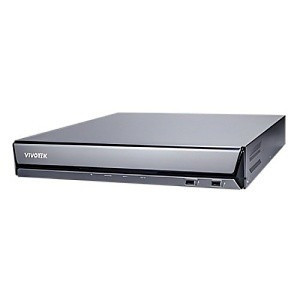
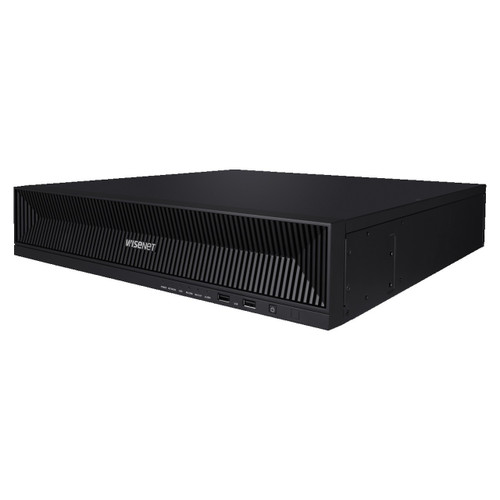
The Vivotek ND9425P and Hanwha XRN-1620B2 are both 16-channel, 4K-capable network video recorders running embedded Linux, aimed at mid-scale IP camera deployments where local recording, PoE management, and remote access are primary requirements. This comparison examines their recording bandwidth and storage scalability, physical build and power envelope, and integration ecosystem—three axes that most directly shape total-cost-of-ownership and long-term platform fit for installers and IT buyers evaluating either unit.
In This Guide
- Which NVR offers greater recording bandwidth and storage expansion?
- How do the two units compare on physical build, power draw, and operating environment?
- Which unit provides stronger integration, redundancy, and management software options?
- Which should you choose: the ND9425P or the XRN-1620B2?
- Side-by-Side Specs
- FAQ
Which NVR offers greater recording bandwidth and storage expansion?
The Hanwha XRN-1620B2 specifies a maximum recording bandwidth of 140 Mbps with a total network transmission bandwidth also rated at 140 Mbps. The Vivotek ND9425P lists a recording throughput of 64 Mbps and a network throughput (input/output total) of 88 Mbps. On bandwidth alone, the XRN-1620B2 provides roughly 2.2× the recording headroom, which directly affects how many channels can run at full bitrate simultaneously or how aggressively each camera stream can be encoded.
Storage expansion follows the same pattern. The XRN-1620B2 provides 8 internal SATA slots supporting up to 10 TB per drive, for a stated maximum of 80 TB raw capacity. The ND9425P provides 2 internal 3.5-inch HDD bays; a maximum per-drive or aggregate capacity figure is not specified in the provided specs—Vivotek defers to a recommended HDD list. Both units support RAID, but the ND9425P is limited to RAID 0 or 1 across two drives, while the XRN-1620B2's RAID configuration options are not detailed in the provided specs. External overflow to USB 3.0 storage is available on both units.
Playback bandwidth on the XRN-1620B2 is rated at a maximum of 32 Mbps. The ND9425P does not list a discrete playback bandwidth figure in the provided specs. The XRN-1620B2 also supports simultaneous playback of up to 64 channels (16 local, 16 per remote user across up to 3 remote users), compared to the ND9425P's stated 4-channel playback display.
How do the two units compare on physical build, power draw, and operating environment?
The Hanwha XRN-1620B2 is a larger, heavier unit: 440 × 89.8 × 428.4 mm and 5.71 kg. Its 3U-class footprint accommodates the 8-bay HDD chassis. The Vivotek ND9425P is significantly more compact at 366 × 320.3 × 46 mm and 2.5 kg (without HDD), consistent with a 1U slim or desktop form factor. Rack-space planning will differ substantially between the two.
Power consumption is also materially different. The ND9425P is rated at a maximum of 255 W. This figure includes integrated PoE+ delivery to cameras—the unit provides PoE+ ports for connected cameras, so the 255 W envelope covers both NVR operation and camera powering. The XRN-1620B2 is rated at a maximum of 130 W; however, the provided specs do not indicate that it includes integrated PoE ports—camera power would require a separate PoE switch. Buyers should account for this when comparing total rack-power budgets.
Both units share an identical operating temperature range of 0°C to 40°C. Humidity tolerances differ: the ND9425P is rated 0–95% RH (non-condensing assumed), while the XRN-1620B2 is rated 20–85% RH. The ND9425P carries a broader humidity floor, which may matter in environments that can trend toward very low relative humidity. Safety certifications listed for the ND9425P include CE, FCC, VCCI, C-Tick, UL, CB, BSMI, and BIS; the XRN-1620B2's certifications are not enumerated in the provided specs.
Which unit provides stronger integration, redundancy, and management software options?
The Hanwha XRN-1620B2 supports N+1 failover redundancy and Automatic Redundancy Backup (ARB)—neither feature is listed for the ND9425P in the provided specs. For deployments where recording continuity is a compliance or contractual requirement, this is a meaningful architectural distinction. The XRN-1620B2 also logs up to 100,000 entries per log type (system and event logs separately), while the ND9425P's log capacity is not quantified in the provided specs.
On camera protocol support, both units declare ONVIF compliance. The XRN-1620B2 additionally supports Hanwha's proprietary SUNAPI (server and client), enabling deeper integration with Wisenet AI cameras for object-attribute search. The ND9425P integrates with Vivotek's VCA (video content analytics) suite—VCA counting, crowd control, and event search are listed as supported—and connects to Vivotek's VAST 2 and Shepherd software platforms. The XRN-1620B2 lists compatibility with WAVE VMS, SSM, Smart Viewer, and third-party VMS via SUNAPI CGI.
PTZ preset capacity differs: the XRN-1620B2 specifies 300 presets; the ND9425P lists PTZ direction control, home, iris, preset, and patrol but does not enumerate a preset count in the provided specs. Remote user limits also differ—the XRN-1620B2 allows up to 10 live unicast and 20 multicast remote users; the ND9425P's remote user concurrency limit is not specified. The ND9425P includes Trend Micro IoT Security and cybersecurity management as listed features; the XRN-1620B2 lists 802.1x, IP filtering, encryption, device certificates (Hanwha Techwin Root CA), and signed firmware as its security feature set.
Which should you choose: the ND9425P or the XRN-1620B2?
Our take: The XRN-1620B2 is the stronger choice when storage capacity, recording bandwidth, and enterprise-grade redundancy are the primary requirements. Its 140 Mbps recording bandwidth is approximately 2.2× the ND9425P's 64 Mbps, its 8-bay chassis supports up to 80 TB versus the ND9425P's 2-bay configuration with unspecified maximum capacity, and it includes N+1 failover and ARB that the ND9425P does not list. Conversely, the ND9425P is the more appropriate choice when integrated PoE+ camera powering is needed from a single compact unit—its 255 W envelope covers camera power while the XRN-1620B2 requires a separate PoE switch, adding cost and rack space. The ND9425P also suits Vivotek-centric deployments leveraging VAST 2 and VCA analytics. Choose the XRN-1620B2 for larger, mixed-camera or Wisenet-AI deployments demanding high throughput and recording redundancy; choose the ND9425P for smaller, Vivotek-native sites where PoE simplicity and a compact footprint are valued.
Side-by-Side Comparison
Spec-for-spec, from manufacturer data.
| Specification | Vivotek ND9425P | Hanwha XRN-1620B2 |
|---|---|---|
| Max Input Channels | 16 | 16 |
| Max Input Resolution | 8MP (3840×2160) | 32MP |
| Recording Bandwidth | 64 Mbps | 140 Mbps |
| Network Throughput (Total) | 88 Mbps | 140 Mbps |
| Video Codecs | H.265, H.264, MJPEG | H.265, H.264, MJPEG |
| Hardware Decoding | Yes (hardware decoder) | — |
| Internal HDD Bays | 2 × 3.5-inch SATA | 8 × SATA |
| Max Storage Capacity | Not specified (see Vivotek HDD list) | 80 TB (8 × 10 TB) |
| RAID Support | RAID 0, 1 | Not specified in provided specs |
| Integrated PoE+ | Yes | Not listed in provided specs |
| Max Power Consumption | 255 W (includes PoE delivery) | 130 W (NVR only) |
| N+1 Failover / ARB | Not listed | Yes (both) |
| Video Outputs | 1× HDMI (4K), 1× VGA | 1× HDMI (4K), 1× VGA (FHD) |
| Alarm Inputs / Outputs | 4 in / 1 out | 4 in / 2 out |
| Ethernet Ports | 1× Gigabit RJ-45 | 2× Gigabit RJ-45 (LAN/WAN) |
| Operating Humidity | 0–95% RH | 20–85% RH |
| Dimensions (W×D×H mm) | 366 × 320.3 × 46 | 440 × 428.4 × 89.8 |
| Weight (without HDD) | 2.5 kg | 5.71 kg |
Frequently Asked Questions
Which should you choose: the ND9425P or the XRN-1620B2?
The XRN-1620B2 is the stronger choice when storage capacity, recording bandwidth, and enterprise-grade redundancy are the primary requirements. Its 140 Mbps recording bandwidth is approximately 2.2× the ND9425P's 64 Mbps, its 8-bay chassis supports up to 80 TB versus the ND9425P's 2-bay configuration with unspecified maximum capacity, and it includes N+1 failover and ARB that the ND9425P does not list. Conversely, the ND9425P is the more appropriate choice when integrated PoE+ camera powering is needed from a single compact unit—its 255 W envelope covers camera power while the XRN-1620B2 requires a separate PoE switch, adding cost and rack space. The ND9425P also suits Vivotek-centric deployments leveraging VAST 2 and VCA analytics. Choose the XRN-1620B2 for larger, mixed-camera or Wisenet-AI deployments demanding high throughput and recording redundancy; choose the ND9425P for smaller, Vivotek-native sites where PoE simplicity and a compact footprint are valued.
Is the ND9425P or XRN-1620B2 better for larger deployments?
For larger deployments, the XRN-1620B2 is better supported by its specifications. It offers 140 Mbps recording bandwidth versus the ND9425P's 64 Mbps, supports up to 80 TB across 8 SATA slots versus the ND9425P's 2-bay configuration, and includes N+1 failover redundancy and ARB that the ND9425P does not list. If a deployment will grow to use all 16 channels at high bitrates or require sustained recording uptime guarantees, the XRN-1620B2's specs align better with those demands.
Do I need a separate PoE switch if I buy the ND9425P or the XRN-1620B2?
The ND9425P includes integrated PoE+ ports and is rated at a maximum of 255 W, covering both NVR operation and camera power delivery. The provided specs for the XRN-1620B2 do not list integrated PoE ports—its power consumption is rated at 130 W and no PoE management feature is mentioned. Buyers selecting the XRN-1620B2 should budget for a separate PoE switch to power IP cameras, while ND9425P purchasers can connect cameras directly.
Which NVR has better cybersecurity and access-control features?
Both units address cybersecurity, but with different toolsets. The ND9425P lists Trend Micro IoT Security integration and a cybersecurity management feature. The XRN-1620B2 specifies 802.1x port-based access control, IP address filtering, user access logging, encryption, Hanwha Techwin Root CA device certificates, and signed firmware. The XRN-1620B2's listed security features are more granularly specified in the provided specs; buyers in regulated or enterprise environments should verify which of these specific capabilities their security policy requires before selecting.
Get a Second Opinion on Your Camera Choice
Share your site layout, coverage goals, and budget. Our team will validate the camera selection, flag anything we would change, and recommend products that match the use case.