
Vivotek ND9326P vs Hanwha QRN-830S: Specification Comparison
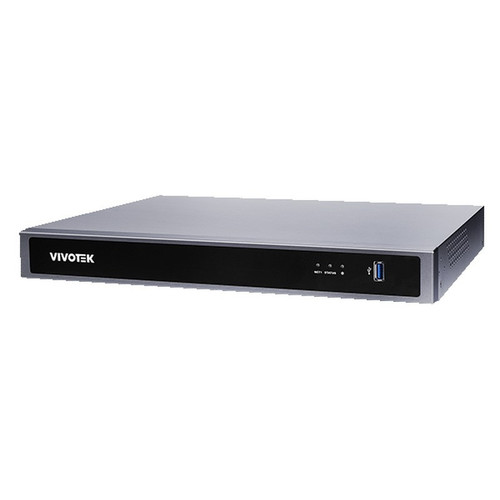
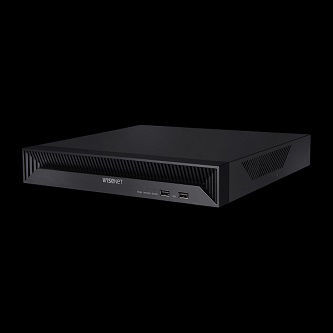
Both the Vivotek ND9326P and Hanwha QRN-830S are 8-channel network video recorders targeting small-to-mid commercial IP camera deployments. Each supports 8MP (4K) resolution, H.265/H.264/MJPEG compression, onboard PoE camera ports, a single HDMI output at 3840×2160, ONVIF compatibility, and local HDD storage. Buyers typically cross-shop units in this class on recording throughput, PoE budget, storage expandability, analytics depth, and vendor ecosystem fit. This comparison examines those dimensions using published specifications only.
In This Guide
- Which NVR delivers more recording headroom and decoding power for 8-channel 4K deployments?
- How do the two units compare on storage capacity, PoE power budget, and operating environment tolerances?
- Which unit offers broader analytics, ecosystem integration, and cybersecurity management capabilities?
- Which should you choose: the ND9326P or the QRN-830S?
- Side-by-Side Specs
- FAQ
Which NVR delivers more recording headroom and decoding power for 8-channel 4K deployments?
The ND9326P specifies a recording throughput of 192 Mbps and a network throughput of 224 Mbps across dual 10/100/1000 Mbps Ethernet ports. Its hardware decoder is rated for H.265/H.264 at 3840×2160 @ 120 fps or 1920×1080 @ 480 fps, with a maximum decoding resolution of 7680×2560. Live view supports 8 channels simultaneously across multiple layouts, and playback supports 4 simultaneous channels with storyboard thumbnail browsing up to 2 channels.
The QRN-830S specifies a maximum recording bandwidth of 80 Mbps and a maximum playback bandwidth of 32 Mbps. Its local display decodes at 8MP @ 60 fps or 1080p @ 240 fps via a single HDMI output at 3840×2160 (30 Hz). Simultaneous playback reaches 32 channels total (8 local, 8 per remote user, up to 3 remote users). Remote live unicast supports up to 10 users and multicast up to 20 users; the ND9326P does not publish equivalent remote-user limits in its provided specifications.
The ND9326P's 192 Mbps recording throughput is 2.4× the QRN-830S's 80 Mbps ceiling, which translates directly to headroom for higher-bitrate cameras, dual-stream recording, or future channel utilization. The QRN-830S's explicit remote-user concurrency figures (10 unicast live, 20 multicast) are a defined operational parameter the ND9326P spec sheet does not address.
How do the two units compare on storage capacity, PoE power budget, and operating environment tolerances?
The ND9326P accommodates two internal 3.5-inch HDDs with RAID 0 and RAID 1 support. Maximum individual HDD capacity is not specified in the provided data, but the dual-bay RAID capability offers redundancy unavailable on the QRN-830S. External storage is provided via USB 3.0, and scheduled backup to FTP is supported. The ND9326P draws up to 190 W maximum and operates from 100–240 V AC at 50/60 Hz, covering international mains voltages. Its operating temperature range is −10 °C to 55 °C (14 °F to 131 °F) at 0–95% humidity.
The QRN-830S provides a single SATA HDD slot rated to a maximum of 6 TB with no RAID capability listed. It is powered by a 54 VDC / 1.55 A DC adapter (no universal AC mains input specified) and draws a maximum of 84 W (287 BTU with one HDD and PoE active). Its PoE budget across 8× 10/100 PoE RJ-45 ports is 65 W. Operating temperature is 0 °C to 40 °C (32 °F to 104 °F) at 20–85% RH. The ND9326P's operating range extends 10 °C lower and 15 °C higher than the QRN-830S.
Storage architecture is a clear differentiator: the ND9326P offers two HDD bays plus RAID 1 redundancy versus the QRN-830S's single-drive, no-RAID design. The QRN-830S's 65 W PoE budget is a defined figure; the ND9326P lists PoE+ management support but does not publish a total PoE watt budget in the provided specifications. The ND9326P's wider thermal tolerance makes it more suitable for unconditioned or industrial-adjacent spaces.
Which unit offers broader analytics, ecosystem integration, and cybersecurity management capabilities?
The ND9326P includes onboard AI analytics branded as Smart Search II, supporting object search (people, vehicle), scene search (line crossing, intrusion, loitering), and attribute search for people (gender, age, clothing color, accessories) and vehicles (type, color). VCA counting and VCA event search are listed as supported. Cybersecurity features include Trend Micro IoT Security integration and a dedicated Cybersecurity Management function. The unit integrates with Vivotek's Shepherd and VSS (VAST Security Station) VMS platforms and mobile apps iViewer, VIVOCloud, and VORTEX (Android and iOS). Camera integration is via ONVIF Profile S.
The QRN-830S supports ONVIF Profile S and Hanwha's proprietary SUNAPI (server and client), enabling native integration with Hanwha's Wisenet ecosystem. Smart Search is listed as a playback/search mode. Camera setup includes polygon-based motion detection (4- and 8-point), focus, image parameter, fisheye dewarping mode, and hallway view configuration. Security features include IP address filtering, 802.1x port authentication, encryption, device certificate (Hanwha Techwin Root CA), and signed firmware. N+1 failover and ARB (Automatic Recovery Backup) redundancy are specified. Mobile app support covers iOS and Android via SUNAPI/CGI. Dedicated attribute-level AI analytics (gender, age, color classification) are not listed in the provided specifications.
The ND9326P's attribute-level deep learning analytics are a functional differentiator for forensic search workloads. The QRN-830S's N+1 failover, ARB, signed firmware, and 802.1x support provide enterprise-grade redundancy and authentication features not listed in the ND9326P's provided specifications. Buyers committed to Hanwha Wisenet cameras benefit from the QRN-830S's native SUNAPI integration; mixed or Vivotek-centric deployments align with the ND9326P and VSS.
Which should you choose: the ND9326P or the QRN-830S?
Our take: The ND9326P is the stronger choice when recording bandwidth, storage redundancy, onboard AI analytics depth, and wider operating temperature tolerance are the primary decision criteria. It records at 192 Mbps versus the QRN-830S's 80 Mbps — a 2.4× advantage — supports dual HDD bays with RAID 0/1 versus a single 6 TB drive with no RAID, and adds attribute-level AI search (age, gender, clothing color, vehicle type) not listed for the QRN-830S. Its −10 °C to 55 °C thermal range extends 10 °C below and 15 °C above the QRN-830S's 0–40 °C window. The QRN-830S counters with N+1 failover, ARB redundancy, 802.1x and signed-firmware security, a published 65 W PoE budget, and native SUNAPI integration for Hanwha Wisenet camera estates. Choose the QRN-830S for a Hanwha-centric deployment requiring defined PoE budgeting and enterprise failover; choose the ND9326P for higher-throughput, analytics-intensive, or environmentally demanding installations.
Side-by-Side Comparison
Spec-for-spec, from manufacturer data.
| Specification | Vivotek ND9326P | Hanwha QRN-830S |
|---|---|---|
| Camera Channels | 8 | 8 |
| Max Recording Resolution | 8MP (3840×2160) | 8MP (3840×2160) |
| Recording Throughput | 192 Mbps | 80 Mbps |
| Video Compression | H.265, H.264, MJPEG | H.265, H.264, MJPEG |
| HDMI Output Resolution | 3840×2160 | 3840×2160 (30 Hz) |
| Hardware Decode Capability | 3840×2160 @ 120 fps; 1080p @ 480 fps | 8MP @ 60 fps; 1080p @ 240 fps |
| HDD Bays | 2 × 3.5" internal | 1 × SATA (max 6TB) |
| RAID Support | RAID 0, RAID 1 | — |
| PoE Ports | 8 (PoE+ managed) | 8 × 10/100 PoE |
| PoE Budget | — | 65 W |
| Alarm Inputs / Outputs | 4 in / 1 out | — |
| Onboard AI Analytics | Object, scene, attribute search (DLPU) | Smart Search (mode listed; attribute detail not specified) |
| N+1 Failover / ARB | — | Supported |
| 802.1x / Signed Firmware | — | Supported |
| Operating Temperature | −10 °C to 55 °C | 0 °C to 40 °C |
| Max Power Consumption | 190 W | 84 W (1 HDD, PoE on) |
| Input Voltage | 100–240 V AC, 50/60 Hz | 54 VDC adapter |
| Dimensions (W×D×H mm) | 365 × 315 × 44 | 300 × 238.9 × 47.6 |
| Weight | 2.65 kg | 1.32 kg |
| Camera Protocol | ONVIF Profile S | ONVIF Profile S, SUNAPI |
| Warranty | 2 Year | — |
Frequently Asked Questions
Which should you choose: the ND9326P or the QRN-830S?
The ND9326P is the stronger choice when recording bandwidth, storage redundancy, onboard AI analytics depth, and wider operating temperature tolerance are the primary decision criteria. It records at 192 Mbps versus the QRN-830S's 80 Mbps — a 2.4× advantage — supports dual HDD bays with RAID 0/1 versus a single 6 TB drive with no RAID, and adds attribute-level AI search (age, gender, clothing color, vehicle type) not listed for the QRN-830S. Its −10 °C to 55 °C thermal range extends 10 °C below and 15 °C above the QRN-830S's 0–40 °C window. The QRN-830S counters with N+1 failover, ARB redundancy, 802.1x and signed-firmware security, a published 65 W PoE budget, and native SUNAPI integration for Hanwha Wisenet camera estates. Choose the QRN-830S for a Hanwha-centric deployment requiring defined PoE budgeting and enterprise failover; choose the ND9326P for higher-throughput, analytics-intensive, or environmentally demanding installations.
Is the ND9326P or QRN-830S better for larger deployments where recording bandwidth matters?
The ND9326P specifies 192 Mbps recording throughput versus the QRN-830S's 80 Mbps maximum. For deployments using high-bitrate 4K cameras or planning to maximize all 8 channels at full quality, the ND9326P provides substantially more headroom. The QRN-830S's 80 Mbps ceiling may require bitrate management or dual-stream trade-offs at full channel load.
Which NVR is better suited for installations in harsh or unconditioned environments?
The ND9326P operates from −10 °C to 55 °C (14 °F to 131 °F), while the QRN-830S is rated 0 °C to 40 °C (32 °F to 104 °F). The ND9326P's wider thermal tolerance makes it more appropriate for unconditioned utility spaces, warehouses, or outdoor enclosures where ambient temperatures may fall below freezing or rise above typical office conditions.
Does either NVR offer protection against drive failure?
The ND9326P supports RAID 0 (striping) and RAID 1 (mirroring) across its two 3.5-inch internal HDD bays; RAID 1 provides drive-failure redundancy without data loss. The QRN-830S has a single SATA HDD slot with no RAID support listed in its specifications, so a drive failure results in data loss. The QRN-830S does list N+1 NVR-level failover and ARB (Automatic Recovery Backup), which protect against NVR unit failure rather than individual drive failure.
Get a Second Opinion on Your Camera Choice
Share your site layout, coverage goals, and budget. Our team will validate the camera selection, flag anything we would change, and recommend products that match the use case.