
Vivotek FD9187-HT-V3 vs Vivotek MD8564-EH-V2: Specification Comparison
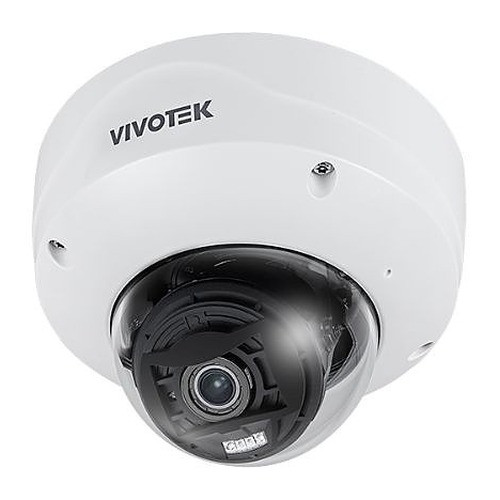
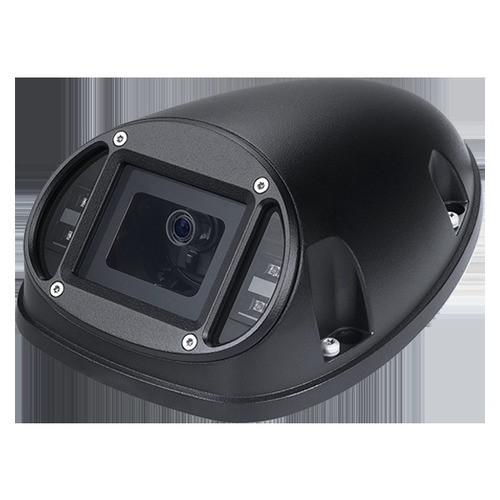
Both the Vivotek FD9187-HT-V3 and MD8564-EH-V2 are 5MP dome cameras offering H.265 compression, PoE power, IK10 impact resistance, and Day/Night IR — placing them in the same resolution class and broadly the same fixed-dome category. However, they are purpose-built for entirely different deployment scenarios: the FD9187-HT-V3 is an indoor motorized-varifocal dome for general surveillance, while the MD8564-EH-V2 is an outdoor vehicle-mount dome with an M12 ruggedized connector and IP68 sealing. This comparison examines where each model's specifications diverge and which application context each serves.
In This Guide
How do the imaging specs compare?
Both cameras deliver 5MP resolution at up to 30fps. The FD9187-HT-V3 uses a motorized varifocal 2.7–13.5mm lens with P-iris control, enabling remote zoom and focus adjustment across a 5× optical range without physically relocating the camera. The MD8564-EH-V2 uses a fixed 3.6mm f/2.0 lens on a 1/2.7" sensor, offering no optical zoom but a consistent wide-angle view suited to close-range vehicle identification. The MD8564-EH-V2 also supports 60fps at 1080p resolution, a mode not listed in the FD9187-HT-V3 specifications.
Both cameras share 50-meter IR illumination range and Day/Night functionality. The MD8564-EH-V2 provides explicit minimum illumination figures: 0.1 lux at f/2.0 in color, 0.01 lux in B&W, and 0 lux with IR active. Comparable minimum illumination figures are not listed in the FD9187-HT-V3 specifications. Both models include WDR Pro. The FD9187-HT-V3 specifies Smart VCA analytics including object detection, line crossing, and intrusion detection. The MD8564-EH-V2 specifies Deep Learning Processing Unit (DLPU)-based analytics and VMD. Neither camera's sensor size is specified for the FD9187-HT-V3; the MD8564-EH-V2 lists a 1/2.7" sensor.
What about installation and environment?
The FD9187-HT-V3 carries IP66/IP67 and IK10 ratings and is designated for indoor use, with a compact Ø139 × 104mm housing weighing 538g. It accepts power via PoE 802.3af (Class 0) or DC12V and mounts to ceiling or wall via standard conduit. The MD8564-EH-V2 is rated IP68 — a higher ingress protection level indicating continuous submersion resistance — and also carries IK10. It is designed for outdoor and vehicle/fleet deployment, using an M12 female 4-pin D-coded Ethernet connector rather than a standard RJ45, which demands compatible vehicle-grade cabling infrastructure. Its dimensions are 241 × 162 × 83mm.
The MD8564-EH-V2 specifies an operating temperature range of -20°C to 55°C; no operating temperature range is listed for the FD9187-HT-V3. The MD8564-EH-V2 draws under 13W maximum via PoE 802.3af; PoE wattage is not explicitly stated for the FD9187-HT-V3 beyond its 802.3af Class 0 designation (maximum 15.4W). The MD8564-EH-V2 also includes tool-free pan (±170°), tilt (0°–40°), and ±25° pan mechanical adjustment, along with 48× digital ePTZ — positional flexibility not listed for the FD9187-HT-V3.
Which fits your VMS and analytics better?
Both cameras support ONVIF; the MD8564-EH-V2 explicitly lists Profile G, S, and T compliance. The FD9187-HT-V3 lists ONVIF as supported but does not specify which profiles. Both cameras include a microSD/SDHC/SDXC card slot for on-board edge storage. The MD8564-EH-V2 specifies 2GB onboard memory versus 1GB for the FD9187-HT-V3.
The FD9187-HT-V3 includes two-way audio, which the MD8564-EH-V2 does not list. The FD9187-HT-V3 offers Smart VCA with Vision Object Analytics, line crossing, and intrusion detection processed on an edge SoC — relevant for perimeter and access-point monitoring indoors. The MD8564-EH-V2 includes a DLPU for deep learning analytics and VMD but does not list two-way audio. On cybersecurity, the MD8564-EH-V2 explicitly documents brute force detection, secure boot, signed firmware, IEEE 802.1x, HTTPS, and digest authentication; comparable cybersecurity feature listings are not provided in the FD9187-HT-V3 specifications.
Which should you choose: the FD9187-HT-V3 or the MD8564-EH-V2?
Our take: The FD9187-HT-V3 is the stronger choice when you need flexible indoor coverage with remote lens adjustment, two-way audio, and rule-based Smart VCA analytics. Its 2.7–13.5mm motorized varifocal lens with P-iris provides a 5× optical zoom range that the MD8564-EH-V2's fixed 3.6mm lens cannot match, making it significantly more adaptable to varying scene depths. Conversely, the MD8564-EH-V2 is the correct specification for outdoor vehicle and fleet applications: its IP68 rating exceeds the FD9187-HT-V3's IP67, its M12 ruggedized connector is purpose-built for vehicle wiring harnesses, and it adds 60fps at 1080p, explicit minimum illumination figures (0.01 lux B&W), a documented -20°C to 55°C operating range, and a formal cybersecurity feature set. Choose the FD9187-HT-V3 for indoor varifocal general surveillance; specify the MD8564-EH-V2 exclusively for outdoor vehicle-mount or harsh-environment fixed-lens deployments.
Side-by-Side Comparison
Spec-for-spec, from manufacturer data.
| Specification | Vivotek FD9187-HT-V3 | Vivotek MD8564-EH-V2 |
|---|---|---|
| Resolution | 5MP @ 30fps | 5MP @ 30fps; 60fps @ 1080p |
| Image Sensor Size | — | 1/2.7" |
| Lens / Focal Length | Motorized varifocal 2.7–13.5mm, P-iris | Fixed 3.6mm f/2.0 |
| Min. Illumination | — | 0.1 lux (Color); 0.01 lux (B&W); 0 lux with IR |
| IR Range | 50m | 50m |
| WDR | WDR Pro | WDR Pro |
| Video Compression | H.265, H.264, MJPEG | H.265, H.264, MJPEG |
| IP Rating | IP66 / IP67 | IP68 |
| IK / Impact Rating | IK10 | IK10 |
| Power Input | PoE 802.3af Class 0; DC12V | PoE 802.3af (under 13W max) |
| Network Interface | Standard Ethernet (RJ45 implied) | M12, Female, 4-pin D-coded |
| Operating Temperature | — | -20°C to 55°C |
| ONVIF | Yes | Profile G, S, T |
| Edge Storage | microSD/SDHC/SDXC | microSD/SDHC/SDXC |
| Audio | Two-way audio | — |
| Analytics | Smart VCA; Vision Object Analytics; line crossing; intrusion detection | Deep Learning (DLPU); VMD |
| Onboard Memory | 1GB | 2GB |
| Dimensions | Ø139 × 104mm | 241 × 162 × 83mm |
| Weight | 538g | — |
| Environment Rating | Indoor | Outdoor / Vehicle |
| Warranty | 36 Months | — |
Frequently Asked Questions
Which should you choose: the FD9187-HT-V3 or the MD8564-EH-V2?
The FD9187-HT-V3 is the stronger choice when you need flexible indoor coverage with remote lens adjustment, two-way audio, and rule-based Smart VCA analytics. Its 2.7–13.5mm motorized varifocal lens with P-iris provides a 5× optical zoom range that the MD8564-EH-V2's fixed 3.6mm lens cannot match, making it significantly more adaptable to varying scene depths. Conversely, the MD8564-EH-V2 is the correct specification for outdoor vehicle and fleet applications: its IP68 rating exceeds the FD9187-HT-V3's IP67, its M12 ruggedized connector is purpose-built for vehicle wiring harnesses, and it adds 60fps at 1080p, explicit minimum illumination figures (0.01 lux B&W), a documented -20°C to 55°C operating range, and a formal cybersecurity feature set. Choose the FD9187-HT-V3 for indoor varifocal general surveillance; specify the MD8564-EH-V2 exclusively for outdoor vehicle-mount or harsh-environment fixed-lens deployments.
Is the FD9187-HT-V3 or MD8564-EH-V2 better for low-light performance?
The MD8564-EH-V2 provides documented minimum illumination figures: 0.1 lux in color, 0.01 lux in B&W, and 0 lux with IR active at f/2.0. Equivalent figures are not listed in the FD9187-HT-V3 specifications. Both cameras share 50-meter IR range and Day/Night functionality, so a direct low-light comparison cannot be fully quantified from the available specs for the FD9187-HT-V3.
Can either camera be used outdoors on a vehicle or mobile platform?
The MD8564-EH-V2 is specifically designed for vehicle and fleet surveillance: it carries an IP68 rating, uses an M12 ruggedized Ethernet connector, and specifies a -20°C to 55°C operating range. The FD9187-HT-V3 is rated for indoor use with IP66/IP67 and uses a standard RJ45-style interface; it is not specified for vehicle mounting or the vibration and submersion demands of mobile platforms.
Which camera supports two-way audio?
The FD9187-HT-V3 includes two-way audio per its listed specifications. The MD8564-EH-V2 does not list audio capability in its provided specifications.
Get a Second Opinion on Your Camera Choice
Share your site layout, coverage goals, and budget. Our team will validate the camera selection, flag anything we would change, and recommend products that match the use case.