
Ubiquiti U7-LITE-US vs TP-Link EAP775-WALL: Specification Comparison
Both the Ubiquiti U7-LITE-US and the TP-Link EAP775-WALL are Wi-Fi 7 (802.11be) wireless access points targeting enterprise and commercial deployments where wired backhaul is available. The U7-LITE-US is a ceiling-mount unit aimed at open-plan and high-density coverage, while the EAP775-WALL is a wall-plate form factor designed for in-wall installation where ceiling mounting is impractical. This comparison evaluates RF capability and throughput, physical installation and power requirements, and management ecosystem compatibility to help integrators choose the right unit for their deployment context.
In This Guide
- Which access point delivers more RF throughput and band coverage?
- How do form factor, mounting, and power requirements affect installation planning?
- Are these access points compatible with the same management platform and controller infrastructure?
- Which should you choose: the U7-LITE-US or the EAP775-WALL?
- Side-by-Side Specs
- FAQ
Which access point delivers more RF throughput and band coverage?
The U7-LITE-US is a dual-band (2.4 GHz + 5 GHz) Wi-Fi 7 AP with 4 spatial streams and a maximum aggregate speed listed at 2.5 Gbps — matching its 2.5 GbE uplink port. Channel bandwidth support spans HT 20/40, VHT 20/40/80/160, HE 20/40/80/160, and EHT 20/40/80/160/240 MHz, covering the full 802.11be channel-width ladder including the 240 MHz EHT mode.
The EAP775-WALL is rated BE11000, indicating a tri-band (2.4 GHz + 5 GHz + a third band, typically 6 GHz in BE11000-class products) aggregate throughput figure of 11 Gbps. This is a substantially higher headline number. However, the provided specs do not explicitly confirm the 6 GHz band or list spatial stream count for the EAP775-WALL, so the BE11000 tier should be verified against TP-Link's datasheet before specifying. WPA3 encryption is confirmed for the EAP775-WALL; the U7-LITE-US specs do not explicitly list a WPA generation.
On raw throughput numbers as provided, the EAP775-WALL's BE11000 rating represents a higher capacity ceiling than the U7-LITE-US's 2.5 Gbps specification, assuming the tri-band configuration is confirmed.
How do form factor, mounting, and power requirements affect installation planning?
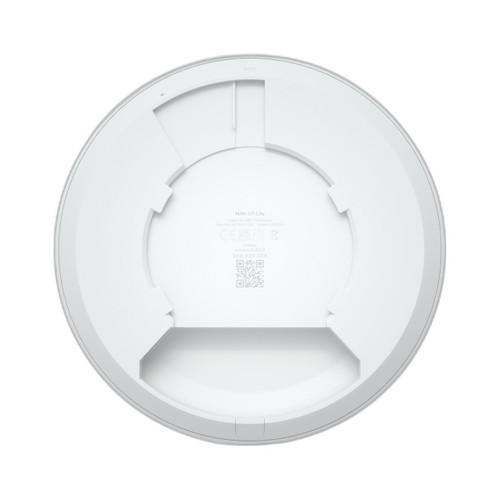
The U7-LITE-US is a ceiling/wall-mountable disc (Ø171.5 × 33 mm, 0.750 lb) designed for overhead deployment in open areas. It draws a maximum of 13W and is powered by 802.3af PoE (42.5–57V DC), which is widely supported by standard PoE switches and injectors. Its single 2.5 GbE RJ45 port serves as both uplink and power input. Coverage is specified at 115 m² (1,250 ft²) per unit.
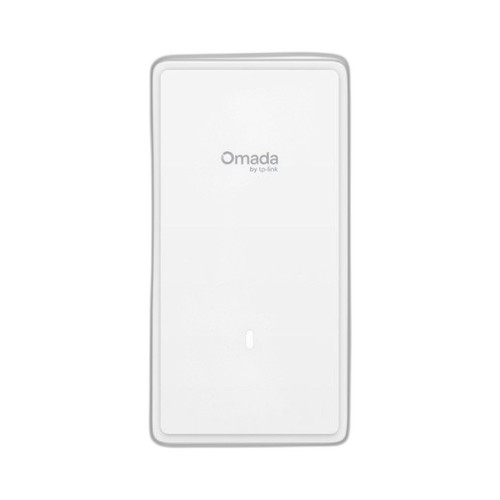
The EAP775-WALL is a wall-plate form factor explicitly intended for in-wall mounting — the category of deployment where ceiling installation is impractical, such as hotel rooms, classrooms with drop ceilings blocked, or corridor walls. Its specs confirm PoE powering and a 100 m maximum range, but wattage draw, PoE standard (802.3af vs. 802.3at vs. 802.3bt), physical dimensions, and weight are not provided in the available spec data. The 'Mount Type: Rack' entry in the raw data appears to be a data-entry artifact inconsistent with the product's wall-plate classification.
For installers, the U7-LITE-US offers well-defined power budgeting (13W, 802.3af confirmed). The EAP775-WALL's PoE class is unspecified in the provided data, making switch port power budgeting indeterminate without consulting the TP-Link datasheet.
Are these access points compatible with the same management platform and controller infrastructure?
The U7-LITE-US requires UniFi Network Version 9.0.114 or later and integrates exclusively into Ubiquiti's UniFi controller ecosystem. Deployment, monitoring, RF optimization, and firmware updates are all managed through UniFi — either the cloud-hosted UniFi Site Manager or a self-hosted UniFi Network Server. Organizations already running UniFi infrastructure can add the U7-LITE-US with no new management tooling.
The EAP775-WALL is managed via TP-Link's Omada SDN platform, which supports Access Point and Mesh operating modes per the provided specs. Omada offers both hardware controller (OC200/OC300), software controller, and cloud-based management options. The two platforms are entirely separate and non-interoperable; a site cannot mix UniFi and Omada APs under a single pane of glass.
The EAP775-WALL also lists Bluetooth/IoT capability in its specs, which is absent from the U7-LITE-US specification set. If IoT device onboarding or BLE scanning is a deployment requirement, the EAP775-WALL has a stated feature the U7-LITE-US does not. Platform choice is therefore a hard constraint: UniFi-standardized sites should select the U7-LITE-US; Omada-standardized sites should select the EAP775-WALL.
Which should you choose: the U7-LITE-US or the EAP775-WALL?
Our take: The U7-LITE-US is the stronger choice when the deployment is UniFi-managed, ceiling installation is feasible, and switch infrastructure is limited to 802.3af (15W) PoE ports. Its 13W draw, confirmed 802.3af compliance, 2.5 GbE uplink, and 1,250 ft² coverage area are all precisely specified, giving integrators deterministic power-budget and coverage planning. The EAP775-WALL's BE11000 aggregate throughput rating significantly exceeds the U7-LITE-US's 2.5 Gbps ceiling on paper, and its wall-plate form factor fills installations where overhead cabling is impractical — advantages the U7-LITE-US cannot match in those scenarios. However, the EAP775-WALL's PoE wattage class and spatial stream count are absent from the provided specs, introducing planning uncertainty. Platform lock-in is decisive: UniFi and Omada are non-interoperable, so existing controller investment should drive selection before any RF comparison.
Side-by-Side Comparison
Spec-for-spec, from manufacturer data.
| Specification | Ubiquiti U7-LITE-US | TP-Link EAP775-WALL |
|---|---|---|
| Wi-Fi Standard | Wi-Fi 7 (802.11be) | Wi-Fi 7 (802.11be) |
| Aggregate Speed | 2.5 Gbps | 11 Gbps (BE11000) |
| Bands | 2.4 GHz + 5 GHz (dual-band) | 2.4 GHz + 5 GHz dual-band (tri-band unconfirmed in provided specs) |
| Spatial Streams | 4 | — |
| Channel Bandwidth | EHT 20/40/80/160/240 MHz | — |
| Form Factor | Ceiling/wall-mount disc | Wall plate |
| Dimensions | Ø171.5 × 33 mm | — |
| Weight | 0.750 lb | — |
| Uplink Port | 1× 2.5 GbE RJ45 | — |
| PoE Standard | 802.3af | PoE (standard unspecified) |
| Power Consumption | 13W | — |
| Coverage Area | 115 m² (1,250 ft²) | 100 m max range |
| Management Platform | UniFi (v9.0.114+) | Omada SDN |
| Operating Modes | Access Point | Access Point, Mesh |
| Bluetooth / IoT | — | Yes (listed) |
| Security | — | WPA3 |
Frequently Asked Questions
Which should you choose: the U7-LITE-US or the EAP775-WALL?
The U7-LITE-US is the stronger choice when the deployment is UniFi-managed, ceiling installation is feasible, and switch infrastructure is limited to 802.3af (15W) PoE ports. Its 13W draw, confirmed 802.3af compliance, 2.5 GbE uplink, and 1,250 ft² coverage area are all precisely specified, giving integrators deterministic power-budget and coverage planning. The EAP775-WALL's BE11000 aggregate throughput rating significantly exceeds the U7-LITE-US's 2.5 Gbps ceiling on paper, and its wall-plate form factor fills installations where overhead cabling is impractical — advantages the U7-LITE-US cannot match in those scenarios. However, the EAP775-WALL's PoE wattage class and spatial stream count are absent from the provided specs, introducing planning uncertainty. Platform lock-in is decisive: UniFi and Omada are non-interoperable, so existing controller investment should drive selection before any RF comparison.
Can I manage the U7-LITE-US and EAP775-WALL from the same controller?
No. The U7-LITE-US requires Ubiquiti's UniFi Network controller (version 9.0.114 or later), while the EAP775-WALL uses TP-Link's Omada SDN platform. The two ecosystems are not interoperable, so a mixed deployment would require maintaining two separate management systems.
Will my existing 802.3af PoE switch power both access points?
The U7-LITE-US is confirmed to operate on 802.3af PoE at under 15W (13W max), so any 802.3af-capable switch port will power it. The EAP775-WALL's PoE standard and wattage requirement are not specified in the available data — consult the TP-Link EAP775-WALL datasheet to confirm whether 802.3af is sufficient or whether 802.3at/bt is required before switch selection.
Is the U7-LITE-US or EAP775-WALL better for a hotel room or classroom wall-port installation?
The EAP775-WALL is the purpose-built choice for that scenario. Its wall-plate form factor is designed specifically for in-wall mounting where ceiling installation is impractical. The U7-LITE-US is a ceiling/overhead-mount disc and is not a wall-plate replacement unit, so it does not fit a standard wall-plate electrical gang box.
Get a Second Opinion on Your Camera Choice
Share your site layout, coverage goals, and budget. Our team will validate the camera selection, flag anything we would change, and recommend products that match the use case.