
TSC A001-1001 vs Zebra ZD4AH42-D01X01EZ: Specification Comparison
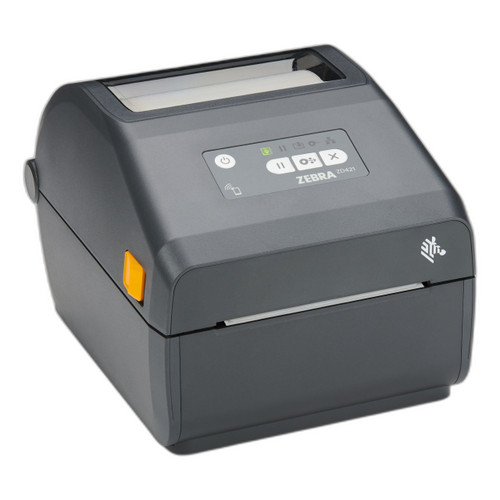
Both the TSC A30RB-A001-1001 and the Zebra ZD4AH42-D01X01EZ are compact, direct thermal mobile printers aimed at field and point-of-care labeling workflows. Each unit foregoes ink and toner, relies on wireless connectivity for host integration, and targets workers who need on-the-spot label or receipt output. The comparison turns on connectivity breadth, media handling, integrated scanning capability, and the supporting hardware specifications—battery, memory, and OS—that determine how each device fits into a broader mobile workflow.

In This Guide
- Which printer offers broader wireless connectivity and workflow integration?
- How do print speed, media range, resolution, and integrated scanning compare?
- What do battery capacity, onboard memory, and the operating platform tell buyers about durability and total cost of ownership?
- Which should you choose: the A001-1001 or the ZD4AH42-D01X01EZ?
- Side-by-Side Specs
- FAQ
Which printer offers broader wireless connectivity and workflow integration?
The TSC A30RB-A001-1001 ships with both Wi-Fi and Bluetooth (MFi-certified), meaning it can pair directly with iOS handheld devices over Bluetooth while also connecting to a Wi-Fi network simultaneously. That dual-radio approach is a meaningful advantage in WMS-driven retail and logistics environments where a worker's handheld scanner communicates over Bluetooth while print jobs are also routed over the WLAN.
The Zebra ZD4AH42-D01X01EZ lists Wi-Fi 802.11 a/b/g/n/ac as its primary wireless path. The spec sheet also notes Bluetooth Low Energy (BLE) and an NFC Print Touch tag for pairing, though the BLE notation suggests a pairing/setup role rather than a full Bluetooth print channel. Zebra's Link-OS operating environment is a well-documented platform with broad EMM and SDK support, which matters in enterprises already standardized on Zebra's ecosystem. The TSC's connectivity advantage is its explicit dual-mode MFi Bluetooth; the Zebra's advantage is the structured Link-OS software layer and the 802.11ac radio band.
How do print speed, media range, resolution, and integrated scanning compare?
On raw print speed, the TSC edges ahead at 5 inches per second versus the Zebra's 4 in./sec (the Zebra's 4 ips figure is noted at 300 dpi). Both units share a 203 dpi baseline resolution; the Zebra spec additionally references 300 dpi capability, suggesting a higher-resolution print mode is available on that unit—no equivalent higher-resolution mode is cited for the TSC.
Media handling is a key differentiator. The TSC explicitly supports labels, receipts, and linerless media up to a 2.83-inch print width. The Zebra supports a label width range of 1 to 4 inches, offering more flexibility at the wide end for larger format labels. The Zebra spec does not list receipt or linerless media support.
The Zebra carries an integrated 2D scan engine reading QR Code, Data Matrix, PDF417, Code 128, Code 39, UPC, and EAN symbologies—a hardware capability the TSC entirely lacks. For point-of-care or scan-and-print workflows (verify a wristband barcode, then print a new label), the Zebra's built-in scanner eliminates a separate handheld device. The TSC has no scan engine listed in its specifications.
What do battery capacity, onboard memory, and the operating platform tell buyers about durability and total cost of ownership?
The Zebra ZD4AH42-D01X01EZ specifies a 2750 mAh lithium-ion battery with an estimated 4–6 hours of intermittent use. No battery capacity or runtime figure is provided in the TSC A30RB-A001-1001 specifications, making a direct endurance comparison impossible on available data alone.
Memory figures are similarly one-sided: the Zebra lists 512 MB Flash and 256 MB SDRAM, supporting its Link-OS environment, stored formats, fonts, and graphics. The TSC specification does not disclose a memory configuration.
On warranty, the TSC carries a 2-year term versus the Zebra's 1-year term—a concrete TCO difference that favors the TSC for buyers without a Zebra service contract. The Zebra's Link-OS platform supports Zebra's Print DNA suite (device management, analytics, profile manager), whereas the TSC's management software ecosystem is not described in the provided specifications. Buyers in Zebra-standardized fleets gain immediate software continuity; buyers starting fresh should evaluate what management tooling each vendor actually provides for their scale.
Which should you choose: the A001-1001 or the ZD4AH42-D01X01EZ?
Our take: The TSC A30RB-A001-1001 is the stronger choice when the deployment requires dual Wi-Fi and MFi Bluetooth connectivity, linerless or receipt media support, and a longer 2-year warranty at the outset. Concretely: it prints 1 ips faster (5 vs. 4 ips), covers linerless and receipt stock the Zebra does not list, and doubles the warranty period (2 years vs. 1 year). The Zebra ZD4AH42-D01X01EZ, however, is the clear choice when the workflow demands scan-and-print in a single device—its integrated 2D engine reads QR, Data Matrix, PDF417, and all major 1D codes natively, a capability the TSC lacks entirely. The Zebra also supports a wider label range (1–4 inches vs. 2.83 inches), backs 512 MB Flash and 256 MB SDRAM, and runs Link-OS for enterprises already standardized on Zebra fleet management. Logistics and retail teams printing receipts or linerless tickets lean TSC; healthcare and compliance scan-and-print deployments lean Zebra.
Side-by-Side Comparison
Spec-for-spec, from manufacturer data.
| Specification | TSC A001-1001 | Zebra ZD4AH42-D01X01EZ |
|---|---|---|
| Product Type | Direct Thermal Mobile Printer | Direct Thermal Mobile Printer |
| Print Method | Direct Thermal | Direct Thermal |
| Print Speed | 5 ips | 4 in./sec (at 300 dpi) |
| Print Resolution | 203 dpi | 203 dpi / 300 dpi |
| Max Print Width | 2.83 inches | 1–4 inches |
| Media Types | Labels, Receipts, Linerless | Labels (receipt/linerless not listed) |
| Wi-Fi | Yes | 802.11 a/b/g/n/ac |
| Bluetooth | Yes (MFi) | BLE / NFC Print Touch (pairing) |
| Integrated Scan Engine | — | 2D (QR, Data Matrix, PDF417, Code 128, Code 39, UPC, EAN) |
| Battery Capacity | — | 2750 mAh Li-Ion (4–6 hrs intermittent) |
| Memory | — | 512 MB Flash; 256 MB SDRAM |
| Operating System / Platform | — | Link-OS |
| Display | Color LCD | — |
| Warranty | 2 Years | 1 Year |
| Cutter Option | — | Field-installable cutter (listed) |
| Datasheet | /content/product-datasheets/A30RB-A001-1001.pdf | /content/product-datasheets/ZD4AH42-D01X01EZ.pdf |
Frequently Asked Questions
Which should you choose: the A001-1001 or the ZD4AH42-D01X01EZ?
The TSC A30RB-A001-1001 is the stronger choice when the deployment requires dual Wi-Fi and MFi Bluetooth connectivity, linerless or receipt media support, and a longer 2-year warranty at the outset. Concretely: it prints 1 ips faster (5 vs. 4 ips), covers linerless and receipt stock the Zebra does not list, and doubles the warranty period (2 years vs. 1 year). The Zebra ZD4AH42-D01X01EZ, however, is the clear choice when the workflow demands scan-and-print in a single device—its integrated 2D engine reads QR, Data Matrix, PDF417, and all major 1D codes natively, a capability the TSC lacks entirely. The Zebra also supports a wider label range (1–4 inches vs. 2.83 inches), backs 512 MB Flash and 256 MB SDRAM, and runs Link-OS for enterprises already standardized on Zebra fleet management. Logistics and retail teams printing receipts or linerless tickets lean TSC; healthcare and compliance scan-and-print deployments lean Zebra.
Does the TSC A30RB-A001-1001 or the Zebra ZD4AH42-D01X01EZ work better for healthcare point-of-care labeling?
The Zebra ZD4AH42-D01X01EZ is purpose-aligned for point-of-care use: its integrated 2D scan engine reads patient wristband barcodes (QR, Data Matrix, PDF417) natively before printing a replacement or specimen label, and its Link-OS platform supports healthcare EMM workflows. The TSC A30RB-A001-1001 has no scan engine listed in its specifications and would require a separate scanner to accomplish the same scan-and-print task.
Which printer is better suited to retail and field logistics teams printing receipts and linerless labels?
The TSC A30RB-A001-1001 explicitly supports labels, receipts, and linerless media. The Zebra ZD4AH42-D01X01EZ's provided specifications list label widths (1–4 inches) but do not mention receipt or linerless media support. For workflows that depend on linerless stock or thermal receipts, the TSC is the only unit whose specifications confirm that capability.
How do the warranties compare, and which unit has a lower long-term support cost?
The TSC A30RB-A001-1001 carries a stated 2-year warranty; the Zebra ZD4AH42-D01X01EZ carries a 1-year warranty. All else equal, the TSC's longer base warranty reduces the immediate risk of out-of-pocket repair costs. Zebra typically offers extended service contracts (Zebra OneCare), but no contract pricing is available in the provided specifications for either unit, so buyers should obtain current service contract pricing from each vendor before making a total-cost-of-ownership determination.
More Label Printer Comparisons
- TSC 99-082A101-1001 vs Zebra ZD4A042-301X01EZ
- TSC 99-082A101-1001 vs Zebra ZD4A042-D01X01EZ
- TSC 99-082A101-1001 vs Zebra ZD4AH42-D01X01EZ
- TSC 99-082A101-1001 vs Zebra ZD4A022-D01X01EZ
- TSC 99-082A101-1001 vs TSC 99-083A501-0011
- TSC 99-082A101-1001 vs TSC 99-052A003-0411
Label Printer Buying Guides
Get a Second Opinion on Your Camera Choice
Share your site layout, coverage goals, and budget. Our team will validate the camera selection, flag anything we would change, and recommend products that match the use case.