
TP-Link SG2218P vs Vivotek FGT-180P-250: Specification Comparison
Both the TP-Link SG2218P and the Vivotek AW-FGT-180P-250 are 18-port PoE Gigabit switches targeting IP surveillance and networked device deployments. The SG2218P is a managed smart switch with cloud and standalone control via TP-Link's Omada platform, while the FGT-180P-250 is an unmanaged plug-and-play unit purpose-built for IP camera systems. Buyers choosing between these two are weighing network control and flexibility against deployment simplicity, and a 150 W PoE budget against a 250 W PoE budget within the same port-count form factor.
In This Guide
- How do port count, PoE budget, and switching throughput compare between the SG2218P and FGT-180P-250?
- Which switch offers more network control, and how does each integrate with surveillance and IT infrastructure?
- How do power consumption, physical build, and operating environment differ between the two switches?
- Which should you choose: the SG2218P or the FGT-180P-250?
- Side-by-Side Specs
- FAQ
How do port count, PoE budget, and switching throughput compare between the SG2218P and FGT-180P-250?
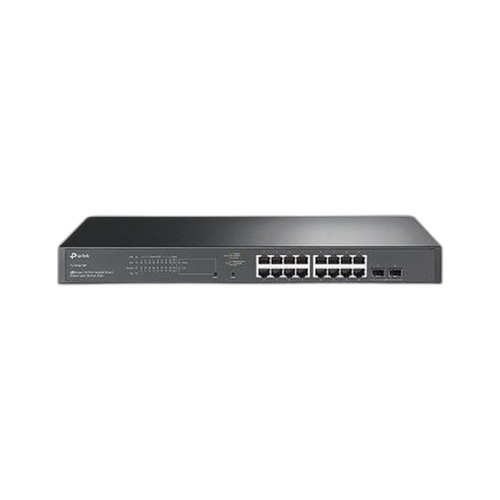
Both switches provide 18 ports total. The TP-Link SG2218P allocates 16 of those ports as PoE+ (802.3af/at, up to 30 W per port) plus 2 SFP uplink slots, delivering a total PoE budget of 150 W and a switching capacity of 36 Gbps with store-and-forward operation.
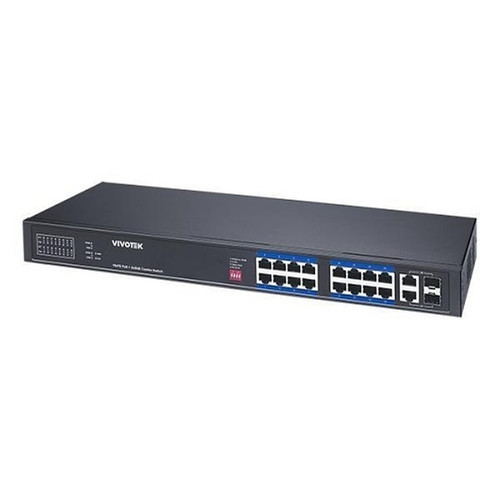
The Vivotek AW-FGT-180P-250 dedicates all 18 ports to PoE (802.3af/at per the specs), with a significantly larger PoE budget of 250 W. Its forwarding rate is listed at 5.4 Mpps; switching capacity in Gbps is not stated in the provided specs. No SFP uplink slots are specified for the FGT-180P-250.
For deployments running many higher-wattage cameras or a mix of cameras, APs, and intercoms, the FGT-180P-250's 100 W advantage in PoE headroom is material. The SG2218P's 2 SFP slots add fiber uplink flexibility not present in the FGT-180P-250's listed specs.
Which switch offers more network control, and how does each integrate with surveillance and IT infrastructure?
The TP-Link SG2218P is a managed smart switch operating under TP-Link's Omada platform, supporting both cloud-based and standalone management. This enables VLAN segmentation, QoS prioritization, link aggregation, port mirroring, and access control — features that matter in mixed-use networks where camera traffic must be isolated from corporate data.
The Vivotek AW-FGT-180P-250 is explicitly unmanaged, requiring zero configuration. It is designed for pure plug-and-play deployment, which eliminates setup complexity but also removes any ability to configure VLANs, QoS, or traffic policies. The specs note it is purpose-built for IP surveillance systems.
The SG2218P also lists ONVIF compatibility, which is relevant when the switch is being evaluated as part of a broader Omada or ONVIF-compliant ecosystem. No ONVIF or management software compatibility is stated for the FGT-180P-250 in the provided specs.
How do power consumption, physical build, and operating environment differ between the two switches?
The TP-Link SG2218P draws up to 150 W at full PoE load and is powered via a 100–240 V AC, 50/60 Hz supply. Its dimensions are 440 × 180 × 44 mm (17.3 × 7.1 × 1.7 in) and it supports wall, ceiling, and rack mounting. Memory is 32 MB Flash and 256 MB DRAM. MTBF is rated at 612,090 hours at 25 °C, and its operating temperature range is −5 °C to 45 °C (23 °F to 113 °F).
The Vivotek AW-FGT-180P-250 draws up to 260 W total power consumption (reflecting its 250 W PoE budget plus switch overhead). Its dimensions are 440 × 210 × 44 mm — slightly deeper than the SG2218P. Weight is listed at 5.29 lbs (the 1.0 lb figure in the specs appears inconsistent with a unit of this class and should be verified against the datasheet). Operating temperature is 0 °C to 45 °C (32 °F to 113 °F); storage temperature is −20 °C to 70 °C. Only rack mounting is specified. MTBF and memory specs are not provided.
The SG2218P's lower cold-temperature floor (−5 °C vs 0 °C) gives it a marginal advantage in cooler environments. The FGT-180P-250's higher power draw requires adequate rack or cabinet power planning. The SG2218P's wall and ceiling mount options add deployment flexibility the FGT-180P-250 does not specify.
Which should you choose: the SG2218P or the FGT-180P-250?
Our take: The SG2218P is the stronger choice when network segmentation, traffic management, and multi-function deployments are required; the AW-FGT-180P-250 is the stronger choice when raw PoE headroom and zero-configuration simplicity are the priority. The FGT-180P-250 carries a 250 W PoE budget versus the SG2218P's 150 W — a 67% advantage that directly determines how many or how powerful the connected cameras can be. Conversely, the SG2218P is managed (Omada cloud/standalone) while the FGT-180P-250 is unmanaged, meaning VLAN isolation, QoS, and port-level policies are only available on the TP-Link. The SG2218P also adds 2 SFP fiber uplink slots not specified on the FGT-180P-250. Choose the FGT-180P-250 for dedicated, camera-only surveillance closets where a large PoE budget matters more than network control. Choose the SG2218P for mixed IT/security networks where traffic management, Omada ecosystem integration, or fiber uplinks are needed.
Side-by-Side Comparison
Spec-for-spec, from manufacturer data.
| Specification | TP-Link SG2218P | Vivotek FGT-180P-250 |
|---|---|---|
| Total Ports | 18 (16 RJ45 PoE+ + 2 SFP) | 18 PoE ports |
| PoE Standard | 802.3af/at (PoE+) | 802.3af/at (PoE+) |
| PoE Budget | 150 W | 250 W |
| Max PoE per Port | 30 W (802.3at) | Not specified |
| SFP Uplink Slots | 2 | — |
| Switching Capacity | 36 Gbps | — |
| Forwarding Rate | — | 5.4 Mpps |
| Management | Managed (Omada cloud/standalone) | Unmanaged (plug-and-play) |
| ONVIF | Yes | — |
| Power Consumption (max) | 150 W | 260 W |
| Power Supply Input | 100–240 V AC, 50/60 Hz | Not specified |
| Operating Temperature | −5 °C to 45 °C | 0 °C to 45 °C |
| Storage Temperature | — | −20 °C to 70 °C |
| Dimensions (mm) | 440 × 180 × 44 | 440 × 210 × 44 |
| Mount Types | Wall, Ceiling, Rack | Rack |
| MTBF | 612,090 h @ 25 °C | — |
Frequently Asked Questions
Which should you choose: the SG2218P or the FGT-180P-250?
The SG2218P is the stronger choice when network segmentation, traffic management, and multi-function deployments are required; the AW-FGT-180P-250 is the stronger choice when raw PoE headroom and zero-configuration simplicity are the priority. The FGT-180P-250 carries a 250 W PoE budget versus the SG2218P's 150 W — a 67% advantage that directly determines how many or how powerful the connected cameras can be. Conversely, the SG2218P is managed (Omada cloud/standalone) while the FGT-180P-250 is unmanaged, meaning VLAN isolation, QoS, and port-level policies are only available on the TP-Link. The SG2218P also adds 2 SFP fiber uplink slots not specified on the FGT-180P-250. Choose the FGT-180P-250 for dedicated, camera-only surveillance closets where a large PoE budget matters more than network control. Choose the SG2218P for mixed IT/security networks where traffic management, Omada ecosystem integration, or fiber uplinks are needed.
Is the SG2218P or FGT-180P-250 better for powering a large number of IP cameras?
If raw PoE budget is the deciding factor, the AW-FGT-180P-250 has a 250 W budget versus the SG2218P's 150 W, giving it significantly more headroom for powering more cameras or higher-draw devices. However, the SG2218P supports PoE+ at up to 30 W per port on 16 ports, so the per-port maximum is equivalent — it is the aggregate budget where the FGT-180P-250 has a clear advantage.
Do I need IT expertise to install and configure the FGT-180P-250?
No. The AW-FGT-180P-250 is an unmanaged switch designed for plug-and-play deployment with zero configuration required. The SG2218P, by contrast, is a managed smart switch that supports Omada cloud or standalone management, which requires some network administration knowledge to take full advantage of features like VLANs and QoS.
Can the SG2218P connect to fiber uplinks or be integrated into an Omada network?
Yes. The SG2218P includes 2 SFP slots for fiber or SFP-based uplinks, and it operates within TP-Link's Omada platform for centralized cloud or standalone management. The AW-FGT-180P-250 does not list SFP slots or any management platform compatibility in the provided specifications.
More Network Switch Comparisons
Network Switch Buying Guides
Get a Second Opinion on Your Camera Choice
Share your site layout, coverage goals, and budget. Our team will validate the camera selection, flag anything we would change, and recommend products that match the use case.