
TP-Link SG2218P vs Hanwha SKY-SW20G-001: Specification Comparison
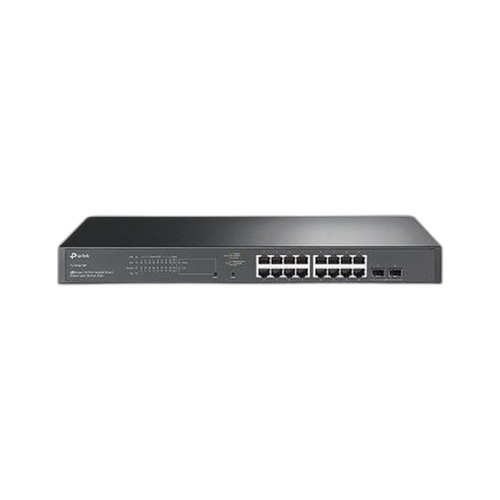
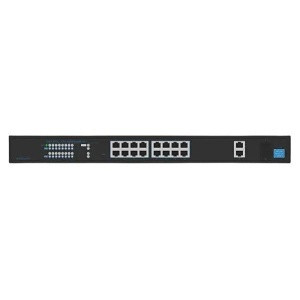
Both the TP-Link SG2218P and the Hanwha SKY-SW20G-001 are 18-port PoE+ gigabit managed switches designed for IP security deployments, each offering 16 PoE+ downlink ports plus 2 SFP fiber uplink slots. The comparison covers the three axes most critical to an installer or IT buyer evaluating these side by side: PoE power budget and per-port delivery, switching fabric and uplink architecture, and management ecosystem and environmental ratings. All figures below are drawn strictly from the provided specifications.
In This Guide
- Which switch delivers more PoE headroom — and can it sustain high-power cameras across all ports?
- How do the switching fabric capacity and uplink options compare for high-throughput camera traffic?
- Which switch integrates more cleanly into a surveillance management platform, and how do their environmental ratings compare?
- Which should you choose: the SG2218P or the SKY-SW20G-001?
- Side-by-Side Specs
- FAQ
Which switch delivers more PoE headroom — and can it sustain high-power cameras across all ports?
The Hanwha SKY-SW20G-001 carries a 250 W total PoE budget versus the TP-Link SG2218P's 150 W — a 67 % increase in available power across the same 16 PoE+ downlink ports. Both switches are rated 802.3at (PoE+) at 30 W per port maximum.
In practical terms, the SG2218P's 150 W budget caps out at roughly 5 ports simultaneously drawing 30 W (e.g., multi-sensor or PTZ cameras with integrated heaters), whereas the SKY-SW20G-001's 250 W budget can sustain approximately 8 such ports concurrently. For deployments mixing standard 15 W dome cameras with a handful of high-draw PTZ or multi-imager units, the SKY-SW20G-001 provides meaningful headroom without requiring external injectors or load management.
The SG2218P's power supply is rated 100–240 V AC, 50/60 Hz. The SKY-SW20G-001 lists a built-in power supply; input voltage range is not specified in the provided data.
How do the switching fabric capacity and uplink options compare for high-throughput camera traffic?
The SKY-SW20G-001 is specified at 40 Gbps non-blocking switching capacity; the SG2218P is specified at 36 Gbps. Both are wire-speed designs relative to their port count (18 ports × 1 Gbps × 2 directions = 36 Gbps theoretical max for the SG2218P, 40 Gbps for the SKY-SW20G-001), so the SKY-SW20G-001 has modestly greater fabric headroom.
Both switches provide 2 SFP gigabit fiber uplink slots, enabling fiber runs to an aggregation layer or NVR rack. The SKY-SW20G-001 additionally specifies 2 dedicated gigabit RJ-45 uplink ports alongside the 2 SFP slots, giving an installer flexible uplink media choices without consuming a downlink port. The SG2218P's uplink architecture beyond the 2 SFP slots is not detailed in the provided specifications.
The SG2218P uses a store-and-forward forwarding mode (spec confirmed). The SKY-SW20G-001's forwarding mode is not stated in the provided data. Memory for the SG2218P is confirmed at 32 MB Flash and 256 MB DRAM; no equivalent memory spec is provided for the SKY-SW20G-001.
Which switch integrates more cleanly into a surveillance management platform, and how do their environmental ratings compare?
Management ecosystems differ meaningfully. The SG2218P operates within TP-Link's Omada SDN platform, supporting both cloud-managed and standalone modes — a vendor-neutral approach suited to mixed-brand camera deployments managed through any VMS. The SKY-SW20G-001 is specified with native Wisenet SKY Cloud VMS integration plus VLAN and QoS support, making it purpose-built for Hanwha Wisenet SKY ecosystems. ONVIF compliance is confirmed for the SG2218P; no ONVIF statement is provided for the SKY-SW20G-001.
Operating temperature ranges diverge. The SKY-SW20G-001 is rated 0–50 °C (32–122 °F), tolerating warmer ambient environments such as IDF closets or unconditioned equipment rooms. The SG2218P is rated -5–45 °C (23–113 °F), offering a slightly wider cold-end tolerance but a lower upper thermal limit. Neither unit is rated for outdoor unenclosed installation based on the provided specs.
The SKY-SW20G-001 carries a stated 5-year warranty. No warranty term is provided for the SG2218P in the supplied specifications. The SG2218P provides an MTBF figure of 612,090 hours at 25 °C; no MTBF is stated for the SKY-SW20G-001.
Which should you choose: the SG2218P or the SKY-SW20G-001?
Our take: The SKY-SW20G-001 is the stronger choice when deploying a Hanwha Wisenet SKY camera system or when the PoE power budget is the binding constraint. Its 250 W PoE budget exceeds the SG2218P's 150 W by 100 W — enough to add roughly three to four additional high-draw PTZ or multi-sensor cameras without external injectors. Its 40 Gbps fabric (vs. 36 Gbps) and dedicated dual RJ-45 uplinks alongside 2 SFP slots also give it a modest architectural edge. Its 0–50 °C thermal ceiling versus the SG2218P's 45 °C upper limit matters in warmer closets. However, the SG2218P is the better fit for multi-vendor or Omada-managed environments: its Omada cloud/standalone management, confirmed ONVIF compliance, and vendor-neutral positioning make it interoperable across brands without tying the installation to Wisenet SKY VMS. Input voltage range for the SKY-SW20G-001 and warranty terms for the SG2218P were not present in the provided specs and should be confirmed before final specification.
Side-by-Side Comparison
Spec-for-spec, from manufacturer data.
| Specification | TP-Link SG2218P | Hanwha SKY-SW20G-001 |
|---|---|---|
| Total PoE Budget | 150 W | 250 W |
| PoE Standard | 802.3af/at (PoE+) | 802.3at (PoE+) |
| Max PoE Per Port | 30 W | 30 W |
| PoE Downlink Ports | 16 | 16 |
| Total Ports | 18 | 18 (16 PoE+ + 2 GbE uplink + 2 SFP) |
| SFP Uplink Slots | 2 | 2 |
| Dedicated RJ-45 Uplinks | Not specified | 2 × Gigabit |
| Switching Capacity | 36 Gbps | 40 Gbps non-blocking |
| Forwarding Mode | Store and forward | — |
| Management | Omada cloud / standalone | Managed; Wisenet SKY VMS integration |
| ONVIF | Yes | — |
| Operating Temperature | -5–45 °C (23–113 °F) | 0–50 °C (32–122 °F) |
| Power Supply Input | 100–240 V AC, 50/60 Hz | Built-in (input voltage not specified) |
| Flash / DRAM | 32 MB / 256 MB | — |
| MTBF | 612,090 h @ 25 °C | — |
| Warranty | — | 5 years |
Frequently Asked Questions
Which should you choose: the SG2218P or the SKY-SW20G-001?
The SKY-SW20G-001 is the stronger choice when deploying a Hanwha Wisenet SKY camera system or when the PoE power budget is the binding constraint. Its 250 W PoE budget exceeds the SG2218P's 150 W by 100 W — enough to add roughly three to four additional high-draw PTZ or multi-sensor cameras without external injectors. Its 40 Gbps fabric (vs. 36 Gbps) and dedicated dual RJ-45 uplinks alongside 2 SFP slots also give it a modest architectural edge. Its 0–50 °C thermal ceiling versus the SG2218P's 45 °C upper limit matters in warmer closets. However, the SG2218P is the better fit for multi-vendor or Omada-managed environments: its Omada cloud/standalone management, confirmed ONVIF compliance, and vendor-neutral positioning make it interoperable across brands without tying the installation to Wisenet SKY VMS. Input voltage range for the SKY-SW20G-001 and warranty terms for the SG2218P were not present in the provided specs and should be confirmed before final specification.
Is the SG2218P or SKY-SW20G-001 better for larger camera deployments with high-power PTZ cameras?
The SKY-SW20G-001 is better suited for high-power PTZ-heavy deployments. Its 250 W PoE budget versus the SG2218P's 150 W allows approximately 8 ports to draw 30 W simultaneously, compared to roughly 5 on the SG2218P — a meaningful difference when powering multiple PTZ cameras with integrated heaters or wiper motors.
Can either switch be managed without a cloud account or proprietary VMS?
The SG2218P supports both Omada cloud management and standalone (local) management modes, so it can be configured and monitored without a cloud account. The SKY-SW20G-001's management spec references Wisenet SKY Cloud VMS integration along with VLAN and QoS; whether it supports a fully local/standalone mode independent of Wisenet SKY is not stated in the provided specifications.
Which switch is better for a mixed-brand IP camera installation using multiple VMS platforms?
The SG2218P is the more interoperable choice for mixed-brand installations. It operates within TP-Link's Omada SDN platform, which is VMS-agnostic, and its ONVIF compliance is confirmed in the specifications. The SKY-SW20G-001 is specified with native Wisenet SKY VMS integration, making it purpose-optimized for Hanwha ecosystems; ONVIF compliance for the SKY-SW20G-001 is not stated in the provided data.
More Network Switch Comparisons
Network Switch Buying Guides
Get a Second Opinion on Your Camera Choice
Share your site layout, coverage goals, and budget. Our team will validate the camera selection, flag anything we would change, and recommend products that match the use case.