
Star Micronics 37950900 vs Star Micronics 37950920: Specification Comparison
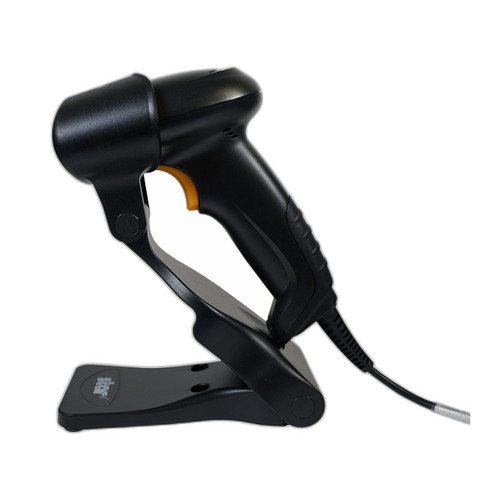
Both the Star Micronics 37950900 and 37950920 are wired, corded 2D barcode scanners from the same manufacturer, sharing USB and RS-232 interface options and an overlapping 1D/2D symbology set. The core distinction is form factor: the 37950900 is a fixed-mount projection scanner designed for hands-free, high-throughput installations, while the 37950920 is a handheld image-sensor scanner suited to flexible, operator-directed scanning. Buyers evaluating these two are typically choosing between a fixed countertop or overhead deployment and a portable in-hand scanning workflow.

In This Guide
- Which scanner offers broader symbology coverage and a more capable scan engine?
- How do the two scanners compare on ingress protection and drop resistance?
- Which scanner fits a fixed-mount deployment versus a flexible handheld workflow, and do their interfaces differ?
- Which should you choose: the 37950900 or the 37950920?
- Side-by-Side Specs
- FAQ
Which scanner offers broader symbology coverage and a more capable scan engine?
The 37950900 uses a fixed 2D projection engine capable of reading both linear and matrix codes. Its documented symbology set includes UPC, EAN, Code 128, Code 39, QR Code, Data Matrix, PDF417, and Aztec — eight named formats, with Aztec being the notable addition over the 37950920.
The 37950920 uses a 2D image sensor and covers UPC, EAN, Code 128, Code 39, QR Code, Data Matrix, and PDF417 — seven named formats. Aztec is not listed in the provided specifications for this model.
For installations that require Aztec barcode support (common in transit ticketing and some mobile-coupon workflows), the 37950900's documented spec list has an edge. For the majority of retail and warehouse codes — UPC, Code 128, QR, Data Matrix, PDF417 — both scanners are comparably specified.
How do the two scanners compare on ingress protection and drop resistance?
The 37950900 carries an IP52 rating, meaning it is protected against dust particles larger than 12.5 mm (first digit 5) and against water dripping at up to a 15-degree tilt (second digit 2). It also has a documented drop rating of 1.2 m.
The 37950920 carries an IP42 rating — protected against solid objects larger than 1 mm (first digit 4) and against dripping water at vertical orientation (second digit 2). No drop rating is specified in the provided data for this model.
The 37950900 is the more ruggedized of the two on both available metrics: higher dust ingress protection (IP5x vs IP4x) and a stated 1.2 m drop rating versus no drop spec for the 37950920. For environments with airborne particulate, food dust, or risk of drops, the 37950900's published specs are more protective.
Which scanner fits a fixed-mount deployment versus a flexible handheld workflow, and do their interfaces differ?
The 37950900 is explicitly a fixed-mount device — pedestal, countertop, or overhead installation — with a wired USB or RS-232 connection and keyboard-wedge or serial barcode input modes. It is intended for repetitive, hands-free scanning at POS lanes or pick-pack conveyor lines where the item or ticket passes in front of the scanner.
The 37950920 is a handheld device with physical dimensions of 5.75 in × 4.06 in × 2.72 in. Its interface is USB HID (keyboard emulation), making it plug-and-play on any host that accepts a keyboard. RS-232 is listed in the product spec fields but is not confirmed in the supplemental interface detail, which specifies USB HID only.
The two scanners serve genuinely different deployment models. The 37950900 requires a fixed-mount infrastructure investment but enables operator-free scanning throughput. The 37950920 requires an operator but offers mobility across receiving docks, stockrooms, or multi-station environments without dedicated mounting hardware.
Which should you choose: the 37950900 or the 37950920?
Our take: The 37950900 is the stronger choice when the deployment is a fixed, high-repetition scan point — such as a POS checkout lane, a conveyor pick-pack station, or an overhead kiosk — where hands-free throughput outweighs portability. Its IP52 dust protection exceeds the 37950920's IP42 rating, it carries a documented 1.2 m drop rating that the 37950920 lacks in the provided specs, and it adds Aztec to its symbology set where the 37950920 does not list that format. Conversely, the 37950920's handheld form factor (5.75 × 4.06 × 2.72 in) and USB HID keyboard-emulation interface make it the practical choice for mobile operator workflows — receiving, inventory counts, or multi-station environments — where mounting infrastructure is unavailable or impractical. Both carry a 2-year warranty and share the same USB/RS-232 interface family. Platform qualifier: if the host system requires Aztec support or operates in a dusty or particulate-heavy environment, the 37950900's specs are the documented match.
Side-by-Side Comparison
Spec-for-spec, from manufacturer data.
| Specification | Star Micronics 37950900 | Star Micronics 37950920 |
|---|---|---|
| Form Factor | Fixed-mount (pedestal/countertop/overhead) | Handheld |
| Scan Engine | Fixed 2D projection (linear + matrix) | 2D Image Sensor (1D/2D) |
| Interface | USB; RS-232 (keyboard wedge or serial) | USB HID (keyboard emulation); RS-232 listed |
| Symbologies — 1D | UPC, EAN, Code 128, Code 39 | UPC, EAN, Code 128, Code 39 |
| Symbologies — 2D | QR Code, Data Matrix, PDF417, Aztec | QR Code, Data Matrix, PDF417 |
| Aztec Support | Yes (spec listed) | Not listed in provided specs |
| IP Rating | IP52 | IP42 |
| Drop Rating | 1.2 m | — |
| Color Options | Black or White | Black or White |
| Warranty | 2 Year | 2 Year |
| Connectivity | Wired | Wired (USB) |
| Dimensions (W × H × D in) | — | 5.75 × 4.06 × 2.72 |
| Intended Environment | Indoor retail and warehouse (fixed) | Retail and warehouse (mobile operator) |
| Mount Type | Pedestal, countertop, or overhead | Handheld (no mount specified) |
Frequently Asked Questions
Which should you choose: the 37950900 or the 37950920?
The 37950900 is the stronger choice when the deployment is a fixed, high-repetition scan point — such as a POS checkout lane, a conveyor pick-pack station, or an overhead kiosk — where hands-free throughput outweighs portability. Its IP52 dust protection exceeds the 37950920's IP42 rating, it carries a documented 1.2 m drop rating that the 37950920 lacks in the provided specs, and it adds Aztec to its symbology set where the 37950920 does not list that format. Conversely, the 37950920's handheld form factor (5.75 × 4.06 × 2.72 in) and USB HID keyboard-emulation interface make it the practical choice for mobile operator workflows — receiving, inventory counts, or multi-station environments — where mounting infrastructure is unavailable or impractical. Both carry a 2-year warranty and share the same USB/RS-232 interface family. Platform qualifier: if the host system requires Aztec support or operates in a dusty or particulate-heavy environment, the 37950900's specs are the documented match.
Is the 37950900 or 37950920 better for a busy retail checkout lane?
The 37950900 is specified for fixed-mount checkout deployments — pedestal, countertop, or overhead — enabling hands-free scanning that suits high-throughput POS lanes. The 37950920 is a handheld device intended for operator-directed scanning and is better suited to flexible or mobile use cases rather than dedicated fixed-lane checkout.
Which scanner is more rugged if it might get dropped or exposed to dust?
The 37950900 has an IP52 rating (higher dust protection than the 37950920's IP42) and a documented 1.2 m drop rating. The 37950920's provided specifications do not include a drop rating. On the available spec data, the 37950900 is the more ruggedized option for dusty or drop-risk environments.
Can both scanners read the same barcodes, or does one support formats the other does not?
There is significant overlap: both scanners cover QR Code, Data Matrix, PDF417, Code 128, Code 39, UPC, and EAN. The 37950900's documented symbology list additionally includes Aztec, which is not listed in the 37950920's provided specifications. For standard retail and warehouse codes, both are comparably covered; Aztec support is a differentiator for the 37950900.
More Barcode Scanner Comparisons
- Zebra DS8108 vs Datalogic GBT4600-HC-BTK1-HP
- Zebra DS8108 vs Datalogic GD4590-HCK10-HDR-B
- Zebra DS8108 vs Honeywell 1202G-2USB-5BF-N
- Zebra DS8108 vs Datalogic GBT4500-BK-BTK1DRA
- Zebra DS8108 vs Zebra DS3608
- Zebra DS8108 vs Zebra LI3608
Barcode Scanner Buying Guides
Get a Second Opinion on Your Camera Choice
Share your site layout, coverage goals, and budget. Our team will validate the camera selection, flag anything we would change, and recommend products that match the use case.