
Speco Technologies ZIPL4B1 vs Hanwha HRX-435: Specification Comparison
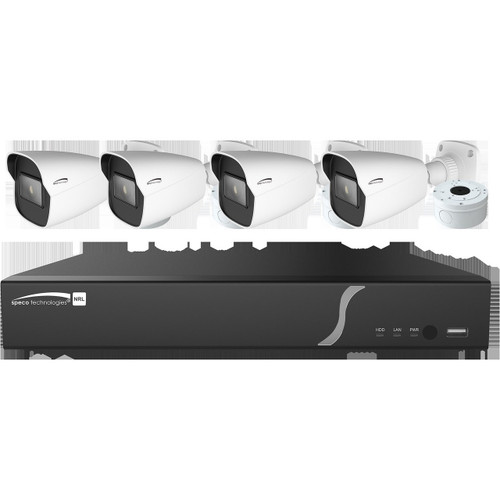
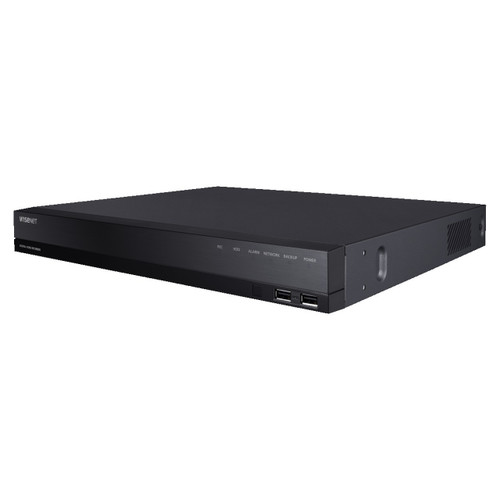
The Speco ZIPL4B1 and Hanwha HRX-435 are both 4-channel recording solutions aimed at small commercial and light enterprise surveillance deployments. The comparison, however, crosses two distinct recorder architectures: the ZIPL4B1 is an all-IP NVR kit bundled with four PoE bullet cameras, while the HRX-435 is a standalone pentabrid DVR that accepts analog coax inputs (AHD/HDTVI/HDCVI/CVBS) plus up to six IP cameras. A buyer choosing between them is weighing a turnkey IP system against a flexible hybrid recorder.
In This Guide
- What camera types and channel counts does each recorder support?
- How do the two units compare on recording resolution, storage capacity, and compression?
- Which unit offers broader connectivity, remote access, and integration options?
- Which should you choose: the ZIPL4B1 or the HRX-435?
- Side-by-Side Specs
- FAQ
What camera types and channel counts does each recorder support?
The ZIPL4B1 is a purpose-built 4-channel IP NVR that ships pre-integrated with four 4 MP PoE 802.3af bullet cameras at 2560×1440 resolution per channel, using H.265/H.264 compression and fixed 2.8 mm lenses. The system is ONVIF-compliant, meaning third-party IP cameras can theoretically be added, but the recorder's specified channel ceiling is 4 IP channels and no analog input is provided. It is a closed, plug-and-play kit.
The HRX-435 is a pentabrid DVR with 4 analog BNC inputs supporting AHD, HDTVI, HDCVI, and CVBS signals up to 8 MP, plus an additional network camera tier of up to 6 IP channels (ONVIF Profile-S and SUNAPI/Wisenet), giving a theoretical maximum of 10 monitored inputs though recording bandwidth caps at 30 Mbps analog / 32 Mbps network. Live display reaches 8 MP at up to 120 fps aggregate. It accepts no bundled cameras; the buyer must source cameras separately.
For buyers already invested in analog coax infrastructure or who want to mix legacy and IP cameras, the HRX-435 supports signal types the ZIPL4B1 cannot accept at all. For a greenfield all-IP site that needs a working system out of the box, the ZIPL4B1 arrives camera-inclusive.
How do the two units compare on recording resolution, storage capacity, and compression?
The ZIPL4B1 ships with a 1 TB internal HDD via a single SATA port. Cameras record at 4 MP (2560×1440) using H.265 or H.264. No specification for maximum supported HDD capacity beyond the included 1 TB is provided in the supplied spec sheet.
The HRX-435 provides two SATA bays supporting up to 6 TB per drive (12 TB total specified). It records analog channels at resolutions from 8 MP down to CIF depending on the connected camera standard, and network channels from 8 MP to CIF. Supported compression is H.265, H.264, and MJPEG. Recording modes include Manual, Schedule, Event, and Dual Track. Playback supports up to 6 channels simultaneously at up to 32 Mbps.
On raw storage headroom the HRX-435 holds a significant advantage: dual SATA bays with up to 12 TB versus the ZIPL4B1's single-bay 1 TB. The HRX-435 also supports MJPEG in addition to H.265/H.264, while both units share H.265 and H.264 as codecs.
Which unit offers broader connectivity, remote access, and integration options?
The ZIPL4B1 is PoE-centric: cameras connect over PoE 802.3af Ethernet, the NVR is network-ready, and ONVIF compliance enables third-party integration. The spec sheet confirms two-way audio. Beyond ONVIF compliance and plug-and-play configuration, no VMS client list, alarm I/O counts, or serial port specifications are provided in the supplied data.
The HRX-435 specifies extensive I/O: 4 alarm inputs, 2 relay outputs (Relay Out1 NO/NC/COM, Relay Out2 NO/COM), RS-485/422 for PTZ control (Pelco-D/P, Samsung-T protocols), 2 front USB 2.0 ports, simultaneous HDMI (4K) and VGA (1080p) local display, and BNC spot output. Remote access supports up to 10 simultaneous live unicast users and 20 multicast users. Compatible viewers include Wisenet SSM, Webviewer, Smart Viewer, and Wisenet Mobile (iOS/Android). Security features include IP filtering, 802.1x authentication, and recording/transmission encryption with device certificates. P2P QR Code setup and ARB redundancy support are also listed.
The HRX-435 offers a materially broader integration and connectivity profile: hardware alarm I/O, PTZ serial control, coaxial control (Pelco-C/AHD/CVI/TVI), a named VMS ecosystem, and documented multi-user remote access tiers. The ZIPL4B1's integration specs are largely absent beyond ONVIF in the provided data.
Which should you choose: the ZIPL4B1 or the HRX-435?
Our take: The HRX-435 is the stronger choice when the deployment requires analog camera compatibility, larger on-site storage capacity, or integration into a broader VMS and alarm ecosystem. Concretely: storage capacity is up to 12 TB (dual SATA) versus the ZIPL4B1's 1 TB (single SATA); the HRX-435 supports 8 MP analog signals across four coax inputs plus up to 6 IP channels, while the ZIPL4B1 is limited to 4 IP channels at 4 MP; and the HRX-435 provides 4 alarm inputs, 2 relay outputs, RS-485 PTZ serial, and a documented multi-user VMS platform, versus no alarm I/O specified for the ZIPL4B1. The ZIPL4B1 is the more appropriate choice for a buyer who needs a self-contained, plug-and-play all-IP kit for a small greenfield site with no existing coax infrastructure and no need for external alarm integration, accepting the trade-off of a fixed 1 TB storage ceiling and a camera-locked 4-channel IP-only architecture.
Side-by-Side Comparison
Spec-for-spec, from manufacturer data.
| Specification | Speco Technologies ZIPL4B1 | Hanwha HRX-435 |
|---|---|---|
| Product Type | NVR Kit (IP-only) | Pentabrid DVR (analog + IP) |
| Analog Inputs | — | 4x BNC (AHD/HDTVI/HDCVI/CVBS) |
| IP Camera Channels | 4 | Up to 6 (ONVIF / SUNAPI) |
| Max Analog Resolution | — | 8 MP |
| Included Cameras | 4x 4 MP PoE bullet | None |
| Recording Resolution (IP) | 4 MP (2560×1440) | 8 MP ~ CIF |
| Video Compression | H.265, H.264 | H.265, H.264, MJPEG |
| ONVIF | Yes | Yes (Profile-S) |
| Storage Bays | 1x SATA | 2x SATA |
| Max Storage Capacity | 1 TB (included; no max stated) | 12 TB (up to 6 TB per drive) |
| Local Display Output | — | 1x HDMI (4K), 1x VGA (1080p) |
| Alarm I/O | — | 4 inputs, 2 relay outputs |
| PTZ Serial Control | — | RS-485/422 (Pelco-D/P, Samsung-T) |
| Two-Way Audio | Yes | Yes (4 line in / 1 line out) |
| Operating Temperature | 14°F–122°F (-10°C to 50°C) | 32°F–104°F (0°C to +40°C) |
| Warranty | 3 years | — |
Frequently Asked Questions
Which should you choose: the ZIPL4B1 or the HRX-435?
The HRX-435 is the stronger choice when the deployment requires analog camera compatibility, larger on-site storage capacity, or integration into a broader VMS and alarm ecosystem. Concretely: storage capacity is up to 12 TB (dual SATA) versus the ZIPL4B1's 1 TB (single SATA); the HRX-435 supports 8 MP analog signals across four coax inputs plus up to 6 IP channels, while the ZIPL4B1 is limited to 4 IP channels at 4 MP; and the HRX-435 provides 4 alarm inputs, 2 relay outputs, RS-485 PTZ serial, and a documented multi-user VMS platform, versus no alarm I/O specified for the ZIPL4B1. The ZIPL4B1 is the more appropriate choice for a buyer who needs a self-contained, plug-and-play all-IP kit for a small greenfield site with no existing coax infrastructure and no need for external alarm integration, accepting the trade-off of a fixed 1 TB storage ceiling and a camera-locked 4-channel IP-only architecture.
Can I use my existing analog coax cameras with the ZIPL4B1?
No. The ZIPL4B1 is an IP-only NVR with no BNC or analog coax inputs. It connects cameras exclusively over PoE Ethernet. If you have existing AHD, HDTVI, HDCVI, or CVBS cameras on coax runs, the HRX-435 supports all four of those signal types on its 4 BNC inputs.
Is the ZIPL4B1 or HRX-435 better for larger deployments where I might add more cameras later?
The HRX-435 offers more expansion headroom: it supports up to 6 network camera channels in addition to its 4 analog inputs, and its dual SATA bays accept up to 12 TB of storage. The ZIPL4B1 specifies 4 IP channels and a single SATA bay with 1 TB included; no maximum HDD capacity beyond the included drive is stated in the supplied specs. For a site anticipated to grow in channel count or storage needs, the HRX-435's documented capacity ceiling is higher.
Does either unit support remote viewing on a smartphone?
The HRX-435 explicitly lists iOS and Android support via Wisenet Mobile, with up to 10 simultaneous remote live unicast users and P2P QR Code setup documented in the specs. The ZIPL4B1 spec sheet confirms network-ready and ONVIF connectivity but does not specify a mobile app, client software name, or remote user count limit in the provided data.
Get a Second Opinion on Your Camera Choice
Share your site layout, coverage goals, and budget. Our team will validate the camera selection, flag anything we would change, and recommend products that match the use case.