
Speco Technologies ZIPK8T2 vs Speco Technologies ZIPK8TA: Specification Comparison
The Speco Technologies ZIPK8T2 and ZIPK8TA are both 8-channel NVR kit systems targeting outdoor IP surveillance deployments. Both ship with PoE-powered IP66-rated cameras, 2TB onboard storage, H.265/H.264 compression, and 5MP sensors with 100ft IR. The key differentiators are camera count and form factor (6 domes vs. 5 PTZ-type units), the ZIPK8TA's inclusion of a 4K AI camera with vehicle detection analytics and audio input, and the ZIPK8T2's larger base camera count. This comparison helps installers choose between broader fixed coverage and AI-enhanced perimeter intelligence.
In This Guide
- How do the camera count, types, and resolution capabilities differ between the ZIPK8T2 and ZIPK8TA?
- Which kit offers more built-in analytics and audio capability for perimeter and vehicle monitoring?
- Are there differences in power requirements, environmental ratings, and installation footprint between the two kits?
- Which should you choose: the ZIPK8T2 or the ZIPK8TA?
- Side-by-Side Specs
- FAQ
How do the camera count, types, and resolution capabilities differ between the ZIPK8T2 and ZIPK8TA?
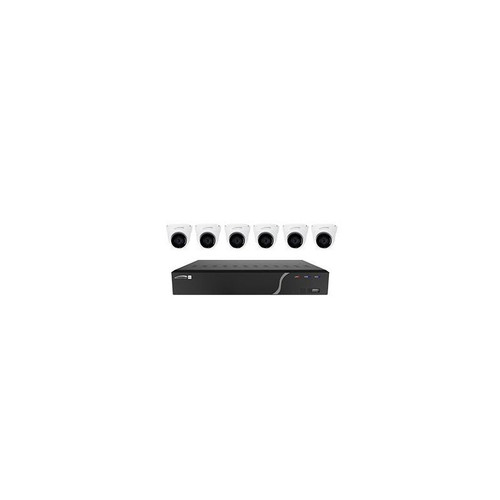
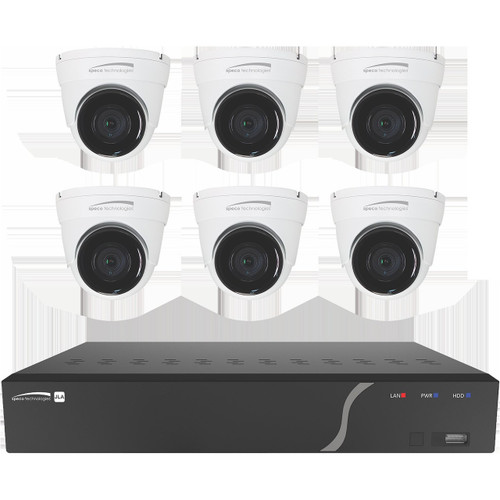
The ZIPK8T2 ships with six 5MP outdoor IR dome cameras, all fixed-lens (2.8mm) at 2592×1944 resolution with IP66 ratings. This gives installers six identical, interchangeable coverage nodes out of the box on an 8-channel NVR, leaving two channels free for expansion.
The ZIPK8TA includes five 5MP IR cameras plus one 4K AI camera, per the product description — providing a mixed-resolution kit. The five standard cameras share the same 5MP/2592×1944 spec as the ZIPK8T2's cameras, but the 4K AI unit's resolution is not individually specified in the provided specs beyond the product tagline reference. The ZIPK8TA cameras are listed as PTZ type, while the ZIPK8T2 cameras are fixed domes. Both kits use the same 8-channel NVR with 2TB storage.
For installers needing uniform fixed-angle coverage across six points, the ZIPK8T2 offers one additional camera in the box. For deployments requiring active tracking or directional control at a key choke point, the ZIPK8TA's PTZ-type cameras represent a different operational profile — though pan/tilt/zoom range specs are not provided in the available data.
Which kit offers more built-in analytics and audio capability for perimeter and vehicle monitoring?
The ZIPK8TA is the only kit in this comparison with documented analytics support. Its specs list Motion Detection and Vehicle Detection as supported analytics, and it includes microphone audio support — enabling audio capture alongside video at the camera level. These capabilities are not listed anywhere in the ZIPK8T2 spec set.
The ZIPK8T2 spec sheet lists no analytics capabilities and no audio support. Both units share DWDR (Digital Wide Dynamic Range) for managing challenging lighting conditions and True Day/Night imaging for low-light performance, so basic environmental adaptability is equivalent.
For sites where automated vehicle detection — such as a parking lot, loading dock, or gated entrance — is a priority, or where audio evidence capture is operationally required, the ZIPK8TA's documented analytics and microphone support provide meaningful functional differentiation that the ZIPK8T2 cannot match based on available specifications.
Are there differences in power requirements, environmental ratings, and installation footprint between the two kits?
Both the ZIPK8T2 and ZIPK8TA share identical environmental and power profiles across all documented specs: PoE (with DC 12V also listed) camera power, IP66 outdoor rating, operating temperature range of -22°F to 131°F (-30°C to 55°C), and 1.5 lb camera weight. Both support up to 100ft infrared night vision range per camera.
The ZIPK8T2 lists a camera power consumption of 7W per unit, which is relevant for PoE switch/injector budget planning when cameras are deployed beyond the NVR's built-in PoE ports. The ZIPK8TA does not specify per-camera power consumption in the provided spec data, leaving that planning figure unavailable for that model.
Both kits use the same shared bundle IDs (21279, 21287, 7004, 21286), suggesting the NVR unit is common across both configurations. Installers should confirm NVR PoE port count and total PoE wattage budget independently, as NVR-level power specs are not broken out in either product's provided data.
Which should you choose: the ZIPK8T2 or the ZIPK8TA?
Our take: The ZIPK8TA is the stronger choice when perimeter intelligence and active tracking matter more than raw camera count, while the ZIPK8T2 is preferable when maximizing fixed-angle coverage nodes is the primary goal. The ZIPK8TA adds Vehicle Detection and Motion Detection analytics plus microphone audio support — capabilities entirely absent from the ZIPK8T2 spec sheet. It also includes a mixed camera kit with PTZ-type units and a 4K AI camera, providing directional flexibility the ZIPK8T2's six fixed 2.8mm domes cannot offer. Conversely, the ZIPK8T2 delivers six cameras versus five, and is the only model with a documented per-camera power draw (7W), aiding PoE budget planning. Both kits are otherwise identical on environmental specs: IP66, -22°F to 131°F, 100ft IR, 5MP/2592×1944, H.265, 2TB storage, and 3-year warranty. Choose the ZIPK8TA for AI-driven perimeter and vehicle monitoring; choose the ZIPK8T2 for straightforward multi-point fixed dome deployments requiring one additional camera in the box.
Side-by-Side Comparison
Spec-for-spec, from manufacturer data.
| Specification | Speco Technologies ZIPK8T2 | Speco Technologies ZIPK8TA |
|---|---|---|
| NVR Channels | 8 | 8 |
| Included Cameras | 6 × 5MP IR Dome | 5 × 5MP IR + 1 × 4K AI |
| Camera Type | Fixed Dome | PTZ |
| Sensor Resolution | 5MP (2592×1944) | 5MP (2592×1944) |
| 4K AI Camera Included | — | Yes (1 unit) |
| Onboard Storage | 2TB | 2TB |
| Video Compression | H.265, H.264 | H.265, H.264 |
| IR Night Vision Range | 100ft | 100ft |
| Day/Night Mode | True Day/Night | True Day/Night |
| Analytics | — | Motion Detection, Vehicle Detection |
| Audio Support | — | Microphone |
| Wide Dynamic Range | DWDR | DWDR |
| IP Rating | IP66 | IP66 |
| Operating Temperature | -22 to 131°F | -22 to 131°F |
| Camera Power | PoE / DC 12V (7W) | PoE / DC 12V (not specified) |
| Warranty | 3-year | 3-year |
Frequently Asked Questions
Which should you choose: the ZIPK8T2 or the ZIPK8TA?
The ZIPK8TA is the stronger choice when perimeter intelligence and active tracking matter more than raw camera count, while the ZIPK8T2 is preferable when maximizing fixed-angle coverage nodes is the primary goal. The ZIPK8TA adds Vehicle Detection and Motion Detection analytics plus microphone audio support — capabilities entirely absent from the ZIPK8T2 spec sheet. It also includes a mixed camera kit with PTZ-type units and a 4K AI camera, providing directional flexibility the ZIPK8T2's six fixed 2.8mm domes cannot offer. Conversely, the ZIPK8T2 delivers six cameras versus five, and is the only model with a documented per-camera power draw (7W), aiding PoE budget planning. Both kits are otherwise identical on environmental specs: IP66, -22°F to 131°F, 100ft IR, 5MP/2592×1944, H.265, 2TB storage, and 3-year warranty. Choose the ZIPK8TA for AI-driven perimeter and vehicle monitoring; choose the ZIPK8T2 for straightforward multi-point fixed dome deployments requiring one additional camera in the box.
Does the ZIPK8TA or ZIPK8T2 include vehicle detection out of the box?
Only the ZIPK8TA lists Vehicle Detection as a supported analytic in its specifications. The ZIPK8T2 spec sheet does not document any analytics capabilities, including vehicle or motion detection.
Which kit gives me more cameras for the price?
The ZIPK8T2 includes six outdoor IR 5MP dome cameras versus five cameras in the ZIPK8TA kit. Both connect to an 8-channel NVR, so the ZIPK8T2 leaves two expansion channels open while the ZIPK8TA leaves three. Note that the ZIPK8TA's kit includes a 4K AI camera in addition to five 5MP units, so the camera types are not equivalent.
Can either kit record audio from the cameras?
The ZIPK8TA specifies Microphone audio support in its spec data. The ZIPK8T2 does not list any audio support capability. If on-camera audio capture is required, only the ZIPK8TA addresses that requirement based on available specifications.
Get a Second Opinion on Your Camera Choice
Share your site layout, coverage goals, and budget. Our team will validate the camera selection, flag anything we would change, and recommend products that match the use case.