
SDC 920P vs Speco Technologies AP620HA: Specification Comparison
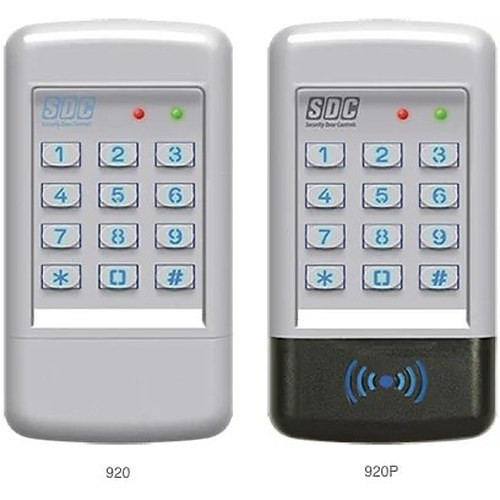
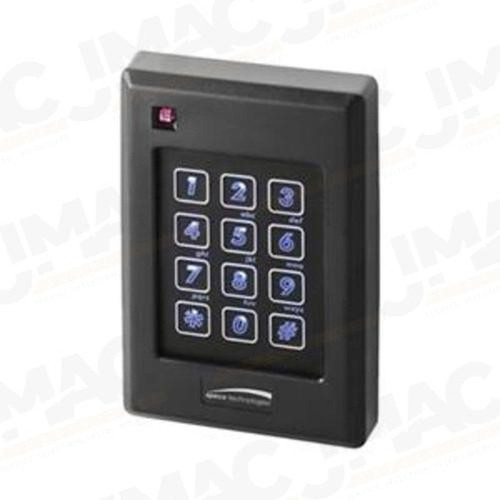
The SDC 920P and Speco Technologies AP620HA are both wired, dual-credential access control readers combining a proximity card reader with an integrated numeric keypad. Both target commercial and light-industrial entry points where two-factor authentication—card plus PIN—is required. This comparison covers their communication protocols and integration architecture, environmental resilience and physical specifications, and credential compatibility and capacity, giving installers and IT buyers the data needed to match each unit to a panel ecosystem and deployment environment.
In This Guide
- Which reader's communication protocol and output interface best fits your panel ecosystem?
- Which reader is better suited to harsh outdoor or extreme-temperature environments?
- Which reader supports more credential types and larger user populations?
- Which should you choose: the 920P or the AP620HA?
- Side-by-Side Specs
- FAQ
Which reader's communication protocol and output interface best fits your panel ecosystem?
The SDC 920P communicates via OSDP (Open Supervised Device Protocol), an RS-485-based, bidirectional, encrypted and supervised protocol widely adopted for higher-security installations. OSDP enables the panel to actively monitor the reader line for tampering and supports encrypted credential transmission. The AP620HA outputs via Wiegand protocol, the legacy industry standard, which is unidirectional and unsupervised—credentials travel in clear text over the wire. No OSDP capability is specified for the AP620HA.
For buyers already on a Wiegand-native panel (the majority of mid-market controllers), the AP620HA integrates with no additional configuration. The 920P requires an OSDP-capable controller or a Wiegand-to-OSDP converter, but rewards that investment with supervised line detection and encrypted data paths. Neither product lists a data communication speed or RS-485 address range in the provided specifications.
Which reader is better suited to harsh outdoor or extreme-temperature environments?
The AP620HA carries an IP67 ingress-protection rating, meaning it is fully dust-tight and can withstand temporary immersion in water to 1 meter for 30 minutes. Its operating temperature range is specified as -40°F to 149°F (-40°C to 65°C), covering sub-arctic winters and sun-exposed desert installations. It weighs 4 oz (113 g), ships with a black snap-on cover as standard, and is certified FCC, ICC, CE, C-Tick, and ETL-listed. Its mullion form factor suits door frames, window frames, and flat surfaces.
The SDC 920P is listed as Indoor/Outdoor rated, but no IP ingress-protection code or numerical operating temperature range is provided in the supplied specifications. Without an IP rating or temperature floor/ceiling, installers cannot confirm suitability for extreme-cold climates, rain exposure, or wash-down environments from the available data alone. The 920P datasheet (/content/product-datasheets/920P.pdf) would be the authoritative source for those values.
Which reader supports more credential types and larger user populations?
The SDC 920P explicitly supports up to 500 users stored in the reader (onboard user capacity) using HID-compatible proximity credentials combined with keypad PIN entry. Communication is OSDP, so the panel and reader share a supervised channel, but the 500-user figure appears to describe reader-side storage. No read range is stated in the provided specifications.
The Speco AP620HA is specified as compatible with both HID and AWID 125 kHz RFID credentials over Wiegand, giving it broader legacy-card interoperability. Its proximity read range is stated as 5 inches (125 kHz RFID). No onboard user-storage capacity is listed for the AP620HA—capacity in a Wiegand architecture typically resides in the downstream controller, not the reader itself, so a direct user-count comparison is not possible from the provided specs. The AP620HA also notes a Key Ring Tag credential option in its operating-temp field, suggesting fob support.
Which should you choose: the 920P or the AP620HA?
Our take: The 920P is the stronger choice when the panel is OSDP-capable and the installation demands encrypted, supervised credential transmission—its OSDP protocol and 500-user onboard capacity are concrete differentiators for higher-security, compliance-sensitive sites. The AP620HA holds the advantage on environmental resilience: an IP67 rating and a confirmed -40°F to 149°F operating range versus no IP code and no temperature limits stated for the 920P. The AP620HA also widens credential compatibility to HID and AWID 125 kHz cards with a documented 5-inch read range, while the 920P lists HID-compatible only with no read range specified. Platform qualifier: choose the 920P for OSDP-native controllers (Lenel, Software House, newer Mercury panels) where line supervision and encryption matter; choose the AP620HA for Wiegand-based panels in outdoor, extreme-temperature, or wet environments where IP67 and broad 125 kHz card support are non-negotiable.
Side-by-Side Comparison
Spec-for-spec, from manufacturer data.
| Specification | SDC 920P | Speco Technologies AP620HA |
|---|---|---|
| Product Type | Keypad + Proximity Reader | Keypad + Proximity Reader |
| Communication / Output Protocol | OSDP | Wiegand |
| Credential Type(s) | HID-compatible proximity + keypad PIN | HID & AWID 125 kHz proximity + keypad PIN |
| Read Range | — | 5 inches (125 kHz RFID) |
| Onboard User Capacity | 500 users | — |
| Environment Rating | Indoor/Outdoor rated | Outdoor (IP67) |
| Ingress Protection (IP) Rating | — | IP67 |
| Operating Temperature | — | -40°F to 149°F (-40°C to 65°C) |
| Mounting Style | — | Mullion, window frame, flat surface |
| Housing Color | — | White (black snap-on cover included) |
| Weight | — | 4 oz (113 g) |
| Audio Indicator | — | Tone beeper (standard) |
| Certifications | — | FCC, ICC, CE, C-Tick, ETL |
| Connectivity | Wired | Wired |
| Warranty | Lifetime | 2-year |
| ONVIF | — | Yes (per spec; atypical for a reader) |
Frequently Asked Questions
Which should you choose: the 920P or the AP620HA?
The 920P is the stronger choice when the panel is OSDP-capable and the installation demands encrypted, supervised credential transmission—its OSDP protocol and 500-user onboard capacity are concrete differentiators for higher-security, compliance-sensitive sites. The AP620HA holds the advantage on environmental resilience: an IP67 rating and a confirmed -40°F to 149°F operating range versus no IP code and no temperature limits stated for the 920P. The AP620HA also widens credential compatibility to HID and AWID 125 kHz cards with a documented 5-inch read range, while the 920P lists HID-compatible only with no read range specified. Platform qualifier: choose the 920P for OSDP-native controllers (Lenel, Software House, newer Mercury panels) where line supervision and encryption matter; choose the AP620HA for Wiegand-based panels in outdoor, extreme-temperature, or wet environments where IP67 and broad 125 kHz card support are non-negotiable.
Is the 920P or AP620HA better for larger deployments with many cardholders?
The 920P specifies onboard storage for up to 500 users. The AP620HA lists no onboard user capacity—in a Wiegand architecture, cardholder records live in the access-control panel, not the reader, so the effective user limit is determined by the controller. If you need reader-side credential storage independent of the panel, the 920P's 500-user spec is the only documented figure available; for panel-managed capacity, neither reader's spec sheet provides a binding limit.
Which reader is safer to install in a location exposed to rain, hose-down, or extreme cold?
The AP620HA carries a documented IP67 rating and an operating range of -40°F to 149°F, making it the verifiable choice for wet, dusty, or extreme-temperature environments. The SDC 920P is described as Indoor/Outdoor rated but no IP ingress code or temperature range is provided in the available specifications. Consult the 920P datasheet before specifying it for harsh outdoor conditions.
Can the 920P or AP620HA work with my existing HID cards and Wiegand panel?
The AP620HA outputs Wiegand protocol and is specified as HID and AWID 125 kHz compatible, so it connects directly to any standard Wiegand-input panel and reads existing HID proximity cards. The 920P uses OSDP output and HID-compatible credentials; it will require an OSDP-capable panel or a protocol converter to interface with a Wiegand-only controller. If your panel is Wiegand-only, the AP620HA is the plug-and-play option.
More Access Control Reader Comparisons
- SDC 923P vs Ubiquiti UA-G3-FLEX-B
- SDC 923P vs Kantech KT-SIG-20KTKS-01
- SDC 923P vs Speco Technologies AP620HA
- SDC 923P vs DMP 7463-W
- SDC 923P vs SDC 920P
- Ubiquiti UA-G3-FLEX-B vs Kantech KT-SIG-20KTKS-01
Access Control Reader Buying Guides
Get a Second Opinion on Your Camera Choice
Share your site layout, coverage goals, and budget. Our team will validate the camera selection, flag anything we would change, and recommend products that match the use case.