
SDC 920P vs Kantech KT-SIG-20KTKS-01: Specification Comparison
Both the SDC 920P and the Kantech KT-SIG-20KTKS-01 are wired access control readers combining proximity card reading with an integrated keypad for dual-factor authentication. Buyers evaluating either unit are typically specifying door-level credential hardware for commercial or light-industrial access control installations. This comparison examines the three dimensions most critical to that purchasing decision: credential technology and reader capability, communication protocol and panel integration, and physical installation and environmental suitability.
In This Guide
- Which reader supports a broader range of credential technologies?
- How do the two readers differ in panel communication protocol and integration path?
- What do the specs reveal about mounting style, environment rating, and physical form factor?
- Which should you choose: the 920P or the KT-SIG-20KTKS-01?
- Side-by-Side Specs
- FAQ
Which reader supports a broader range of credential technologies?
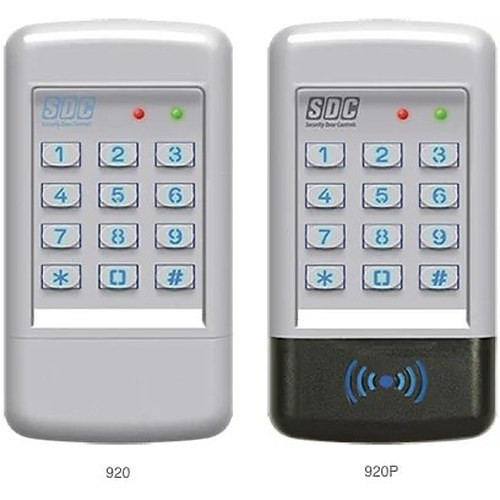
The SDC 920P is specified as HID-compatible proximity only, supporting up to 500 users via HID proximity cards combined with keypad PIN entry. No smart card, MIFARE, or NFC support is listed in its specifications.
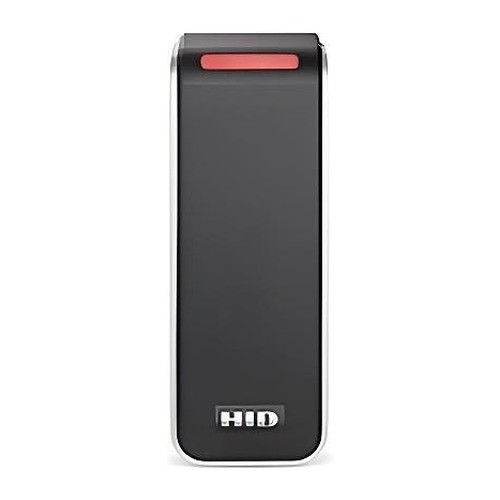
The Kantech KT-SIG-20KTKS-01, sold as an HID Signo 20K mullion reader, lists multi-technology credential support in its specifications: MIFARE, HID, NFC/13.56 MHz, and 125 kHz proximity. This covers both legacy 125 kHz prox cards and modern 13.56 MHz smart card formats in a single reader head.
For sites running mixed credential populations — for example, legacy HID prox cards alongside newer MIFARE or mobile NFC credentials — the KT-SIG-20KTKS-01's multi-technology capability is a meaningful specification advantage. The 920P's user-capacity figure of 500 users is a concrete spec present in the SDC data; no equivalent user-capacity figure is listed for the KT-SIG-20KTKS-01.
How do the two readers differ in panel communication protocol and integration path?
The SDC 920P specifies OSDP (Open Supervised Device Protocol) as its communication method. OSDP is a bi-directional, RS-485-based protocol that provides encrypted credential exchange and supervised line monitoring, and it is supported natively by a growing number of access control panels from multiple manufacturers.
The Kantech KT-SIG-20KTKS-01 specifies Wiegand and RS-485 as its communication interfaces. Wiegand is the long-established unidirectional standard present on the vast majority of installed panels; RS-485 is listed but the specific protocol riding over RS-485 (e.g., OSDP, proprietary Kantech) is not stated in the provided specifications.
Buyers integrating into a legacy Wiegand panel ecosystem will find the KT-SIG-20KTKS-01's Wiegand output directly compatible without additional configuration. Buyers specifying OSDP-capable panels seeking encrypted, supervised reader lines should confirm the KT-SIG-20KTKS-01's RS-485 protocol before selecting it, as only the 920P explicitly lists OSDP.
What do the specs reveal about mounting style, environment rating, and physical form factor?
The SDC 920P is rated for both indoor and outdoor installation per its specifications. No weight or specific mount-style dimension is listed in the provided data. Its environment rating explicitly covers outdoor deployments such as loading docks and building perimeters.
The Kantech KT-SIG-20KTKS-01 specifies a mullion mount style designed for narrow glass door frames, with a listed weight of 0.36 lb. Wall, pole, and rack mount types are also listed, though the primary application noted is glass-door commercial access. No outdoor or IP/IK environmental rating is present in the provided specifications.
The 920P's explicit outdoor rating gives it documented suitability for exterior doors and mixed-environment use cases where the KT-SIG-20KTKS-01 lacks a stated environmental rating. Conversely, the KT-SIG-20KTKS-01's mullion form factor is purpose-designed for glass door installations where a compact, low-profile mount is architecturally required — a scenario the 920P's specs do not address.
Which should you choose: the 920P or the KT-SIG-20KTKS-01?
Our take: The 920P is the stronger choice when the installation requires explicitly outdoor-rated hardware, OSDP encrypted communication, and a defined user capacity ceiling of 500 users on a single HID proximity + PIN credential set. The KT-SIG-20KTKS-01 is the stronger choice when multi-technology credential support (MIFARE, NFC/13.56 MHz, 125 kHz prox, and HID) is required to bridge legacy and modern card populations, or when the physical door profile demands a mullion-style glass-door mount. Key spec deltas: the 920P lists OSDP vs. the KT-SIG-20KTKS-01's Wiegand/RS-485; the 920P provides a 500-user capacity figure vs. no stated capacity for the KT-SIG alternative; and the KT-SIG-20KTKS-01 lists four credential technologies vs. the 920P's one. Platform qualifier: the 920P suits OSDP-capable panel ecosystems in mixed indoor/outdoor environments; the KT-SIG-20KTKS-01 suits Kantech or Wiegand-based panels on glass-door commercial sites needing multi-tech credentials.
Side-by-Side Comparison
Spec-for-spec, from manufacturer data.
| Specification | SDC 920P | Kantech KT-SIG-20KTKS-01 |
|---|---|---|
| Product Type | Reader | Reader |
| Reader Sub-Type | Proximity + Keypad | Multi-Technology + Keypad |
| Credential: HID 125 kHz Prox | Yes | Yes |
| Credential: MIFARE / 13.56 MHz | — | Yes |
| Credential: NFC | — | Yes |
| Credential: Keypad PIN | Yes | Yes |
| Communication Protocol | OSDP | Wiegand; RS-485 |
| OSDP Support | Yes | Not stated in specs |
| Wiegand Output | Not stated in specs | Yes |
| User Capacity | 500 users | — |
| Environment Rating | Indoor / Outdoor | Not stated in specs |
| Mount Style | Not stated in specs | Mullion (glass door) |
| Weight | — | 0.36 lb |
| Connectivity | Wired | Wired |
| Warranty | Lifetime | — |
| Country of Origin | — | US |
Frequently Asked Questions
Which should you choose: the 920P or the KT-SIG-20KTKS-01?
The 920P is the stronger choice when the installation requires explicitly outdoor-rated hardware, OSDP encrypted communication, and a defined user capacity ceiling of 500 users on a single HID proximity + PIN credential set. The KT-SIG-20KTKS-01 is the stronger choice when multi-technology credential support (MIFARE, NFC/13.56 MHz, 125 kHz prox, and HID) is required to bridge legacy and modern card populations, or when the physical door profile demands a mullion-style glass-door mount. Key spec deltas: the 920P lists OSDP vs. the KT-SIG-20KTKS-01's Wiegand/RS-485; the 920P provides a 500-user capacity figure vs. no stated capacity for the KT-SIG alternative; and the KT-SIG-20KTKS-01 lists four credential technologies vs. the 920P's one. Platform qualifier: the 920P suits OSDP-capable panel ecosystems in mixed indoor/outdoor environments; the KT-SIG-20KTKS-01 suits Kantech or Wiegand-based panels on glass-door commercial sites needing multi-tech credentials.
Is the 920P or KT-SIG-20KTKS-01 better for outdoor door installations?
Based on the provided specifications, only the SDC 920P carries an explicit outdoor environment rating, making it the documented choice for exterior doors, covered entries, or loading dock applications. The Kantech KT-SIG-20KTKS-01 specifications do not list an outdoor or IP/IK environmental rating, so its suitability for outdoor use cannot be confirmed from the available data.
Which reader works with my existing HID proximity cards and will also support mobile NFC credentials in the future?
The Kantech KT-SIG-20KTKS-01 lists multi-technology support including HID 125 kHz proximity and NFC/13.56 MHz in its specifications, making it compatible with legacy HID prox cards today and positioned to support NFC-based mobile credentials. The SDC 920P is specified as HID-compatible proximity only; NFC or 13.56 MHz smart card support is not listed in its specifications.
Can either reader be used on a panel that only supports Wiegand?
The Kantech KT-SIG-20KTKS-01 explicitly lists Wiegand as a communication interface, confirming compatibility with Wiegand-only panels. The SDC 920P specifies OSDP as its communication protocol; Wiegand output is not listed in the provided specifications. Buyers with Wiegand-only panels should verify 920P Wiegand compatibility with SDC directly before specifying it.
More Access Control Reader Comparisons
- SDC 923P vs Ubiquiti UA-G3-FLEX-B
- SDC 923P vs Kantech KT-SIG-20KTKS-01
- SDC 923P vs Speco Technologies AP620HA
- SDC 923P vs DMP 7463-W
- SDC 923P vs SDC 920P
- Ubiquiti UA-G3-FLEX-B vs Kantech KT-SIG-20KTKS-01
Access Control Reader Buying Guides
Get a Second Opinion on Your Camera Choice
Share your site layout, coverage goals, and budget. Our team will validate the camera selection, flag anything we would change, and recommend products that match the use case.