
Sato WWHC04041-WAN vs Zebra ZT41142-T010000Z: Specification Comparison
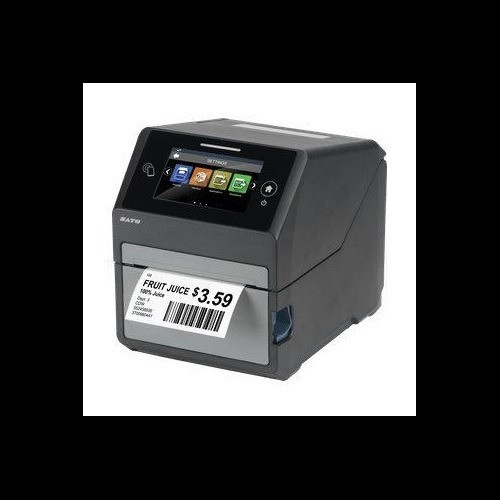
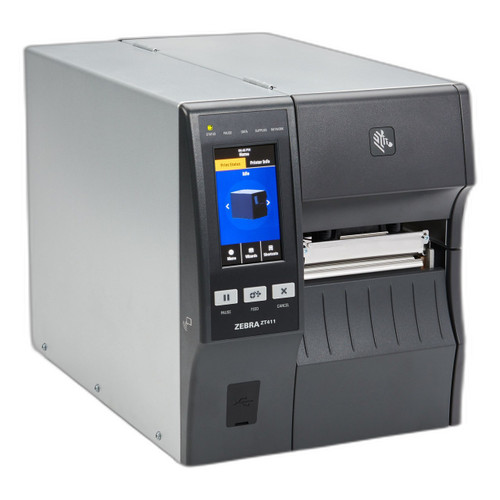
Both the Sato CT4-LX-HC (WWHC04041-WAN) and the Zebra ZT41142-T010000Z are 4-inch desktop/industrial thermal label printers supporting direct thermal and thermal transfer output, placing them in the same general product class for label printing deployments. The Sato unit is purpose-built for healthcare environments with antimicrobial housing and a clinical touchscreen interface, while the Zebra model adds an integrated 2D barcode scan engine. This comparison evaluates print performance, connectivity and scanning capability, and environmental and physical fit across both units for B2B label printing procurement.
In This Guide
- How do print speed, resolution, and media handling compare between the WWHC04041-WAN and ZT41142-T010000Z?
- Which unit offers broader connectivity and does the integrated scanner change the deployment calculus?
- How do the physical build, operating environment, and healthcare or industrial suitability compare?
- Which should you choose: the WWHC04041-WAN or the ZT41142-T010000Z?
- Side-by-Side Specs
- FAQ
How do print speed, resolution, and media handling compare between the WWHC04041-WAN and ZT41142-T010000Z?
The Zebra ZT41142-T010000Z posts a rated print speed of 14 ips versus the Sato WWHC04041-WAN's 8 ips — a 75% throughput advantage that matters in high-volume shipping, receiving, or point-of-care wristband runs.
On resolution, the Sato specifies 305 dpi (confirmed in both the structured spec and the datasheet tilde fields). The Zebra lists multiple resolution options — 203, 300, and 600 dpi — giving integrators the choice of a higher-fidelity 600 dpi head for fine-text or dense 2D symbology printing, or a lower-cost 203 dpi configuration. No single head ships in all three; the purchaser must specify at order time.
Media handling on the Sato supports widths from 1 inch to 4.1 inches with a maximum roll diameter of 5 inches, a 1.5-inch core, and ribbon up to 984 ft (300 m). The Zebra specifications do not detail roll diameter, core size, or ribbon length in the provided data. The Sato's media width ceiling of 4.1 inches versus Zebra's stated 4-inch print width is effectively equivalent for standard label stock.
Which unit offers broader connectivity and does the integrated scanner change the deployment calculus?
The Sato WWHC04041-WAN provides Ethernet, Wi-Fi, Bluetooth, and USB 2.0 as standard interfaces. The Zebra ZT41142-T010000Z ships with USB, Serial, Ethernet, and Bluetooth 4.1 MFi as package contents, and adds Wi-Fi 802.11ac per the tilde-field specifications. Zebra's Bluetooth 4.1 MFi designation indicates Apple device certification — relevant in iOS-heavy clinical or retail environments — while the Sato spec does not specify a Bluetooth version or MFi status.
The defining differentiator for the Zebra is its integrated 2D scan engine supporting QR Code, Data Matrix, PDF417, Code 128, Code 39, UPC, and EAN. This eliminates the need for a separate handheld scanner at the print station for print-and-verify workflows — a measurable BOM and footprint reduction in receiving docks, pharmacy dispensing, or asset-tagging stations. The Sato has no scan engine in its provided specifications.
The Sato includes 4 GB flash, 1 GB DDR3 RAM, and 2 GB user storage — granular memory specs not provided for the Zebra, which lists only 256 MB SDRAM in one spec field. If on-printer storage of label formats, fonts, and graphics is a requirement, the Sato's memory posture is documentably larger based on the available data.
How do the physical build, operating environment, and healthcare or industrial suitability compare?
The Sato WWHC04041-WAN is explicitly designed for clinical settings: its housing is antimicrobial and disinfectant-resistant plastic, it carries a 4.3-inch full-color touchscreen for guided operator interaction, and its operating temperature range is 32°F to 104°F (0°C to 40°C). These attributes directly address Joint Commission and infection-control requirements in patient-care areas.
The Zebra ZT41142-T010000Z's provided specifications do not describe antimicrobial housing or a touchscreen display. The spec sheet lists a Mount Type of Rack and a weight of 36–40 lbs (16.3–18.1 kg), which is substantially heavier than the Sato's 8.0 lbs (3.6 kg) and suggests an industrial or warehouse form factor rather than a desktop clinical unit. No operating temperature range is specified for the Zebra in the provided data.
The Sato is warranted for 1 year; the Zebra is also listed at 1-year warranty. Both units accept AC 100-240V power per the Sato spec; the Zebra's input voltage is not specified in the provided data. For healthcare desktops, the Sato's compact 7.0 × 9.375 × 8.4375-inch footprint and 8-lb weight are appropriate; the Zebra's rack-mount form factor and significantly greater weight indicate a different physical deployment context.
Which should you choose: the WWHC04041-WAN or the ZT41142-T010000Z?
Our take: The WWHC04041-WAN is the stronger choice when the deployment is a clinical or patient-care environment requiring infection-control compliance, a guided touchscreen interface, and a compact desktop footprint. Key spec deltas: the Sato's antimicrobial, disinfectant-resistant housing is explicitly specified while the Zebra provides no such rating; the Sato weighs 8.0 lbs versus the Zebra's 36–40 lbs, making it suitable for nursing stations or exam rooms where the Zebra's rack-mount mass is impractical; and the Sato carries 4 GB flash plus 1 GB DDR3 RAM versus the Zebra's documented 256 MB SDRAM. Conversely, the ZT41142-T010000Z is the stronger choice for high-throughput warehouse or logistics deployments needing 14 ips print speed (versus 8 ips), an integrated 2D scan engine for print-and-verify workflows, and optional 600 dpi resolution — none of which the Sato provides. Platform qualifier: healthcare IT teams standardizing on iOS-connected peripherals should note the Zebra's Bluetooth 4.1 MFi certification, absent from Sato's specifications.
Side-by-Side Comparison
Spec-for-spec, from manufacturer data.
| Specification | Sato WWHC04041-WAN | Zebra ZT41142-T010000Z |
|---|---|---|
| Print Method | Direct Thermal / Thermal Transfer | Thermal (method not further specified in provided specs) |
| Print Speed | 8 ips | 14 ips |
| Print Resolution | 305 dpi | 203 / 300 / 600 dpi (head choice at order) |
| Max Print Width | 4.09" | 4" |
| Media Width Range | 1" to 4.1" | — |
| Max Media Roll Diameter | 5" | — |
| Ribbon Max Length | 984 ft (300 m) | — |
| Display | 4.3" full-color touchscreen | — |
| Integrated Scanner | — | 2D (QR, Data Matrix, PDF417, Code 128, Code 39, UPC, EAN) |
| Connectivity | Ethernet, Wi-Fi, Bluetooth, USB 2.0 | Wi-Fi 802.11ac, Bluetooth 4.1 MFi, USB, Serial, Ethernet |
| Bluetooth Version / Cert | — | Bluetooth 4.1 MFi |
| Housing | Antimicrobial, disinfectant-resistant plastic | — |
| Weight | 8.0 lbs (3.6 kg) | 36–40 lbs (16.3–18.1 kg) |
| Mount Type | Desktop | Rack |
| Memory | 4 GB Flash, 1 GB DDR3, 2 GB user storage | 256 MB SDRAM |
| Operating Temperature | 32°F to 104°F (0°C to 40°C) | — |
| Power Input | AC 100-240V, 50/60 Hz | — |
| Warranty | 1 year | 1 year |
Frequently Asked Questions
Which should you choose: the WWHC04041-WAN or the ZT41142-T010000Z?
The WWHC04041-WAN is the stronger choice when the deployment is a clinical or patient-care environment requiring infection-control compliance, a guided touchscreen interface, and a compact desktop footprint. Key spec deltas: the Sato's antimicrobial, disinfectant-resistant housing is explicitly specified while the Zebra provides no such rating; the Sato weighs 8.0 lbs versus the Zebra's 36–40 lbs, making it suitable for nursing stations or exam rooms where the Zebra's rack-mount mass is impractical; and the Sato carries 4 GB flash plus 1 GB DDR3 RAM versus the Zebra's documented 256 MB SDRAM. Conversely, the ZT41142-T010000Z is the stronger choice for high-throughput warehouse or logistics deployments needing 14 ips print speed (versus 8 ips), an integrated 2D scan engine for print-and-verify workflows, and optional 600 dpi resolution — none of which the Sato provides. Platform qualifier: healthcare IT teams standardizing on iOS-connected peripherals should note the Zebra's Bluetooth 4.1 MFi certification, absent from Sato's specifications.
Is the WWHC04041-WAN or the ZT41142-T010000Z better for hospital and clinical labeling?
Based on the provided specifications, the Sato WWHC04041-WAN is purpose-built for clinical use: it specifies antimicrobial, disinfectant-resistant plastic housing and a 4.3-inch full-color touchscreen designed for guided clinical workflows. The Zebra ZT41142-T010000Z's specifications do not include antimicrobial housing or a touchscreen, and its 36–40 lb rack-mount form factor is not suited to point-of-care desktop placement. For infection-control-sensitive environments, the Sato's documented housing properties give it a clear specification advantage.
Which printer handles higher print volumes — the WWHC04041-WAN or the ZT41142-T010000Z?
The Zebra ZT41142-T010000Z is rated at 14 ips versus the Sato WWHC04041-WAN's 8 ips — a 75% throughput difference per the provided specs. For applications such as shipping label production, receiving, or high-volume asset tagging where labels per hour drives ROI, the Zebra's speed specification is the stronger option. The Zebra also adds an integrated 2D scan engine that eliminates a secondary device in print-and-verify workflows, further improving station throughput.
Do both the WWHC04041-WAN and ZT41142-T010000Z support wireless connectivity?
Yes, both units support Wi-Fi and Bluetooth per their provided specifications. The Sato WWHC04041-WAN lists Ethernet, Wi-Fi, Bluetooth, and USB 2.0; the Zebra ZT41142-T010000Z lists Wi-Fi 802.11ac and Bluetooth 4.1 MFi, with USB, Serial, and Ethernet also included as package contents. The Zebra's Bluetooth 4.1 MFi designation certifies compatibility with Apple iOS devices, which the Sato's specifications do not address. Both support wired Ethernet for fixed network infrastructure.
More Label Printer Comparisons
- Sato WWCT04241-NAR vs Zebra ZD4A043-D01X01EZ
- Sato WWCT04241-NAR vs Zebra ZT41142-T010000Z
- Sato WWCT04241-NAR vs Zebra ZT41142-T31A000Z
- Sato WWCT04241-NAR vs Sato WWCT04441-WCN
- Sato WWCT04241-NAR vs Sato WWHC03041-WAN
- Sato WWCT04441-WCN vs Zebra ZD4A043-D01X01EZ
Label Printer Buying Guides
Get a Second Opinion on Your Camera Choice
Share your site layout, coverage goals, and budget. Our team will validate the camera selection, flag anything we would change, and recommend products that match the use case.