
Sato WWHC04041-WAN vs Zebra AUFA004-00: Specification Comparison
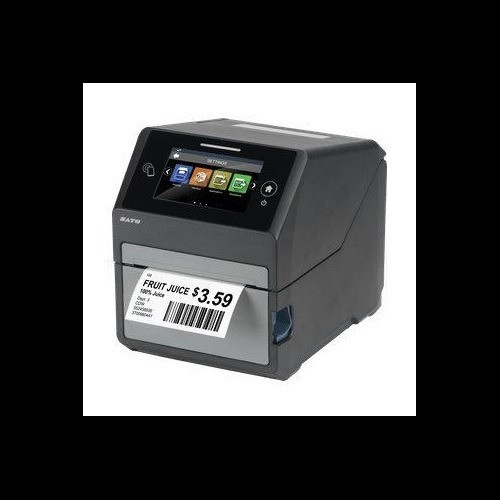
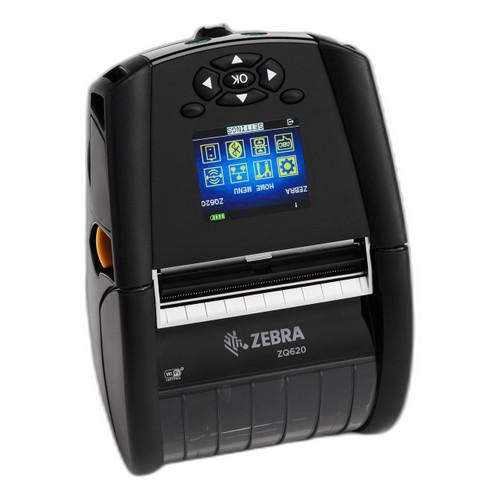
Both the Sato CT4-LX-HC (WWHC04041-WAN) and the Zebra ZQ62 (AUFA004-00) are thermal label printers, but they occupy fundamentally different form factors and deployment contexts. The Sato is a desktop healthcare printer designed for fixed clinical workstations; the Zebra is a compact mobile printer designed for portable, field or warehouse use. A buyer choosing between these is comparing stationary high-resolution clinical labeling against ruggedized mobile printing — a legitimate cross-shop when an organization is deciding between centralized and point-of-care or point-of-activity printing strategies.
In This Guide
Which printer delivers higher print resolution and output speed?
The Sato WWHC04041-WAN specifies a print resolution of 305 DPI and a print speed of 8 inches per second (ips), with a maximum print width of 4.09 inches. It supports both direct thermal and thermal transfer print methods, giving operators flexibility in media and ribbon selection depending on label durability requirements.
The Zebra ZQ62 (AUFA004-00) specifies a resolution of 288×240 — a non-square pixel matrix — and a 3-inch print width. Print speed is not stated in the provided specifications. The ZQ62 supports thermal printing only; whether it supports thermal transfer is not specified in the provided data.
On print resolution and output width, the Sato holds a clear advantage: 305 DPI versus the Zebra's 288×240 non-square matrix, and 4.09-inch versus 3-inch maximum print width. For applications requiring crisp, wide labels — such as patient wristbands or specimen tubes — the Sato's print engine is the stronger performer by spec.
Which printer is better suited to its intended deployment environment?
The Sato WWHC04041-WAN is a desktop unit weighing 8.0 lbs (3.6 kg) with physical dimensions of 7.0" × 9.375" × 8.4375". Its housing is explicitly rated as antimicrobial and disinfectant-resistant — a critical compliance factor in clinical settings where surfaces must withstand repeated chemical sanitization. It operates on AC power (100–240V, 50/60Hz) and is not battery-powered. Operating temperature range is 32°F to 104°F (0°C to 40°C).
The Zebra ZQ62 is a mobile, portable printer with an IP54 ingress protection rating, meaning it is rated against dust ingestion and water splashing from any direction. It is powered by an internal 3,250mAh battery, enabling untethered operation across a full shift. Its compact 3-inch print width and portable form factor suit warehouse, dock, retail, and field deployment. Operating temperature range is not provided in the supplied specifications.
The two units are purpose-built for opposite environments. The Sato's antimicrobial housing addresses healthcare infection-control requirements; the Zebra's IP54 rating and battery address mobile ruggedness. Neither spec is interchangeable: the Sato is not portable, and the Zebra's antimicrobial status is not stated.
Which printer offers broader connectivity and media handling capability?
The Sato WWHC04041-WAN provides Ethernet, Wi-Fi, Bluetooth, and USB 2.0 connectivity — covering wired network infrastructure as well as wireless and direct-device connections. It supports media widths from 1" to 4.1", a maximum media roll diameter of 5", a 1.5" media core, and ribbon rolls up to 984 ft (300 m) in length. Onboard memory is substantial: 4 GB Flash, 1 GB DDR3 RAM, and 2 GB user storage. The 4.3" full-color touchscreen supports guided operator workflows.
The Zebra ZQ62 provides Bluetooth 4.X and Wi-Fi connectivity. Ethernet is listed as 'Cradle' — meaning wired network access requires a separate cradle accessory, not a native port. Media is specified as 0.75" core, linered, with a 3-inch print width; maximum roll diameter is not stated. Memory is 256 MB RAM and 512 MB Flash. No display size or type is specified in the provided data.
The Sato leads significantly on connectivity breadth (native Ethernet vs. cradle-dependent), onboard memory (4 GB Flash vs. 512 MB Flash; 1 GB RAM vs. 256 MB RAM), and media versatility including ribbon support for thermal transfer. The Zebra's Bluetooth 4.X and Wi-Fi suffice for mobile pairing but lack the network infrastructure integration the Sato provides natively.
Which should you choose: the WWHC04041-WAN or the AUFA004-00?
Our take: The WWHC04041-WAN is the stronger choice when the deployment is a fixed clinical or healthcare environment requiring high-resolution labeling, infection-control-compliant hardware, and deep network integration. The Sato delivers 305 DPI versus the Zebra's non-square 288×240 matrix, a 4.09-inch print width versus 3 inches, and native Ethernet plus 4 GB Flash versus the Zebra's cradle-dependent wired access and 512 MB Flash. Conversely, the Zebra ZQ62 (AUFA004-00) is the correct choice for mobile or field operations: its IP54 rating, 3,250mAh battery for untethered shift-length use, and compact portable form factor address requirements the Sato — an AC-powered desktop unit — cannot meet. Organizations evaluating centralized, workstation-based clinical label printing should specify the Sato; organizations deploying workers who print while moving through a warehouse, dock, or field site should specify the Zebra.
Side-by-Side Comparison
Spec-for-spec, from manufacturer data.
| Specification | Sato WWHC04041-WAN | Zebra AUFA004-00 |
|---|---|---|
| Form Factor | Desktop | Mobile / Portable |
| Print Method | Direct Thermal / Thermal Transfer | Thermal (transfer support not specified) |
| Print Resolution | 305 DPI | 288×240 (non-square matrix) |
| Print Speed | 8 ips | Not specified |
| Max Print Width | 4.09" | 3" |
| Connectivity | Ethernet, Wi-Fi, Bluetooth, USB 2.0 | Bluetooth 4.X, Wi-Fi (Ethernet via cradle only) |
| IP / Enclosure Rating | Antimicrobial, disinfectant-resistant housing | IP54 |
| Power Source | AC 100–240V, 50/60Hz | 3,250mAh internal battery |
| Display | 4.3" full-color touchscreen | Not specified |
| Flash Memory | 4 GB | 512 MB |
| RAM | 1 GB DDR3 | 256 MB |
| Media Width Range | 1" to 4.1" | 3" print width; 0.75" core linered |
| Max Media Roll Diameter | 5" | Not specified |
| Ribbon Support | Up to 984 ft (300 m) | Not specified |
| Weight | 8.0 lbs (3.6 kg) | Not specified |
| Warranty | 1-year | 1-year |
Frequently Asked Questions
Which should you choose: the WWHC04041-WAN or the AUFA004-00?
The WWHC04041-WAN is the stronger choice when the deployment is a fixed clinical or healthcare environment requiring high-resolution labeling, infection-control-compliant hardware, and deep network integration. The Sato delivers 305 DPI versus the Zebra's non-square 288×240 matrix, a 4.09-inch print width versus 3 inches, and native Ethernet plus 4 GB Flash versus the Zebra's cradle-dependent wired access and 512 MB Flash. Conversely, the Zebra ZQ62 (AUFA004-00) is the correct choice for mobile or field operations: its IP54 rating, 3,250mAh battery for untethered shift-length use, and compact portable form factor address requirements the Sato — an AC-powered desktop unit — cannot meet. Organizations evaluating centralized, workstation-based clinical label printing should specify the Sato; organizations deploying workers who print while moving through a warehouse, dock, or field site should specify the Zebra.
Is the WWHC04041-WAN or the ZQ62 AUFA004-00 better for hospital and clinical environments?
The Sato WWHC04041-WAN is the purpose-built choice for clinical environments. Its housing is explicitly specified as antimicrobial and disinfectant-resistant — a compliance requirement in most healthcare settings — and it delivers 305 DPI resolution across a 4.09-inch print width, supporting patient wristbands, specimen labels, and pharmacy output. The Zebra ZQ62's antimicrobial status is not stated in the provided specifications, and its 3-inch print width is narrower. The Sato also provides native Ethernet connectivity for integration with hospital network infrastructure, which the Zebra requires a cradle accessory to match.
Can the Zebra ZQ62 AUFA004-00 be used for full-shift printing without plugging in?
Yes, based on the provided specifications. The ZQ62 is equipped with an internal 3,250mAh battery and an IP54 rating for portable field use. The product's own specification bullet states it 'sustains full-shift printing without mid-shift recharge interruptions.' The Sato WWHC04041-WAN, by contrast, is an AC-powered desktop unit (100–240V, 50/60Hz) with no battery specified; it is not designed for untethered or mobile operation.
Which printer supports more barcode symbologies and scan capabilities?
The Zebra ZQ62 includes an integrated 2D scan engine and explicitly lists supported symbologies: QR Code, Data Matrix, PDF417, Code 128, Code 39, UPC, and EAN. The Sato WWHC04041-WAN's provided specifications do not list supported print symbologies or an integrated scan engine. Buyers requiring a combined print-and-scan mobile workflow should note the Zebra's documented symbology support; the Sato's symbology capabilities cannot be confirmed from the supplied spec data.
More Label Printer Comparisons
- Sato WWCT04241-NAR vs Zebra ZD4A043-D01X01EZ
- Sato WWCT04241-NAR vs Zebra ZT41142-T010000Z
- Sato WWCT04241-NAR vs Zebra ZT41142-T31A000Z
- Sato WWCT04241-NAR vs Sato WWCT04441-WCN
- Sato WWCT04241-NAR vs Sato WWHC03041-WAN
- Sato WWCT04441-WCN vs Zebra ZD4A043-D01X01EZ
Label Printer Buying Guides
Get a Second Opinion on Your Camera Choice
Share your site layout, coverage goals, and budget. Our team will validate the camera selection, flag anything we would change, and recommend products that match the use case.