
Sato WWHC04041-NHR vs Zebra ZT41142-T010000Z: Specification Comparison
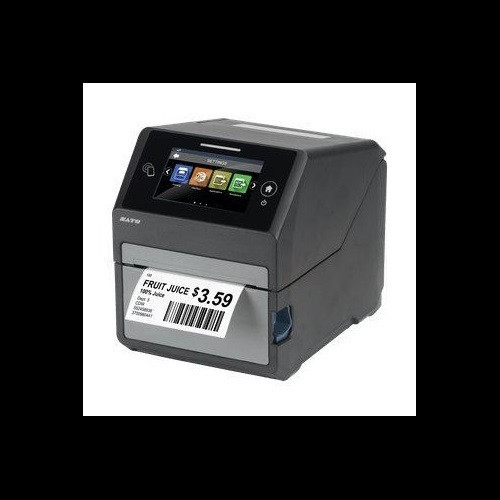
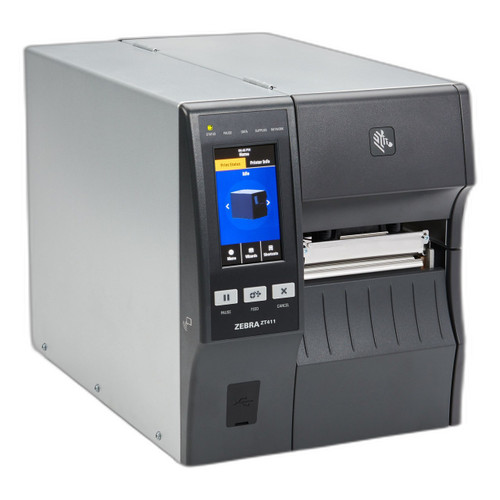
Both the Sato WWHC04041-NHR CT4-LX-HC and the Zebra ZT41142-T010000Z are 4-inch-class desktop/industrial thermal label and tag printers that support direct thermal and/or thermal transfer output, wireless and wired connectivity, and barcode label generation. A buyer evaluating either unit would weigh print speed, resolution options, media handling, connectivity breadth, and application-specific features such as the Sato's healthcare antimicrobial housing or the Zebra's integrated 2D barcode scanner. These two units are legitimately cross-shoppable in the broad thermal printer category.
In This Guide
- Which printer delivers faster throughput and finer resolution for your label volume and quality needs?
- Which printer better fits your media requirements and connectivity infrastructure?
- Which printer is better suited to your operating environment and operator interface requirements?
- Which should you choose: the WWHC04041-NHR or the ZT41142-T010000Z?
- Side-by-Side Specs
- FAQ
Which printer delivers faster throughput and finer resolution for your label volume and quality needs?
The Zebra ZT41142-T010000Z prints at 14 ips versus the Sato WWHC04041-NHR's 8 ips — a 75% speed advantage at maximum rated throughput. For high-volume shipping or warehouse label runs, the Zebra's speed delta is operationally significant: a 4×6 shipping label completes in under 2 seconds at 14 ips.
On resolution, the Zebra offers three selectable modes — 203, 300, and 600 dpi — giving operators the flexibility to balance speed and detail per job. The Sato is rated at 305 dpi (with a secondary '203' figure also listed in specs); no multi-resolution mode is documented in the provided specifications. For fine-pitch barcodes or small-font clinical labels, the Zebra's 600 dpi option provides headroom the Sato spec sheet does not document.
Maximum print width is comparable: 4.09 inches on the Sato and 4 inches on the Zebra, placing both in the standard 4-inch label class.
Which printer better fits your media requirements and connectivity infrastructure?
The Sato WWHC04041-NHR supports both direct thermal and thermal transfer print methods, accepts media widths from 1 inch to 4.1 inches on rolls up to 5 inches in diameter, and accommodates ribbon up to 984 ft (300 m). The Zebra ZT41142-T010000Z's print method (direct thermal, thermal transfer, or both) is not explicitly stated in the provided specifications beyond 'Thermal Printer' and 'Type: Thermal'; ribbon capacity and media roll diameter are likewise not specified.
Connectivity is broad on both units. The Sato provides USB, Ethernet, Wi-Fi, and Bluetooth simultaneously. The Zebra provides Wi-Fi 802.11ac and Bluetooth 4.1 MFi as wireless interfaces, and its package contents confirm USB, Serial, Ethernet, and Bluetooth — adding a serial port the Sato spec does not list. The Zebra's Bluetooth 4.1 MFi certification is notable for Apple device integration.
The Zebra adds an integrated 2D barcode scanner (QR Code, Data Matrix, PDF417, Code 128, Code 39, UPC, EAN) that the Sato does not have. This scanner eliminates the need for a separate handheld in scan-and-print workflows.
Which printer is better suited to your operating environment and operator interface requirements?
The Sato WWHC04041-NHR is purpose-built for healthcare environments: its housing is constructed from antimicrobial, disinfectant-resistant plastic, a documented material property directly relevant to clinical surface-cleaning protocols. It includes a 4.3-inch full-color touchscreen for on-device navigation — no equivalent display size or type is specified for the Zebra ZT41142-T010000Z in the provided data.
Operating temperature for the Sato is specified at 32°F–104°F (0°C–40°C). No operating temperature range is provided in the Zebra's supplied specifications.
The Sato carries 4 GB flash, 1 GB DDR3 RAM, and 2 GB user storage — detailed memory figures not present in the Zebra spec set, which lists only '256 MB SDRAM.' The Zebra's mount type is listed as 'Rack' in the provided spec, while the Sato is 'Desktop'; however, the Zebra is marketed as a 4-inch label printer, so buyers should verify physical mounting requirements against their environment. Weight differs substantially: Sato is 8.0 lbs (3.6 kg) versus the Zebra's 36–40 lbs (16.3–18.1 kg), indicating the Zebra is a significantly heavier industrial unit.
Which should you choose: the WWHC04041-NHR or the ZT41142-T010000Z?
Our take: The WWHC04041-NHR is the stronger choice when the deployment is in a clinical or healthcare setting requiring disinfectant-resistant surfaces, a large color touchscreen for bedside or nurse-station operation, and compact desktop placement at 8.0 lbs. The ZT41142-T010000Z is the stronger choice when print throughput, resolution flexibility, or integrated scanning are the primary drivers: it prints at 14 ips versus the Sato's 8 ips, offers 600 dpi as its top resolution tier versus the Sato's documented 305 dpi, and includes a built-in 2D scanner covering QR, Data Matrix, and PDF417 that the Sato lacks entirely. At 36–40 lbs the Zebra is clearly an industrial fixed-station unit, not a portable or bedside device. Both carry 1-year warranties. Buyers operating warehouses, distribution centers, or scan-and-print workflows should favor the Zebra; healthcare facilities prioritizing infection control, operator touchscreen UX, and a lightweight footprint should favor the Sato.
Side-by-Side Comparison
Spec-for-spec, from manufacturer data.
| Specification | Sato WWHC04041-NHR | Zebra ZT41142-T010000Z |
|---|---|---|
| Print Speed | 8 ips | 14 ips |
| Max Print Width | 4.09" | 4" |
| Print Resolution | 305 dpi | 203 / 300 / 600 dpi (selectable) |
| Print Method | Direct Thermal / Thermal Transfer | Thermal (TT/DT not explicitly stated in specs) |
| Integrated Scanner | — | 2D (QR, Data Matrix, PDF417, Code 128, UPC, EAN) |
| Display | 4.3" Full-Color Touchscreen | — |
| Housing | Antimicrobial, disinfectant-resistant plastic | Not specified |
| Connectivity (Wired) | USB, Ethernet | USB, Serial, Ethernet |
| Connectivity (Wireless) | Wi-Fi, Bluetooth | Wi-Fi 802.11ac, Bluetooth 4.1 MFi |
| Max Media Width | 4.1" | Not specified |
| Max Roll Diameter | 5" | Not specified |
| Max Ribbon Length | 984 ft (300 m) | Not specified |
| Memory | 4 GB Flash / 1 GB DDR3 / 2 GB User Storage | 256 MB SDRAM |
| Operating Temperature | 32°F–104°F (0°C–40°C) | Not specified |
| Weight | 8.0 lbs (3.6 kg) | 36–40 lbs (16.3–18.1 kg) |
| Warranty | 1-year | 1-year |
Frequently Asked Questions
Which should you choose: the WWHC04041-NHR or the ZT41142-T010000Z?
The WWHC04041-NHR is the stronger choice when the deployment is in a clinical or healthcare setting requiring disinfectant-resistant surfaces, a large color touchscreen for bedside or nurse-station operation, and compact desktop placement at 8.0 lbs. The ZT41142-T010000Z is the stronger choice when print throughput, resolution flexibility, or integrated scanning are the primary drivers: it prints at 14 ips versus the Sato's 8 ips, offers 600 dpi as its top resolution tier versus the Sato's documented 305 dpi, and includes a built-in 2D scanner covering QR, Data Matrix, and PDF417 that the Sato lacks entirely. At 36–40 lbs the Zebra is clearly an industrial fixed-station unit, not a portable or bedside device. Both carry 1-year warranties. Buyers operating warehouses, distribution centers, or scan-and-print workflows should favor the Zebra; healthcare facilities prioritizing infection control, operator touchscreen UX, and a lightweight footprint should favor the Sato.
Is the WWHC04041-NHR or ZT41142-T010000Z better for a hospital wristband and specimen label environment?
Based on the provided specifications, the Sato WWHC04041-NHR is designed specifically for healthcare use: its housing is made of antimicrobial, disinfectant-resistant plastic, it accepts the narrow media widths (as low as 1 inch) typical of wristbands, and its 4.3-inch color touchscreen supports on-device operation by clinical staff. The Zebra ZT41142-T010000Z does not list antimicrobial housing or a touchscreen in its supplied specifications, and at 36–40 lbs it is not configured as a bedside unit.
Does the ZT41142-T010000Z print faster than the WWHC04041-NHR, and does it matter for my use case?
Yes. The Zebra ZT41142-T010000Z is rated at 14 ips versus the Sato WWHC04041-NHR's 8 ips — a 75% throughput advantage. For high-volume label runs such as shipping, receiving, or warehouse pick operations, this difference is meaningful. For lower-volume clinical label printing (wristbands, specimen tubes, pharmacy labels), 8 ips is generally sufficient and the speed gap becomes less decision-relevant.
Can the ZT41142-T010000Z replace a separate barcode scanner at a print station, and can the WWHC04041-NHR do the same?
The Zebra ZT41142-T010000Z includes an integrated 2D barcode scanner that reads QR Code, Data Matrix, PDF417, Code 128, Code 39, UPC, and EAN symbologies, which can eliminate a separate handheld scanner in scan-and-print workflows. The Sato WWHC04041-NHR does not list any integrated scanning capability in its provided specifications, so a separate scanner would be required if scan-and-print functionality is needed.
More Label Printer Comparisons
- Sato WWCT04241-NAR vs Zebra ZD4A043-D01X01EZ
- Sato WWCT04241-NAR vs Zebra ZT41142-T010000Z
- Sato WWCT04241-NAR vs Zebra ZT41142-T31A000Z
- Sato WWCT04241-NAR vs Sato WWCT04441-WCN
- Sato WWCT04241-NAR vs Sato WWHC03041-WAN
- Sato WWCT04441-WCN vs Zebra ZD4A043-D01X01EZ
Label Printer Buying Guides
Get a Second Opinion on Your Camera Choice
Share your site layout, coverage goals, and budget. Our team will validate the camera selection, flag anything we would change, and recommend products that match the use case.