
Sato WWHC04041-NHR vs Zebra AUFA004-00: Specification Comparison
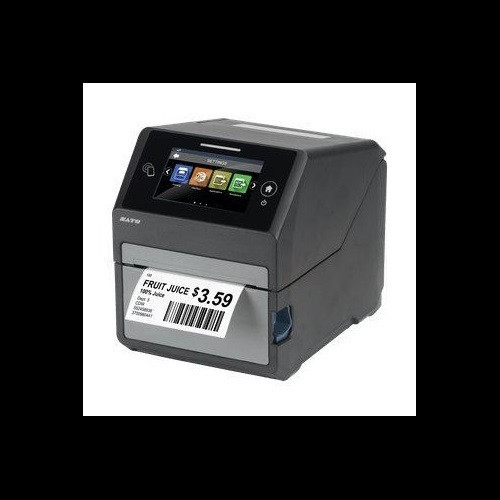
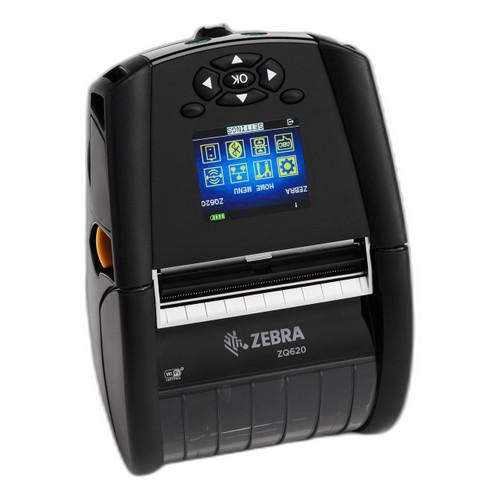
Both the Sato CT4-LX-HC (WWHC04041-NHR) and the Zebra ZQ62 (AUFA004-00) are thermal label printers, but they target fundamentally different deployment scenarios. The Sato is a desktop healthcare printer with a full-color touchscreen, dual-mode printing, and antimicrobial housing designed for fixed clinical workstations. The Zebra ZQ62 is a compact mobile printer built for portability, featuring an IP54-rated enclosure and a 3250 mAh battery for fieldwork and warehouse operations. A buyer cross-shopping these would be choosing between stationary clinical precision and rugged mobile flexibility.
In This Guide
- Which printer delivers higher print resolution and speed for label demands?
- Which printer is better suited to its intended operating environment — clinical fixed-station or mobile rugged use?
- Which printer offers more comprehensive connectivity for enterprise integration?
- Which should you choose: the WWHC04041-NHR or the AUFA004-00?
- Side-by-Side Specs
- FAQ
Which printer delivers higher print resolution and speed for label demands?
The Sato WWHC04041-NHR prints at 305 dpi with a maximum speed of 8 ips and a maximum print width of 4.09 inches. It supports both direct thermal and thermal transfer modes, giving operators flexibility for different media and ribbon types. Thermal transfer support also enables longer-lasting labels resistant to smearing and fading, which is critical for specimen and wristband labeling in clinical settings.
The Zebra ZQ62 (AUFA004-00) is specified at a 288×240 resolution — a non-standard figure that does not equate directly to a standard DPI rating such as 203 or 300 dpi. Its print width is 3 inches, narrower than the Sato's 4.09 inches. The Zebra spec sheet does not list a print speed in ips. The Sato provides clearly superior and more verifiable print performance data for buyers requiring confirmed output quality.
For resolution-sensitive applications such as small-font specimen labels or patient wristbands, the Sato's 305 dpi and 8 ips specification is fully documented. The Zebra's resolution figure is atypical in format, and no ips speed is provided in the supplied specifications, making direct comparison on print throughput impossible from available data.
Which printer is better suited to its intended operating environment — clinical fixed-station or mobile rugged use?
The Sato WWHC04041-NHR is purpose-built for healthcare fixed installations. Its housing is constructed from antimicrobial, disinfectant-resistant plastic, a material choice that directly addresses infection-control protocols requiring regular surface wiping with hospital-grade agents. It is a desktop unit weighing 8.0 lbs (3.6 kg), with an AC power supply (100–240V, 50/60Hz) and an operating temperature range of 32°F to 104°F (0°C to 40°C). There is no IP ingress-protection rating listed in the provided specifications.
The Zebra ZQ62 carries an IP54 rating, meaning it is protected against dust ingress and splash water from any direction — a critical specification for dock, warehouse, or outdoor last-mile environments. It is battery-powered (3,250 mAh internal) and classified as a portable/mobile printer, meaning it operates untethered. Physical dimensions beyond a 3-inch print width are not listed in the provided specifications, nor is an operating temperature range.
These two printers occupy non-overlapping environmental niches. The Sato's antimicrobial housing addresses clinical hygiene compliance; the Zebra's IP54 rating addresses physical ruggedness and splash resistance in industrial mobile contexts. Neither spec covers the other's strength: no IP rating is provided for the Sato, and no antimicrobial housing claim is made for the Zebra.
Which printer offers more comprehensive connectivity for enterprise integration?
The Sato WWHC04041-NHR provides four documented interfaces: Ethernet (wired LAN), Wi-Fi, Bluetooth, and USB. This combination supports both fixed-network integration for hospital IT infrastructure and wireless or direct-connect options. The 4.3-inch full-color touchscreen enables on-device operator interaction without a host terminal. Memory is substantial: 4 GB Flash, 1 GB DDR3 RAM, and 2 GB user storage, supporting local form storage and complex label templates.
The Zebra ZQ62 (AUFA004-00) lists Bluetooth 4.X and Wi-Fi as its connectivity options. No USB host or Ethernet port is specified. It includes a 2D scan engine (supporting QR Code, Data Matrix, PDF417, Code 128, Code 39, UPC, and EAN), which is a capability the Sato does not list. Memory is specified as 256 MB RAM and 512 MB Flash — significantly less than the Sato. The mount type is listed as Wall/Rack, and Ethernet Rate is listed as 'Cradle,' suggesting wired network access requires a docking cradle rather than a native port.
The Sato's four native interfaces and larger onboard memory better support enterprise clinical workflows. The Zebra adds a 2D barcode scan engine absent from the Sato's listed specs, which is relevant for mobile workflows requiring scan-and-print operations. Buyers integrating into a wired hospital network will find the Sato's native Ethernet simpler to provision than the Zebra's cradle-dependent wired path.
Which should you choose: the WWHC04041-NHR or the AUFA004-00?
Our take: The WWHC04041-NHR is the stronger choice when the deployment is a fixed clinical workstation requiring verified print quality, infection-control-compliant materials, and robust enterprise connectivity. Key spec deltas: the Sato prints at a documented 305 dpi versus the Zebra's non-standard 288×240 figure with no ips speed listed; the Sato supports four native interfaces (Ethernet, Wi-Fi, Bluetooth, USB) while the Zebra lists only Bluetooth 4.X and Wi-Fi with wired LAN requiring a cradle; and the Sato provides 4 GB Flash and 1 GB RAM against the Zebra's 256 MB RAM and 512 MB Flash. Conversely, the ZQ62 (AUFA004-00) is the correct choice for untethered mobile operations — its IP54 rating and 3,250 mAh battery are capabilities the Sato, as an AC-powered desktop unit, does not offer. Buyers should select the Sato for clinical fixed-station labeling and the Zebra for warehouse, dock, or field mobile printing.
Side-by-Side Comparison
Spec-for-spec, from manufacturer data.
| Specification | Sato WWHC04041-NHR | Zebra AUFA004-00 |
|---|---|---|
| Product Class | Desktop Healthcare Label Printer | Mobile Label Printer |
| Form Factor | Desktop | Portable / Mobile |
| Print Method | Direct Thermal / Thermal Transfer | Thermal (method not specified in specs) |
| Resolution | 305 dpi | 288×240 (non-standard format; dpi not stated) |
| Print Speed | 8 ips | — |
| Max Print Width | 4.09" | 3" |
| Power Source | AC 100–240V, 50/60Hz | 3,250 mAh internal battery |
| IP Rating | — | IP54 |
| Housing | Antimicrobial, disinfectant-resistant plastic | — |
| Display | 4.3" full-color touchscreen | — |
| Connectivity | Ethernet, Wi-Fi, Bluetooth, USB | Bluetooth 4.X, Wi-Fi (Ethernet via cradle) |
| Memory | 4 GB Flash, 1 GB DDR3 RAM, 2 GB user storage | 512 MB Flash, 256 MB RAM |
| Scan Engine | — | 2D (QR, Data Matrix, PDF417, Code 128, Code 39, UPC, EAN) |
| Max Media Width | 4.1" | — |
| Max Roll Diameter | 5" | — |
| Warranty | 1-year | 1-year |
Frequently Asked Questions
Which should you choose: the WWHC04041-NHR or the AUFA004-00?
The WWHC04041-NHR is the stronger choice when the deployment is a fixed clinical workstation requiring verified print quality, infection-control-compliant materials, and robust enterprise connectivity. Key spec deltas: the Sato prints at a documented 305 dpi versus the Zebra's non-standard 288×240 figure with no ips speed listed; the Sato supports four native interfaces (Ethernet, Wi-Fi, Bluetooth, USB) while the Zebra lists only Bluetooth 4.X and Wi-Fi with wired LAN requiring a cradle; and the Sato provides 4 GB Flash and 1 GB RAM against the Zebra's 256 MB RAM and 512 MB Flash. Conversely, the ZQ62 (AUFA004-00) is the correct choice for untethered mobile operations — its IP54 rating and 3,250 mAh battery are capabilities the Sato, as an AC-powered desktop unit, does not offer. Buyers should select the Sato for clinical fixed-station labeling and the Zebra for warehouse, dock, or field mobile printing.
Is the WWHC04041-NHR or the ZQ62 AUFA004-00 better for hospital patient-care labeling?
The WWHC04041-NHR is the purpose-built option for hospital use. Its antimicrobial, disinfectant-resistant plastic housing directly addresses infection-control requirements, and its 305 dpi resolution at 8 ips with up to 4.09-inch print width covers wristband and specimen label formats. The ZQ62 does not list antimicrobial housing in its provided specifications and has a narrower 3-inch print width.
Can either printer operate without a wall outlet — for example, in a mobile cart or field scenario?
Only the Zebra ZQ62 (AUFA004-00) is battery-powered, with a 3,250 mAh internal battery rated for full-shift use. The Sato WWHC04041-NHR requires AC mains power (100–240V, 50/60Hz) and is not specified as battery-capable. For any untethered or mobile deployment, the ZQ62 is the only viable option between these two.
Which printer is easier to connect to a wired hospital or warehouse network?
The Sato WWHC04041-NHR includes a native Ethernet port, making it straightforward to assign a static IP and integrate with a hospital network or label management system. The Zebra ZQ62's provided specifications list Ethernet Rate as 'Cradle,' indicating that wired LAN connectivity requires a separate docking cradle rather than a direct port on the printer itself.
More Label Printer Comparisons
- Sato WWCT04241-NAR vs Zebra ZD4A043-D01X01EZ
- Sato WWCT04241-NAR vs Zebra ZT41142-T010000Z
- Sato WWCT04241-NAR vs Zebra ZT41142-T31A000Z
- Sato WWCT04241-NAR vs Sato WWCT04441-WCN
- Sato WWCT04241-NAR vs Sato WWHC03041-WAN
- Sato WWCT04441-WCN vs Zebra ZD4A043-D01X01EZ
Label Printer Buying Guides
Get a Second Opinion on Your Camera Choice
Share your site layout, coverage goals, and budget. Our team will validate the camera selection, flag anything we would change, and recommend products that match the use case.