
Sato WWHC04041-NHN vs Zebra ZT41142-T010000Z: Specification Comparison
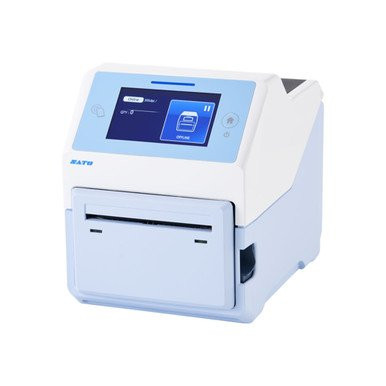
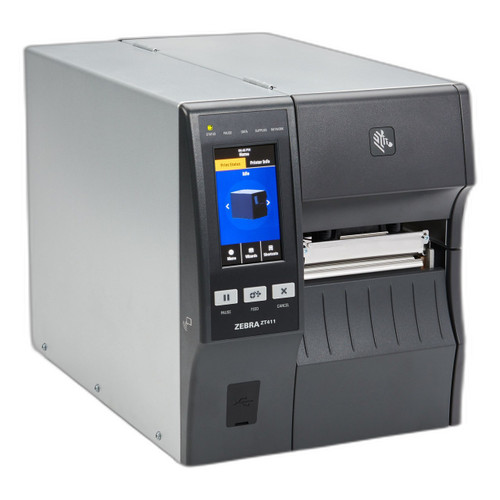
Both the Sato CT4-LX-HC (WWHC04041-NHN) and the Zebra ZT41142-T010000Z are 4-inch desktop/industrial thermal label printers supporting direct thermal and thermal transfer methods, making them cross-shoppable in label-printing procurement. The Sato is purpose-built for healthcare environments with antimicrobial housing and a color touchscreen, while the Zebra adds an integrated 2D barcode scanner and significantly higher print speed. This comparison evaluates print performance, connectivity and scanning capability, and environmental or application-specific design for B2B buyers evaluating both units.
In This Guide
- How do print speed, resolution, and media handling compare between the WWHC04041-NHN and ZT41142-T010000Z?
- Which unit offers broader connectivity and does the integrated scanner change the deployment calculus?
- Which printer is better suited to its target environment in terms of physical design, weight, and application-specific features?
- Which should you choose: the WWHC04041-NHN or the ZT41142-T010000Z?
- Side-by-Side Specs
- FAQ
How do print speed, resolution, and media handling compare between the WWHC04041-NHN and ZT41142-T010000Z?
The Zebra ZT41142-T010000Z prints at 14 ips versus the Sato CT4-LX-HC's 8 ips — a 75% throughput advantage that is material in high-volume shipping, receiving, or manufacturing labeling environments where label-per-hour rates drive station count.
On resolution, both units share a 203 dpi baseline. The Sato CT4-LX-HC specs list 305 dpi as the primary operating resolution; the Zebra ZT41142-T010000Z offers selectable 203, 300, and 600 dpi — giving it finer detail options for small-font compliance labels or dense 2D codes without a head swap.
Maximum print width is nearly identical: 4.09 inches on the Sato versus 4 inches on the Zebra. The Sato specifies media width range of 1" to 4.1", core size of 1.5", max roll diameter of 5", and maximum ribbon length of 984 ft. The Zebra spec sheet does not provide equivalent ribbon length, core size, or roll diameter figures for direct comparison.
Which unit offers broader connectivity and does the integrated scanner change the deployment calculus?
Both printers support Wi-Fi and Bluetooth. The Zebra ZT41142-T010000Z specifies Bluetooth 4.1 MFi and Wi-Fi 802.11ac; the Sato CT4-LX-HC lists Ethernet, Wi-Fi, Bluetooth, and USB but does not specify Wi-Fi 802.11 generation or Bluetooth version. The Sato's inclusion of wired Ethernet alongside wireless gives it a cabled-network fallback the Zebra spec does not explicitly confirm, though the Zebra's package contents reference standard USB, Serial, Ethernet, and Bluetooth.
The Zebra ZT41142-T010000Z's defining differentiator is its integrated 2D scan engine reading QR Code, Data Matrix, PDF417, Code 128, Code 39, UPC, and EAN. This allows verify-after-print workflows — confirm the label scans correctly at the point of application — without a separate handheld scanner. No scanning capability of any kind is listed in the Sato CT4-LX-HC specifications.
The Sato CT4-LX-HC provides a 4.3-inch full-color touchscreen as its operator interface. The Zebra ZT41142-T010000Z spec does not reference a display type or size, which may affect ease of standalone configuration in environments without a connected host.
Which printer is better suited to its target environment in terms of physical design, weight, and application-specific features?
The Sato CT4-LX-HC is explicitly engineered for healthcare: its housing is antimicrobial and disinfectant-resistant plastic, allowing the chemical wipe-downs required in clinical settings under protocols using bleach-based or quaternary ammonium cleaners. No equivalent housing material claim appears in the Zebra ZT41142-T010000Z specifications.
Weight diverges substantially. The Sato CT4-LX-HC weighs 8.0 lbs, consistent with a compact desktop unit (footprint 7.0" × 9.375" × 8.4375"). The Zebra ZT41142-T010000Z is listed at 36–40 lbs depending on configuration, placing it firmly in the industrial floor or bench category despite a shared mount-type listing discrepancy in the raw spec data. Buyers should confirm Zebra's physical mounting requirements before specifying a shared workstation.
The Sato CT4-LX-HC specifies 4 GB flash, 1 GB DDR3 RAM, and 2 GB user storage — a defined memory architecture useful for font libraries, form templates, and firmware. The Zebra ZT41142-T010000Z lists 256 MB SDRAM; flash and user storage are not specified in the provided data. Operating temperature for the Sato is confirmed at 32°F to 104°F; the Zebra does not provide an operating temperature range in the supplied specifications.
Which should you choose: the WWHC04041-NHN or the ZT41142-T010000Z?
Our take: The WWHC04041-NHN is the stronger choice when the deployment environment demands healthcare compliance — specifically, its antimicrobial, disinfectant-resistant housing is a hard requirement in clinical and patient-care labeling that the ZT41142-T010000Z does not address by spec. Conversely, the ZT41142-T010000Z holds three concrete advantages for general industrial or logistics use: print speed of 14 ips versus 8 ips (75% faster throughput), selectable resolution up to 600 dpi versus the Sato's 305 dpi ceiling, and an integrated 2D scan engine covering QR Code, Data Matrix, PDF417, and 1D symbologies that eliminates a separate verification device. Weight also separates their deployment profiles: 8 lbs for the Sato desktop versus 36–40 lbs for the Zebra industrial unit. Specify the Sato CT4-LX-HC for bedside, pharmacy, or specimen labeling in regulated clinical settings; specify the Zebra ZT41142-T010000Z for high-speed warehouse, manufacturing, or point-of-use scan-and-print workflows where throughput and barcode verification matter more than chemical resistance.
Side-by-Side Comparison
Spec-for-spec, from manufacturer data.
| Specification | Sato WWHC04041-NHN | Zebra ZT41142-T010000Z |
|---|---|---|
| Print Speed | 8 ips | 14 ips |
| Print Method | Direct Thermal / Thermal Transfer | Thermal (method not specified in spec) |
| Max Resolution | 305 dpi | 600 dpi (selectable 203 / 300 / 600) |
| Max Print Width | 4.09" | 4" |
| Media Width Range | 1" to 4.1" | — |
| Max Roll Diameter | 5" | — |
| Max Ribbon Length | 984 ft | — |
| Display | 4.3" Full-Color Touchscreen | — |
| Connectivity | USB, Ethernet, Wi-Fi, Bluetooth | USB, Serial, Ethernet, Wi-Fi 802.11ac, Bluetooth 4.1 MFi |
| Integrated Scanner | None | 2D (QR, Data Matrix, PDF417, Code 128, Code 39, UPC, EAN) |
| Housing | Antimicrobial, disinfectant-resistant plastic | — |
| Weight | 8.0 lbs | 36–40 lbs |
| Dimensions | 7.0" x 9.375" x 8.4375" | — |
| Memory | 4 GB Flash / 1 GB DDR3 / 2 GB user storage | 256 MB SDRAM |
| Operating Temperature | 32°F to 104°F | — |
| Warranty | 1-year | 1-year |
Frequently Asked Questions
Which should you choose: the WWHC04041-NHN or the ZT41142-T010000Z?
The WWHC04041-NHN is the stronger choice when the deployment environment demands healthcare compliance — specifically, its antimicrobial, disinfectant-resistant housing is a hard requirement in clinical and patient-care labeling that the ZT41142-T010000Z does not address by spec. Conversely, the ZT41142-T010000Z holds three concrete advantages for general industrial or logistics use: print speed of 14 ips versus 8 ips (75% faster throughput), selectable resolution up to 600 dpi versus the Sato's 305 dpi ceiling, and an integrated 2D scan engine covering QR Code, Data Matrix, PDF417, and 1D symbologies that eliminates a separate verification device. Weight also separates their deployment profiles: 8 lbs for the Sato desktop versus 36–40 lbs for the Zebra industrial unit. Specify the Sato CT4-LX-HC for bedside, pharmacy, or specimen labeling in regulated clinical settings; specify the Zebra ZT41142-T010000Z for high-speed warehouse, manufacturing, or point-of-use scan-and-print workflows where throughput and barcode verification matter more than chemical resistance.
Is the WWHC04041-NHN or ZT41142-T010000Z better for hospital and clinical labeling stations?
The Sato WWHC04041-NHN is purpose-specified for healthcare: its housing is antimicrobial and disinfectant-resistant, allowing standard clinical wipe-down protocols. It also weighs 8.0 lbs and has a compact footprint suitable for a bedside cart or nursing station. The Zebra ZT41142-T010000Z spec does not claim antimicrobial housing and weighs 36–40 lbs, making it poorly suited to point-of-care deployment.
Does the ZT41142-T010000Z's integrated scanner eliminate the need for a separate barcode verifier at the print station?
Per the provided specifications, the Zebra ZT41142-T010000Z includes an integrated 2D scan engine reading QR Code, Data Matrix, PDF417, Code 128, Code 39, UPC, and EAN. For verify-after-print workflows this can replace a dedicated handheld scanner at the label station. The Sato WWHC04041-NHN lists no scanning capability, so a separate device would be required if scan verification is part of the process.
Which printer is faster, and does the speed difference matter for typical label runs?
The Zebra ZT41142-T010000Z is rated at 14 ips; the Sato WWHC04041-NHN at 8 ips — a 75% speed advantage. For low-volume clinical labeling (a few labels per patient encounter) the Sato's 8 ips is adequate. For continuous-run shipping, receiving, or manufacturing lines where hundreds of labels per shift are printed, the Zebra's 14 ips meaningfully reduces station dwell time and may reduce the number of printers required to meet throughput targets.
More Label Printer Comparisons
- Sato WWCT04241-NAR vs Zebra ZD4A043-D01X01EZ
- Sato WWCT04241-NAR vs Zebra ZT41142-T010000Z
- Sato WWCT04241-NAR vs Zebra ZT41142-T31A000Z
- Sato WWCT04241-NAR vs Sato WWCT04441-WCN
- Sato WWCT04241-NAR vs Sato WWHC03041-WAN
- Sato WWCT04441-WCN vs Zebra ZD4A043-D01X01EZ
Label Printer Buying Guides
Get a Second Opinion on Your Camera Choice
Share your site layout, coverage goals, and budget. Our team will validate the camera selection, flag anything we would change, and recommend products that match the use case.