
Sato WWHC03041-WAN vs Zebra ZD4A043-D01X01EZ: Specification Comparison
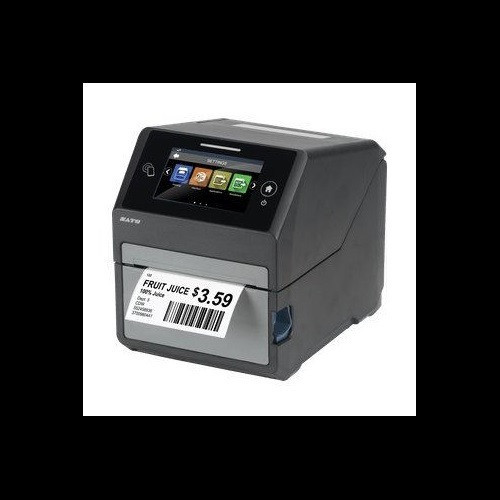
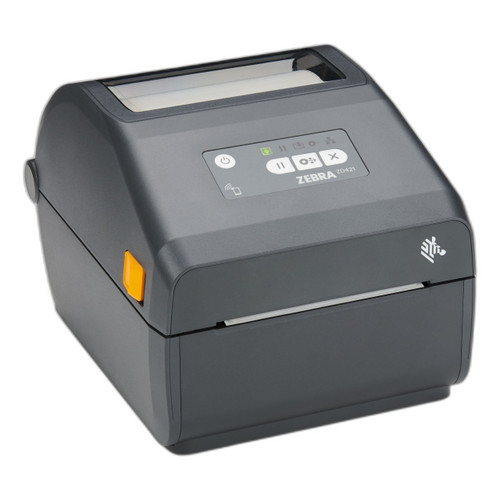
Both the Sato CT4-LX-HC (WWHC03041-WAN) and the Zebra ZD4A043-D01X01EZ are desktop-class direct thermal label printers aimed at professional labeling workflows. The Sato is purpose-built for healthcare environments with antimicrobial housing and thermal transfer capability, while the Zebra integrates a 2D barcode scan engine and battery for cordless operation. This comparison evaluates print performance, connectivity and form factor, and media/memory handling across both units.
In This Guide
- Which printer delivers better print quality and speed for label output?
- How do connectivity options and physical deployment differ between the two printers?
- Which unit offers greater media capacity, memory resources, and environmental suitability?
- Which should you choose: the WWHC03041-WAN or the ZD4A043-D01X01EZ?
- Side-by-Side Specs
- FAQ
Which printer delivers better print quality and speed for label output?
The Zebra ZD4A043-D01X01EZ prints at 300 DPI (also noted as 203 DPI in a secondary spec field — the 300 DPI figure appears in the tilde-prefixed marketing spec and is taken here as the rated resolution), at a print speed of 4 in./sec (102 mm/sec). The Sato WWHC03041-WAN is rated at 203 DPI and prints at 8 ips. On raw throughput, the Sato is twice as fast at 8 ips versus the Zebra's 4 in./sec.
The Zebra's 300 DPI (per primary marketing spec) offers finer dot pitch, which benefits small-font text and dense 2D barcodes. The Sato's 203 DPI is standard for general clinical labeling. The Sato also supports both direct thermal and thermal transfer print methods, giving it flexibility with ribbon-based media for durable labels. The Zebra is direct thermal only, requiring no ribbon but limiting media durability options.
The Zebra lists an integrated 2D scan engine supporting QR Code, Data Matrix, PDF417, Code 128, Code 39, UPC, and EAN — a function the Sato does not spec. This makes the Zebra capable of verify-and-print or scan-driven workflows without an external scanner.
How do connectivity options and physical deployment differ between the two printers?
The Sato WWHC03041-WAN provides four connectivity interfaces: Ethernet, Wi-Fi, Bluetooth, and USB 2.0. This makes it suitable for wired network integration, wireless roaming, or direct PC attachment. The Zebra ZD4A043-D01X01EZ specifies Wi-Fi as its primary connectivity, with Bluetooth Low Energy (BLE) and NFC (Print Touch) also noted in specs. Ethernet is not listed for the Zebra.
The Sato is a conventional desktop unit measuring 7.0" x 9.375" x 8.4375" and weighing 8.0 lbs, powered by AC 100–240V. The Zebra carries a 2750mAh battery enabling full-shift cordless operation, and its mount type is listed as Wall/Rack — contrasting with the Sato's desktop/desktop-mount form. This makes the Zebra more portable or shelf-mountable, while the Sato is a stationary AC-powered desktop unit.
The Sato features a 4.3-inch full-color touchscreen with day/night mode, supporting guided operator workflows directly on the device. No display specification is provided for the Zebra. The Zebra lists Link-OS as its operating system, a Zebra-proprietary platform; no equivalent OS or firmware platform is specified for the Sato.
Which unit offers greater media capacity, memory resources, and environmental suitability?
The Sato WWHC03041-WAN supports media roll diameters up to 5 inches with a 1.5-inch core, a maximum media width of 4.1 inches, and a maximum print width of 4.09 inches. It also accepts ribbons up to 984 ft in length for thermal transfer operation. No maximum media width, roll diameter, or ribbon specification is provided for the Zebra ZD4A043-D01X01EZ.
Memory is substantially larger on the Sato: 4 GB flash, 1 GB DDR3 RAM, and 2 GB user storage. The Zebra is specified at 512 MB flash and 256 MB SDRAM — roughly one-eighth the flash and one-quarter the RAM of the Sato. This gap is relevant for storing label formats, fonts, and firmware locally.
The Sato's antimicrobial, disinfectant-resistant plastic housing is explicitly rated for clinical cleaning protocols, and its operating temperature is 32°F to 104°F. No operating temperature range or housing material is specified for the Zebra. The Zebra lists storage humidity of 5%–95% non-condensing, but no operating humidity or temperature range appears in the provided specs. For regulated healthcare environments, the Sato's housing specification is a documented differentiator; the Zebra's environmental ratings are not comparably specified.
Which should you choose: the WWHC03041-WAN or the ZD4A043-D01X01EZ?
Our take: The WWHC03041-WAN is the stronger choice when the deployment is a fixed clinical or healthcare workstation requiring disinfectant-resistant surfaces, wired Ethernet integration, and high-throughput label output. It prints at 8 ips versus the Zebra's 4 in./sec, carries 4 GB flash versus the Zebra's 512 MB, and uniquely offers Ethernet connectivity and antimicrobial housing certified for clinical cleaning — none of which are spec'd on the Zebra. The ZD4A043-D01X01EZ is the more appropriate option where cordless mobility, an integrated 2D scan engine, and wall or rack mounting matter more than raw speed or media flexibility; its 2750mAh battery enables untethered full-shift use and its 2D scanner eliminates a separate device. Buyers should note the Zebra's resolution is listed as 300 DPI in its primary spec versus the Sato's 203 DPI, favoring fine barcode density. Platform lock-in is also a factor: the Zebra runs Link-OS; no equivalent platform is disclosed for the Sato.
Side-by-Side Comparison
Spec-for-spec, from manufacturer data.
| Specification | Sato WWHC03041-WAN | Zebra ZD4A043-D01X01EZ |
|---|---|---|
| Print Method | Direct Thermal / Thermal Transfer | Direct Thermal only |
| Print Resolution | 203 DPI | 300 DPI (203 DPI also noted in secondary spec) |
| Print Speed | 8 ips | 4 in./sec (102 mm/sec) |
| Max Print Width | 4.09" | — |
| Max Media Width | 4.1" | — |
| Max Media Roll Diameter | 5" | — |
| Max Ribbon Length | 984 ft | N/A (direct thermal only) |
| Connectivity | Ethernet, Wi-Fi, Bluetooth, USB 2.0 | Wi-Fi, BLE (NFC/Print Touch) |
| Display | 4.3" full-color touchscreen (day/night mode) | — |
| Integrated Scanner | — | 2D (QR, Data Matrix, PDF417, Code 128, Code 39, UPC, EAN) |
| Battery | — | 2750mAh |
| Flash Memory | 4 GB | 512 MB |
| RAM | 1 GB DDR3 | 256 MB SDRAM |
| User Storage | 2 GB | — |
| Housing | Antimicrobial, disinfectant-resistant plastic | — |
| Operating Temperature | 32°F to 104°F | — |
| Power | AC 100–240V, 50/60 Hz | Battery (2750mAh); AC spec not listed |
| Mount / Form Factor | Desktop | Wall; Rack |
| Warranty | 1-year | 1-year |
Frequently Asked Questions
Which should you choose: the WWHC03041-WAN or the ZD4A043-D01X01EZ?
The WWHC03041-WAN is the stronger choice when the deployment is a fixed clinical or healthcare workstation requiring disinfectant-resistant surfaces, wired Ethernet integration, and high-throughput label output. It prints at 8 ips versus the Zebra's 4 in./sec, carries 4 GB flash versus the Zebra's 512 MB, and uniquely offers Ethernet connectivity and antimicrobial housing certified for clinical cleaning — none of which are spec'd on the Zebra. The ZD4A043-D01X01EZ is the more appropriate option where cordless mobility, an integrated 2D scan engine, and wall or rack mounting matter more than raw speed or media flexibility; its 2750mAh battery enables untethered full-shift use and its 2D scanner eliminates a separate device. Buyers should note the Zebra's resolution is listed as 300 DPI in its primary spec versus the Sato's 203 DPI, favoring fine barcode density. Platform lock-in is also a factor: the Zebra runs Link-OS; no equivalent platform is disclosed for the Sato.
Is the WWHC03041-WAN or ZD4A043-D01X01EZ better for hospital or clinical labeling environments?
Based on the provided specs, the Sato WWHC03041-WAN is explicitly designed for healthcare settings. Its housing is described as antimicrobial and disinfectant-resistant plastic, and it supports both direct thermal and thermal transfer printing for durable specimen or medication labels. No equivalent housing material or clinical-environment rating is specified for the Zebra ZD4A043-D01X01EZ.
Does either printer support barcode scanning, and does that affect which one I should buy?
Yes — the Zebra ZD4A043-D01X01EZ includes an integrated 2D scan engine supporting QR Code, Data Matrix, PDF417, Code 128, Code 39, UPC, and EAN symbologies. The Sato WWHC03041-WAN does not list any integrated scan engine. If your workflow requires scan-to-print or label verification at the printer without a separate scanner, the Zebra has a documented advantage on this spec.
Which printer has more memory and storage for large label format libraries?
The Sato WWHC03041-WAN is substantially ahead on memory: 4 GB flash, 1 GB DDR3 RAM, and 2 GB user storage, versus the Zebra ZD4A043-D01X01EZ's 512 MB flash and 256 MB SDRAM. If you need to store large numbers of label templates, fonts, or graphics locally on the device, the Sato's memory specifications are significantly larger based on the specs provided.
More Label Printer Comparisons
- Sato WWCT04241-NAR vs Zebra ZD4A043-D01X01EZ
- Sato WWCT04241-NAR vs Zebra ZT41142-T010000Z
- Sato WWCT04241-NAR vs Zebra ZT41142-T31A000Z
- Sato WWCT04241-NAR vs Sato WWCT04441-WCN
- Sato WWCT04241-NAR vs Sato WWHC03041-WAN
- Sato WWCT04441-WCN vs Zebra ZD4A043-D01X01EZ
Label Printer Buying Guides
Get a Second Opinion on Your Camera Choice
Share your site layout, coverage goals, and budget. Our team will validate the camera selection, flag anything we would change, and recommend products that match the use case.