
Sato WWHC03041-NHN vs Sato WWCLP1C01-WAR: Specification Comparison
Both the Sato WWHC03041-NHN (CT4-LX-HC) and the Sato WWCLP1C01-WAR (CL4NX Plus) are 203 dpi direct thermal/thermal transfer desktop-class label printers sharing the same maximum print width and AC universal power input. However, they target distinct deployment contexts: the CT4-LX-HC is purpose-built for healthcare environments, while the CL4NX Plus integrates UHF RFID encoding for supply-chain and industrial labeling. Buyers evaluating both are typically weighing healthcare compliance features against RFID-enabled asset tracking capability at the same resolution tier.
In This Guide
- Which printer delivers faster throughput and handles a wider media and ribbon range?
- Which printer's specialized capability — UHF RFID encoding or healthcare-grade housing — matches the deployment requirement?
- How do the two printers compare on connectivity options, operator interface, and physical footprint?
- Which should you choose: the WWHC03041-NHN or the WWCLP1C01-WAR?
- Side-by-Side Specs
- FAQ
Which printer delivers faster throughput and handles a wider media and ribbon range?
The WWCLP1C01-WAR (CL4NX Plus) prints at 14 ips versus 8 ips for the WWHC03041-NHN (CT4-LX-HC) — a 75% speed advantage that matters in high-volume labeling runs. On media width, the CL4NX Plus accepts 0.87" to 5.04", broader than the CT4-LX-HC's 1" to 4.1", and supports a larger maximum roll diameter of 10" versus 5", reducing re-load frequency on long runs.
Memory tells a different story: the CT4-LX-HC ships with 4 GB Flash, 1 GB DDR3, and 2 GB user storage. The CL4NX Plus carries 2 GB Flash, 256 MB SDRAM, and only 100 MB user storage — notably less headroom for label formats, fonts, and graphics stored on-device. The CT4-LX-HC also specifies a maximum ribbon length of 984 ft; no equivalent ribbon length spec is provided for the CL4NX Plus.
Which printer's specialized capability — UHF RFID encoding or healthcare-grade housing — matches the deployment requirement?
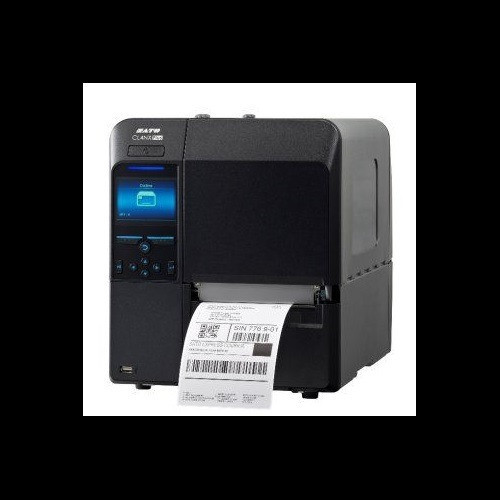
The WWCLP1C01-WAR integrates UHF RFID encoding at 860–960 MHz conforming to EPC Class 1 Gen 2 (ISO 18000-6C), enabling simultaneous print-and-encode of smart labels in a single pass. This is essential for supply-chain, warehouse, or retail inventory workflows where RFID tag commissioning must be inline. No RFID capability is specified for the WWHC03041-NHN.
Conversely, the WWHC03041-NHN specifies an antimicrobial, disinfectant-resistant housing and tool-free printhead replacement — features directly relevant to clinical environments where chemical wipe-downs are routine and minimizing maintenance downtime during patient care is critical. No antimicrobial housing or equivalent infection-control specification is listed for the WWCLP1C01-WAR.
How do the two printers compare on connectivity options, operator interface, and physical footprint?
Connectivity differs on Bluetooth: the WWHC03041-NHN includes Ethernet, Wi-Fi, Bluetooth, and USB 2.0. The WWCLP1C01-WAR lists Ethernet, Wi-Fi, and USB as confirmed spec fields; its enrichment note also references Bluetooth and NFC, but these do not appear in the structured spec fields and should be independently verified before procurement.
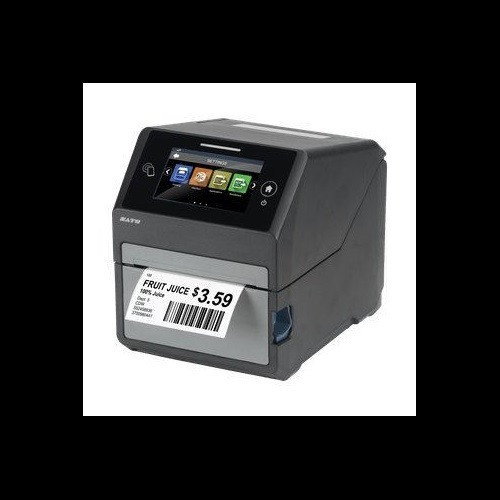
The CT4-LX-HC provides a larger 4.3" full-color touchscreen versus the CL4NX Plus's 3.5" full-color LCD — a meaningful difference for guided workflows or clinical staff who interact with the printer directly. On physical footprint, the CL4NX Plus is substantially larger and heavier at 10.66" × 17.99" × 12.63" and 33 lbs, compared to the CT4-LX-HC at 7.0" × 9.375" × 8.4375" and 8.0 lbs — relevant where counter or cart space is constrained.
Which should you choose: the WWHC03041-NHN or the WWCLP1C01-WAR?
Our take: The WWHC03041-NHN is the stronger choice when the deployment is a clinical or healthcare setting requiring infection-control compliance, while the WWCLP1C01-WAR is the correct selection for supply-chain or industrial workflows demanding inline UHF RFID encoding. Three concrete spec deltas illustrate the trade-off: the CL4NX Plus prints at 14 ips versus 8 ips and accepts rolls up to 10" diameter versus 5", making it the higher-throughput option for large label runs; but the CT4-LX-HC provides 4 GB Flash and 2 GB user storage versus 2 GB Flash and 100 MB on the CL4NX Plus, offering significantly more on-board format and font capacity. The CT4-LX-HC's antimicrobial housing and tool-free printhead replacement have no equivalent on the CL4NX Plus. Buyers running wristband, specimen, or pharmacy label applications should specify the CT4-LX-HC; those commissioning RFID smart labels for logistics or asset tracking should specify the CL4NX Plus.
Side-by-Side Comparison
Spec-for-spec, from manufacturer data.
| Specification | Sato WWHC03041-NHN | Sato WWCLP1C01-WAR |
|---|---|---|
| SKU | WWHC03041-NHN | WWCLP1C01-WAR |
| Model | CT4-LX-HC | CL4NX Plus |
| Print Method | Direct Thermal / Thermal Transfer | Direct Thermal / Thermal Transfer |
| Resolution | 203 dpi | 203 dpi |
| Print Speed | 8 ips | 14 ips |
| Max Print Width | 4.09" | 4.09" |
| Media Width Range | 1" – 4.1" | 0.87" – 5.04" |
| Max Roll Diameter | 5" | 10" |
| Max Ribbon Length | 984 ft | — |
| RFID | — | UHF 860–960 MHz, EPC C1G2 |
| Display | 4.3" Full-Color Touchscreen | 3.5" Full-Color LCD |
| Connectivity | Ethernet, Wi-Fi, Bluetooth, USB 2.0 | Ethernet, Wi-Fi, USB (Bluetooth/NFC unconfirmed in spec fields) |
| Flash Memory | 4 GB | 2 GB |
| RAM | 1 GB DDR3 | 256 MB SDRAM |
| User Storage | 2 GB | 100 MB |
| Weight | 8.0 lbs | 33 lbs |
| Dimensions (W×D×H) | 7.0" × 9.375" × 8.4375" | 10.66" × 17.99" × 12.63" |
| Operating Temperature | 32°F – 104°F | 41°F – 104°F |
| Healthcare Housing | Antimicrobial, disinfectant-resistant | — |
| Printhead Replacement | Tool-free | — |
| Power | AC 100–240V, 50/60Hz | AC 100–240V, 50/60Hz |
| Warranty | 1-year | 1-year |
Frequently Asked Questions
Which should you choose: the WWHC03041-NHN or the WWCLP1C01-WAR?
The WWHC03041-NHN is the stronger choice when the deployment is a clinical or healthcare setting requiring infection-control compliance, while the WWCLP1C01-WAR is the correct selection for supply-chain or industrial workflows demanding inline UHF RFID encoding. Three concrete spec deltas illustrate the trade-off: the CL4NX Plus prints at 14 ips versus 8 ips and accepts rolls up to 10" diameter versus 5", making it the higher-throughput option for large label runs; but the CT4-LX-HC provides 4 GB Flash and 2 GB user storage versus 2 GB Flash and 100 MB on the CL4NX Plus, offering significantly more on-board format and font capacity. The CT4-LX-HC's antimicrobial housing and tool-free printhead replacement have no equivalent on the CL4NX Plus. Buyers running wristband, specimen, or pharmacy label applications should specify the CT4-LX-HC; those commissioning RFID smart labels for logistics or asset tracking should specify the CL4NX Plus.
Can either printer handle both direct thermal and thermal transfer media?
Yes. Both the WWHC03041-NHN and the WWCLP1C01-WAR support Direct Thermal and Thermal Transfer print methods, so either can run label stock without ribbon or use ribbon for more durable output. The CT4-LX-HC specifies a maximum ribbon length of 984 ft; an equivalent ribbon length figure is not provided in the CL4NX Plus specs.
Is the WWHC03041-NHN or the WWCLP1C01-WAR better suited for a high-volume warehouse labeling operation?
The WWCLP1C01-WAR (CL4NX Plus) is better suited for high-volume warehouse use. It prints at 14 ips versus 8 ips on the CT4-LX-HC, accepts wider media (up to 5.04"), and handles larger roll diameters (10" vs 5"), all of which reduce throughput bottlenecks and reload frequency. Its integrated UHF RFID encoding (860–960 MHz, EPC C1G2) also adds inline smart-label commissioning that the CT4-LX-HC does not provide.
Which printer is easier to maintain in an environment where frequent cleaning with disinfectant wipes is required?
The WWHC03041-NHN (CT4-LX-HC) is the appropriate choice. It specifies an antimicrobial, disinfectant-resistant housing and tool-free printhead replacement — features designed for clinical cleaning protocols. No antimicrobial housing specification or disinfectant-resistance rating is listed for the WWCLP1C01-WAR (CL4NX Plus).
More Label Printer Comparisons
- Sato WWCLP1701-WAR vs Zebra ZD421
- Sato WWCLP1701-WAR vs Sato WWCLP1C01-WAR
- Sato WWCLP1701-WAR vs Sato WWFX31241-WDB
- Sato WWCLP1C01-WAR vs Zebra ZD421
- Sato WWCLP1C01-WAR vs Sato WWFX31241-WDB
- Zebra ZD421 vs Sato WWFX31241-WDB
Label Printer Buying Guides
Get a Second Opinion on Your Camera Choice
Share your site layout, coverage goals, and budget. Our team will validate the camera selection, flag anything we would change, and recommend products that match the use case.