
Sato WWFX31241-NCN vs Sato WWCLP1C01-WAR: Specification Comparison
Both the SATO FX3 (WWFX31241-NCN) and the SATO CL4NX Plus (WWCLP1C01-WAR) are 203 dpi direct thermal label printers from the same manufacturer, making them legitimate cross-shop candidates within the thermal printing category. However, they occupy distinct operational niches: the FX3 is a compact, battery-powered mobile printer designed for narrow specialty media, while the CL4NX Plus is an AC-powered industrial desktop unit with UHF RFID encoding capability and wider media support. Buyers evaluating both are typically deciding between portability and inline RFID-capable fixed-station production.
In This Guide
- Which printer delivers faster throughput and supports the media formats your operation requires?
- Which model supports advanced data encoding such as RFID, and how do connectivity options compare?
- Which unit is better suited to your deployment environment—mobile field use or fixed industrial installation?
- Which should you choose: the WWFX31241-NCN or the WWCLP1C01-WAR?
- Side-by-Side Specs
- FAQ
Which printer delivers faster throughput and supports the media formats your operation requires?
Print speed is a significant differentiator here. The CL4NX Plus (WWCLP1C01-WAR) is rated at 14 ips, more than twice the FX3's (WWFX31241-NCN) 6 ips. For high-volume fixed-station label runs—such as carton or pallet labeling on a production line—this gap is operationally meaningful.
Media width capability also diverges sharply. The CL4NX Plus accepts media from 0.87" to 5.04" wide with a maximum roll outer diameter of 10", supporting larger roll stock and a broader range of label formats. The FX3 caps out at a maximum print width of 1.10" and a maximum media width of 3.15", with a roll outer diameter of 5.3" and media cores of 1" or 1.5". The FX3 also supports ribbon (up to 984 ft / 300 m capacity), and while its print method is listed as Direct Thermal, the ribbon specification suggests thermal transfer capability as well—though this is not explicitly stated as a dual-mode option in the provided specs. The CL4NX Plus explicitly supports both Direct Thermal and Thermal Transfer print methods.
For operations requiring wide labels, large roll capacity, or dual print-method flexibility, the CL4NX Plus holds a clear advantage. For narrow specialty tags in space-constrained or mobile environments, the FX3's media profile may be precisely what is needed.
Which model supports advanced data encoding such as RFID, and how do connectivity options compare?
The most functionally decisive difference between these two units is RFID capability. The CL4NX Plus (WWCLP1C01-WAR) integrates a UHF RFID encoder operating at 860–960 MHz per the EPC Class 1 Gen 2 (EPC C1G2) standard. This allows it to encode RFID inlays during the print cycle—a requirement for supply chain, asset tracking, and retail compliance programs mandating RFID labels. The FX3 (WWFX31241-NCN) has no RFID specification listed; buyers needing inline RFID encoding cannot fulfill that requirement with the FX3.
On standard connectivity, both units offer Ethernet, Wi-Fi, and USB. The FX3 adds Bluetooth, which supports wireless pairing with mobile devices or handhelds—consistent with its portable use case. The CL4NX Plus datasheet narrative mentions Bluetooth and NFC, but these are not confirmed in the structured specification fields provided; buyers should verify with the manufacturer before relying on those interfaces.
Memory also differs: the CL4NX Plus carries 2 GB Flash versus the FX3's 512 MB Flash, while both share 256 MB SDRAM. Both units support HTTPS encryption per available specs; this field is confirmed only for the FX3 in the structured specs.
Which unit is better suited to your deployment environment—mobile field use or fixed industrial installation?
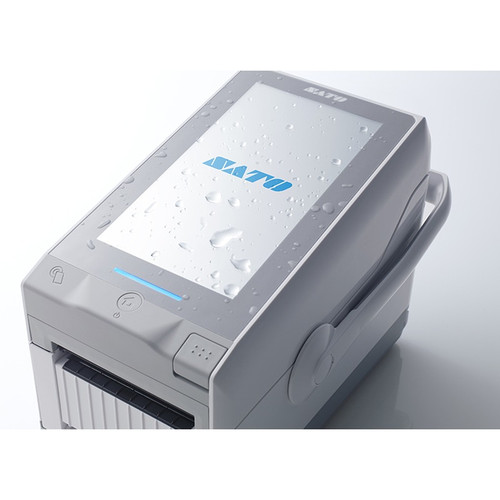
The FX3 (WWFX31241-NCN) is battery-powered and weighs 5.0 lbs (2.3 kg), with a compact footprint of 5.19" × 8.875" × 6.3125". It carries an IPX2 rating (protection against vertically dripping water) and an IK06 vandal resistance rating, along with an anti-microbial treatment noted in the product description. The 7" full-color touchscreen with day/night mode and tool-free printhead and platen roller replacement reinforce a design intended for demanding, on-the-move environments—warehouses, healthcare floors, or field service.
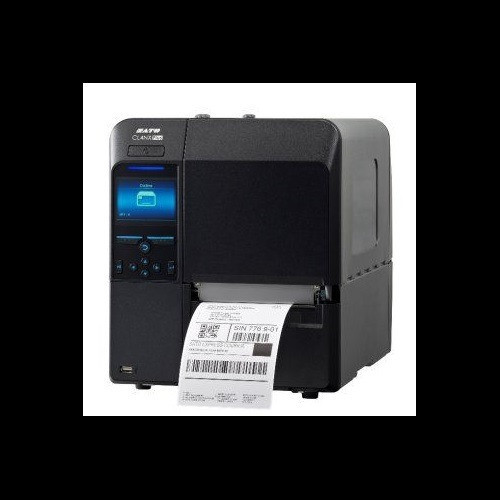
The CL4NX Plus (WWCLP1C01-WAR) is an AC-powered unit (100–240V, 50/60 Hz) weighing 33 lbs (15 kg) with dimensions of 10.66" × 17.99" × 12.63". No IP or IK rating is listed in the provided specifications. Its 3.5" full-color LCD display is smaller than the FX3's 7" panel. This is unambiguously a fixed-station industrial printer, not a device intended for portability.
Operating temperature range is identical for both: 41°F to 104°F (5°C to 40°C). Neither unit is specified for extreme cold or outdoor deployment based on the provided data.
Which should you choose: the WWFX31241-NCN or the WWCLP1C01-WAR?
Our take: The WWFX31241-NCN is the stronger choice when the deployment requires a portable, battery-powered printer for narrow specialty labels in mobile or space-constrained environments. It weighs 5.0 lbs versus the WWCLP1C01-WAR's 33 lbs, adds Bluetooth and a 7" touchscreen not available on the desktop unit, and carries confirmed IPX2 and IK06 ratings for durability in active settings. Conversely, the WWCLP1C01-WAR is the only viable option when integrated UHF RFID encoding (860–960 MHz, EPC C1G2) is required, when print throughput of 14 ips is needed versus the FX3's 6 ips, or when media up to 5.04" wide and 10" roll diameter must be accommodated. Buyers running fixed supply-chain, retail compliance, or pallet-labeling lines should select the CL4NX Plus; buyers needing a rugged, handheld-friendly specialty tag printer for warehouse floor or point-of-application use should select the FX3.
Side-by-Side Comparison
Spec-for-spec, from manufacturer data.
| Specification | Sato WWFX31241-NCN | Sato WWCLP1C01-WAR |
|---|---|---|
| Print Method | Direct Thermal | Direct Thermal / Thermal Transfer |
| Resolution | 203 dpi | 203 dpi |
| Print Speed | 6 ips | 14 ips |
| Max Print Width | 1.10" | 4.09" |
| Media Width Range | Up to 3.15" | 0.87" to 5.04" |
| Max Media Roll Diameter | 5.3" | 10" |
| Media Core Size | 1" or 1.5" | — |
| RFID | — | UHF 860–960 MHz, EPC C1G2 |
| Connectivity | Ethernet, Wi-Fi, Bluetooth, USB | Ethernet, Wi-Fi, USB |
| Display | 7" full-color touchscreen | 3.5" full-color LCD |
| Power Type | Battery | AC 100–240V, 50/60 Hz |
| IP Rating | IPX2 | — |
| Vandal Rating | IK06 | — |
| Memory Flash | 512 MB | 2 GB |
| Memory SDRAM | 256 MB | 256 MB |
| Weight | 5.0 lbs (2.3 kg) | 33 lbs (15 kg) |
| Operating Temperature | 41°F–104°F (5°C–40°C) | 41°F–104°F (5°C–40°C) |
| Warranty | 1-year | 1-year |
Frequently Asked Questions
Which should you choose: the WWFX31241-NCN or the WWCLP1C01-WAR?
The WWFX31241-NCN is the stronger choice when the deployment requires a portable, battery-powered printer for narrow specialty labels in mobile or space-constrained environments. It weighs 5.0 lbs versus the WWCLP1C01-WAR's 33 lbs, adds Bluetooth and a 7" touchscreen not available on the desktop unit, and carries confirmed IPX2 and IK06 ratings for durability in active settings. Conversely, the WWCLP1C01-WAR is the only viable option when integrated UHF RFID encoding (860–960 MHz, EPC C1G2) is required, when print throughput of 14 ips is needed versus the FX3's 6 ips, or when media up to 5.04" wide and 10" roll diameter must be accommodated. Buyers running fixed supply-chain, retail compliance, or pallet-labeling lines should select the CL4NX Plus; buyers needing a rugged, handheld-friendly specialty tag printer for warehouse floor or point-of-application use should select the FX3.
Is the WWFX31241-NCN or WWCLP1C01-WAR better for high-volume fixed label production lines?
The WWCLP1C01-WAR (CL4NX Plus) is better suited for high-volume fixed-station production. It prints at 14 ips versus the FX3's 6 ips, accepts media up to 5.04" wide on rolls up to 10" in diameter, and supports both Direct Thermal and Thermal Transfer print methods. The FX3 (WWFX31241-NCN) is battery-powered and optimized for mobile use with narrower media—it is not designed for sustained high-volume desktop operation.
Which of these printers can encode RFID labels?
Only the WWCLP1C01-WAR (CL4NX Plus) supports RFID encoding. It integrates a UHF encoder operating at 860–960 MHz per the EPC C1G2 standard, enabling inline RFID inlay encoding during the print cycle. The WWFX31241-NCN (FX3) has no RFID capability listed in its specifications and cannot fulfill RFID label requirements.
Can the WWFX31241-NCN be used in wet or physically demanding environments where the WWCLP1C01-WAR cannot?
Based on provided specifications, yes. The WWFX31241-NCN carries an IPX2 rating (resistance to vertically dripping water) and an IK06 vandal resistance rating, plus an anti-microbial treatment noted in product descriptions. No IP or IK rating is listed for the WWCLP1C01-WAR in the provided specifications. Buyers should confirm environmental ratings directly with SATO before deploying either unit in wet or high-impact locations.
More Label Printer Comparisons
- Sato WWCLP1701-WAR vs Zebra ZD421
- Sato WWCLP1701-WAR vs Sato WWCLP1C01-WAR
- Sato WWCLP1701-WAR vs Sato WWFX31241-WDB
- Sato WWCLP1C01-WAR vs Zebra ZD421
- Sato WWCLP1C01-WAR vs Sato WWFX31241-WDB
- Zebra ZD421 vs Sato WWFX31241-WDB
Label Printer Buying Guides
Get a Second Opinion on Your Camera Choice
Share your site layout, coverage goals, and budget. Our team will validate the camera selection, flag anything we would change, and recommend products that match the use case.