
Sato WWCT03441-WCR vs Zebra ZT11142-D01000FZ: Specification Comparison
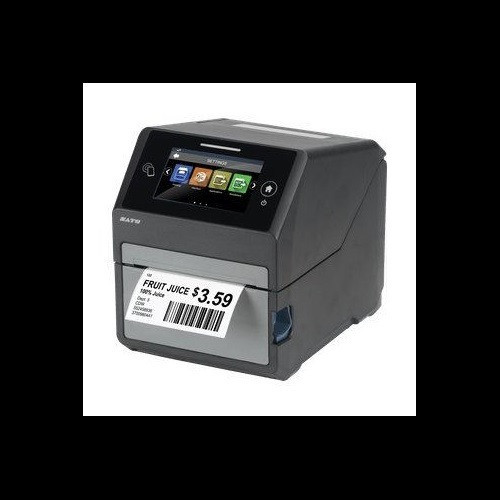
Both the Sato CT4-LX (WWCT03441-WCR) and the Zebra ZT11142-D01000FZ are desktop thermal label printers operating at 203 DPI, making them direct cross-shop candidates for warehouse, retail, and light industrial labeling environments. The comparison centers on feature depth and connectivity breadth: the Sato brings RFID encoding capability, a full-color touchscreen, Wi-Fi, and richer memory specs, while the Zebra's specification sheet is considerably thinner, leaving several performance and media-handling parameters undocumented.

In This Guide
- How do print speed, resolution, and media handling compare between the WWCT03441-WCR and ZT11142-D01000FZ?
- Which printer offers broader connectivity and smarter onboard features?
- Does either printer support RFID encoding, and what are the physical and environmental requirements?
- Which should you choose: the WWCT03441-WCR or the ZT11142-D01000FZ?
- Side-by-Side Specs
- FAQ
How do print speed, resolution, and media handling compare between the WWCT03441-WCR and ZT11142-D01000FZ?
Both printers share a 203 DPI print resolution. The Sato CT4-LX specifies a print speed of 8 ips and a maximum print width of 4.09 inches, with media width ranging from 1 inch to 4.1 inches on 1.5-inch cores and a maximum roll diameter of 5 inches. It supports both Direct Thermal and Thermal Transfer print methods, with a maximum ribbon length of 984 feet.
The Zebra ZT11142-D01000FZ is specified only as a Direct Thermal printer — Thermal Transfer is not listed. No print speed, maximum print width, media width range, roll diameter, or ribbon capacity is provided in the available specifications, making a direct performance comparison on these axes impossible with the data at hand.
Which printer offers broader connectivity and smarter onboard features?
The Sato CT4-LX provides USB 2.0, Ethernet, Wi-Fi, and Bluetooth connectivity, supplemented by a 4.3-inch full-color touchscreen, a real-time clock (RTC), a built-in cutter, and tool-free printhead replacement. Its onboard compute stack includes 4 GB Flash, 1 GB DDR3 RAM, and 2 GB user storage — a meaningful local resource base for complex label formats or firmware.
The Zebra ZT11142-D01000FZ lists USB, Ethernet, and Bluetooth Low Energy (BTLE) as its connectivity options. Wi-Fi is not listed in the provided specifications. No display, cutter, RTC, or onboard memory figures are documented, so those feature comparisons cannot be made from available data.
Does either printer support RFID encoding, and what are the physical and environmental requirements?
The Sato CT4-LX includes integrated HF/NFC RFID encoding at 13.56 MHz, with SATO RF Analyze auto-tuning the antenna for each inlay type. This positions it for item-level tagging, healthcare, and access-card label applications without an external encoder. The unit weighs 7.3 lb (3.3 kg), operates on AC 100–240 V / 50–60 Hz, and is rated for 32°F to 104°F (0°C to 40°C). Dimensions are 7.0 × 9.375 × 8.4375 inches.
The Zebra ZT11142-D01000FZ does not list RFID capability in its provided specifications. Power requirements, operating temperature range, weight, and physical dimensions are also absent from the available data. Both units carry a 1-year warranty.
Which should you choose: the WWCT03441-WCR or the ZT11142-D01000FZ?
Our take: The WWCT03441-WCR is the stronger choice when the deployment requires RFID encoding, a richer operator interface, or Thermal Transfer capability alongside Direct Thermal. Three concrete spec deltas illustrate the gap: the Sato documents an 8 ips print speed versus no speed figure for the Zebra; it adds Wi-Fi to USB/Ethernet/Bluetooth where the Zebra omits Wi-Fi; and it integrates 13.56 MHz HF/NFC RFID encoding that the Zebra does not list at all. The ZT11142-D01000FZ may be appropriate for straightforward Direct Thermal barcode printing where RFID, Thermal Transfer, Wi-Fi, and a touchscreen are unnecessary — and where its thinner spec sheet is acceptable — but buyers requiring any of those capabilities, or who need to verify media-handling and environmental ratings before procurement, will find the Sato CT4-LX the more fully documented and feature-complete option.
Side-by-Side Comparison
Spec-for-spec, from manufacturer data.
| Specification | Sato WWCT03441-WCR | Zebra ZT11142-D01000FZ |
|---|---|---|
| Print Resolution | 203 DPI | 203 DPI |
| Print Method | Direct Thermal / Thermal Transfer | Direct Thermal only |
| Print Speed | 8 ips | — |
| Max Print Width | 4.09" | — |
| Media Width Range | 1" to 4.1" | — |
| Media Core Size | 1.5" | — |
| Max Roll Diameter | 5" | — |
| Max Ribbon Length | 984 ft | N/A (no ribbon) |
| RFID | 13.56 MHz HF/NFC | — |
| Display | 4.3" Full-Color Touchscreen | — |
| Connectivity | USB, Ethernet, Wi-Fi, Bluetooth | USB, Ethernet, BTLE |
| Wi-Fi | Yes | — |
| Bluetooth | Yes | BTLE |
| Onboard Memory | 4 GB Flash + 1 GB DDR3 + 2 GB user | — |
| Weight | 7.3 lb (3.3 kg) | — |
| Warranty | 1-year | 1-year |
Frequently Asked Questions
Which should you choose: the WWCT03441-WCR or the ZT11142-D01000FZ?
The WWCT03441-WCR is the stronger choice when the deployment requires RFID encoding, a richer operator interface, or Thermal Transfer capability alongside Direct Thermal. Three concrete spec deltas illustrate the gap: the Sato documents an 8 ips print speed versus no speed figure for the Zebra; it adds Wi-Fi to USB/Ethernet/Bluetooth where the Zebra omits Wi-Fi; and it integrates 13.56 MHz HF/NFC RFID encoding that the Zebra does not list at all. The ZT11142-D01000FZ may be appropriate for straightforward Direct Thermal barcode printing where RFID, Thermal Transfer, Wi-Fi, and a touchscreen are unnecessary — and where its thinner spec sheet is acceptable — but buyers requiring any of those capabilities, or who need to verify media-handling and environmental ratings before procurement, will find the Sato CT4-LX the more fully documented and feature-complete option.
Is the WWCT03441-WCR or ZT11142-D01000FZ better for a networked warehouse with mobile carts?
The WWCT03441-WCR lists Wi-Fi in addition to Ethernet and Bluetooth, making it directly suited to wireless networked deployments. The ZT11142-D01000FZ does not list Wi-Fi in its provided specifications, so its suitability for wireless-only cart deployments cannot be confirmed from available data.
Can either printer encode RFID labels for asset tracking or access-card applications?
Yes — the WWCT03441-WCR includes integrated 13.56 MHz HF/NFC RFID encoding with SATO RF Analyze antenna auto-tuning. The ZT11142-D01000FZ does not list RFID capability in its provided specifications, so it should not be assumed to support RFID encoding.
Which printer is better suited to high-volume runs that need ribbons for durable labels?
The WWCT03441-WCR supports both Direct Thermal and Thermal Transfer print methods, with a maximum ribbon length of 984 feet documented. The ZT11142-D01000FZ is specified as Direct Thermal only, meaning it does not use ribbons and cannot produce resin or wax-resin transfer prints required for chemically resistant or outdoor-durable labels.
More Label Printer Comparisons
- Sato WD212-409DN-EX1-2 vs Zebra ZT51042-T110000Z
- Sato WD212-409DN-EX1-2 vs Zebra ZT11142-D01000FZ
- Sato WD212-409DN-EX1-2 vs Sato WD212-409DW-EX1-2
- Sato WD212-409DN-EX1-2 vs Sato WT312-403DW-EX1-2
- Sato WD212-409DW-EX1-2 vs Zebra ZT51042-T110000Z
- Sato WD212-409DW-EX1-2 vs Zebra ZT11142-D01000FZ
Label Printer Buying Guides
Get a Second Opinion on Your Camera Choice
Share your site layout, coverage goals, and budget. Our team will validate the camera selection, flag anything we would change, and recommend products that match the use case.