
Sato WT312-403DW-EX1-2 vs Zebra ZT51042-T110000Z: Specification Comparison
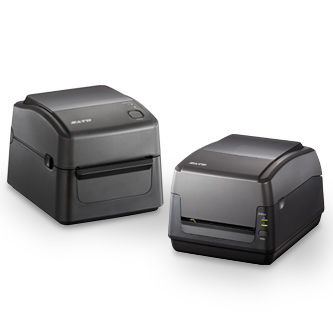
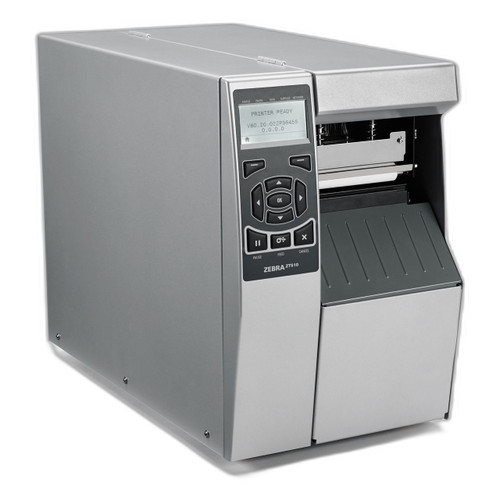
Both the Sato WS4 WT312-403DW-EX1-2 and the Zebra ZT51042-T110000Z are desktop-class direct thermal / thermal transfer label printers sharing a 203 DPI print resolution and a nominal 4-inch print width, making them direct cross-shop candidates for shipping, warehousing, retail tagging, and compliance-label workflows. The comparison evaluates connectivity and interface breadth, media handling and physical footprint, and memory plus symbology support—the three axes that most often determine which unit fits a given operation.
In This Guide
- Which printer offers broader connectivity and integration options?
- How do the two printers compare on media handling, print speed, and physical footprint?
- Which unit provides stronger memory resources, barcode symbology support, and operational analytics?
- Which should you choose: the WT312-403DW-EX1-2 or the ZT51042-T110000Z?
- Side-by-Side Specs
- FAQ
Which printer offers broader connectivity and integration options?
The Sato WT312-403DW-EX1-2 ships with four documented interfaces: Ethernet (wired LAN), Wi-Fi, Bluetooth, and USB 2.0. That combination supports wired-network integration for static workstations, wireless roaming for mobile carts, and direct Bluetooth pairing for handheld devices or tablets—all from a single unit without add-on modules.
The Zebra ZT51042-T110000Z lists only Wi-Fi in its provided specifications. Ethernet, Bluetooth, and USB connectivity are not documented in the supplied spec data. Buyers who require wired-LAN fallback, direct host USB connections, or Bluetooth pairing should note that the Zebra's interface breadth cannot be confirmed from the available specifications.
How do the two printers compare on media handling, print speed, and physical footprint?
The Sato unit accepts media widths from 1.00" to 4.65", accommodates a 1" media core, supports a maximum roll diameter of 5", and handles ribbon lengths up to 984 ft (300 m). Print speed is rated at 6 ips and the maximum print width is 4.09". Physical dimensions are 8.69" × 10.96" × 7.38" and the unit weighs 5.46 lb (2.48 kg)—a genuinely compact desktop footprint.
The Zebra ZT51042-T110000Z specifies a media (paper) width range of 0.79" (20 mm) to 4.5" (114 mm) and a print width of 4.00". Print speed, ribbon capacity, roll diameter, and physical dimensions are not provided in the supplied specifications. The listed weight of 50 lb / 22.7 kg appears inconsistent with a desktop-class unit and may reflect a data error; buyers should verify with the manufacturer before using that figure for planning purposes.
The Sato unit also supports dual-mode printing (direct thermal and thermal transfer), giving operators the flexibility to switch between label stocks without hardware changes. The Zebra's listing notes 'thermal (no ink/toner)' but does not explicitly confirm thermal transfer capability from the provided data.
Which unit provides stronger memory resources, barcode symbology support, and operational analytics?
The Sato WT312-403DW-EX1-2 ships with 16 MB Flash, 32 MB SDRAM, and 16 MB user storage. These figures are suitable for standard label-format libraries and moderate font sets in typical shipping and retail-tag environments. The specification also lists LPR (Line Printer Remote) protocol support as an analytics or network-print feature.
The Zebra ZT51042-T110000Z specifies 512 MB RAM—approximately 16× the Sato's SDRAM—which supports larger format libraries, complex graphics, and high-volume spooling without reprinting. Flash and user-storage figures are not provided in the supplied data.
On symbology support, the Zebra's spec sheet documents a concrete set: Code 128, Code 39, UPC, EAN (1D) and QR Code (2D), with additional symbologies mentioned but incompletely listed in the raw data. The Sato's supplied specifications do not enumerate supported symbologies, so a direct 1D/2D comparison cannot be made from the available data. Buyers with specific barcode standards (PDF417, DataMatrix, GS1) should request confirmation from both vendors.
Which should you choose: the WT312-403DW-EX1-2 or the ZT51042-T110000Z?
Our take: The WT312-403DW-EX1-2 is the stronger choice when connectivity breadth and compact physical size are primary requirements, while the ZT51042-T110000Z holds a clear advantage in RAM capacity for high-volume or complex-format workloads. Concretely: the Sato provides four confirmed interfaces (Ethernet, Wi-Fi, Bluetooth, USB) versus one confirmed interface (Wi-Fi) for the Zebra; the Sato weighs 5.46 lb with documented dimensions, while the Zebra's 50 lb weight figure is unverified and physical dimensions are absent; and the Zebra's 512 MB RAM far exceeds the Sato's 32 MB SDRAM for label-spooling headroom. The Sato also confirms dual thermal modes and ribbon support up to 984 ft. Choose the Sato for mixed-connectivity desktop deployments with direct thermal and thermal transfer needs; verify the Zebra's full spec sheet directly with Zebra before committing, as several key fields—speed, dimensions, wired connectivity—are absent from the provided data.
Side-by-Side Comparison
Spec-for-spec, from manufacturer data.
| Specification | Sato WT312-403DW-EX1-2 | Zebra ZT51042-T110000Z |
|---|---|---|
| Print Resolution | 203 DPI | 203 DPI |
| Max Print Width | 4.09" | 4.00" |
| Print Speed | 6 ips | — |
| Thermal Mode | Direct Thermal & Thermal Transfer | Thermal (Transfer not confirmed) |
| Max Ribbon Length | 984 ft (300 m) | — |
| Media Width Range | 1.00" to 4.65" | 0.79" to 4.50" |
| Media Core | 1" | — |
| Max Roll Diameter | 5" | — |
| RAM / SDRAM | 32 MB SDRAM | 512 MB RAM |
| Flash / Storage | 16 MB Flash + 16 MB User | — |
| Connectivity | Ethernet, Wi-Fi, Bluetooth, USB | Wi-Fi |
| Symbologies (1D) | — | Code 128, Code 39, UPC, EAN |
| Symbologies (2D) | — | QR Code |
| Integrated Cutter | — | Yes |
| Dimensions (W×D×H) | 8.69" × 10.96" × 7.38" | — |
| Weight | 5.46 lb (2.48 kg) | 50 lb / 22.7 kg (verify with vendor) |
| Operating Temperature | 41°F – 104°F (5°C – 40°C) | — |
| Power | AC 100–240 V, 50/60 Hz | — |
| Warranty | 1-year | 1-year |
| Form Factor | Desktop | Desktop |
Frequently Asked Questions
Which should you choose: the WT312-403DW-EX1-2 or the ZT51042-T110000Z?
The WT312-403DW-EX1-2 is the stronger choice when connectivity breadth and compact physical size are primary requirements, while the ZT51042-T110000Z holds a clear advantage in RAM capacity for high-volume or complex-format workloads. Concretely: the Sato provides four confirmed interfaces (Ethernet, Wi-Fi, Bluetooth, USB) versus one confirmed interface (Wi-Fi) for the Zebra; the Sato weighs 5.46 lb with documented dimensions, while the Zebra's 50 lb weight figure is unverified and physical dimensions are absent; and the Zebra's 512 MB RAM far exceeds the Sato's 32 MB SDRAM for label-spooling headroom. The Sato also confirms dual thermal modes and ribbon support up to 984 ft. Choose the Sato for mixed-connectivity desktop deployments with direct thermal and thermal transfer needs; verify the Zebra's full spec sheet directly with Zebra before committing, as several key fields—speed, dimensions, wired connectivity—are absent from the provided data.
Does the Sato WT312-403DW-EX1-2 or the Zebra ZT51042-T110000Z support wired Ethernet?
Only the Sato WT312-403DW-EX1-2 lists Ethernet as a documented interface in the provided specifications. The Zebra ZT51042-T110000Z's supplied spec data lists only Wi-Fi; Ethernet connectivity for the Zebra is not confirmed and should be verified directly with Zebra before purchase if wired-LAN integration is required.
Which printer is better suited for high-volume label runs with complex graphics?
The Zebra ZT51042-T110000Z specifies 512 MB RAM, which provides substantially more spooling and format-storage headroom than the Sato's 32 MB SDRAM and 16 MB Flash. For operations printing large quantities of graphics-heavy or multi-font labels, the Zebra's memory advantage is significant—provided its other specs (speed, media capacity) meet your requirements, which cannot be fully confirmed from the supplied data.
Can both printers handle thermal transfer ribbon, or is one direct-thermal only?
The Sato WT312-403DW-EX1-2 explicitly supports both direct thermal and thermal transfer modes, with a maximum ribbon length of 984 ft (300 m) documented. The Zebra ZT51042-T110000Z is described as 'thermal (no ink/toner)' in the provided data but does not explicitly confirm thermal transfer ribbon capability; buyers requiring thermal transfer should verify this with Zebra before ordering.
More Label Printer Comparisons
- Sato WD212-409DN-EX1-2 vs Zebra ZT51042-T110000Z
- Sato WD212-409DN-EX1-2 vs Zebra ZT11142-D01000FZ
- Sato WD212-409DN-EX1-2 vs Sato WD212-409DW-EX1-2
- Sato WD212-409DN-EX1-2 vs Sato WT312-403DW-EX1-2
- Sato WD212-409DW-EX1-2 vs Zebra ZT51042-T110000Z
- Sato WD212-409DW-EX1-2 vs Zebra ZT11142-D01000FZ
Label Printer Buying Guides
Get a Second Opinion on Your Camera Choice
Share your site layout, coverage goals, and budget. Our team will validate the camera selection, flag anything we would change, and recommend products that match the use case.