
Sato WT212-404NW-EX1-2 vs Zebra ZT51042-T110000Z: Specification Comparison
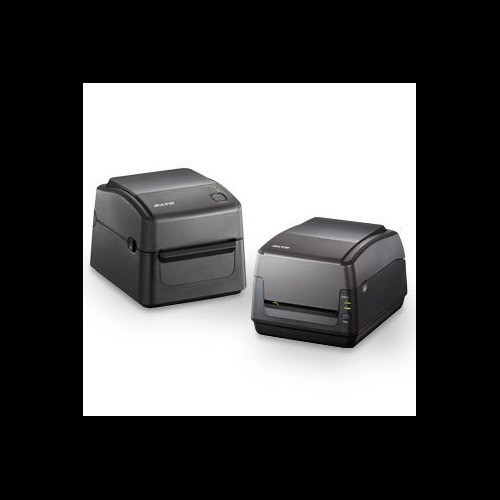
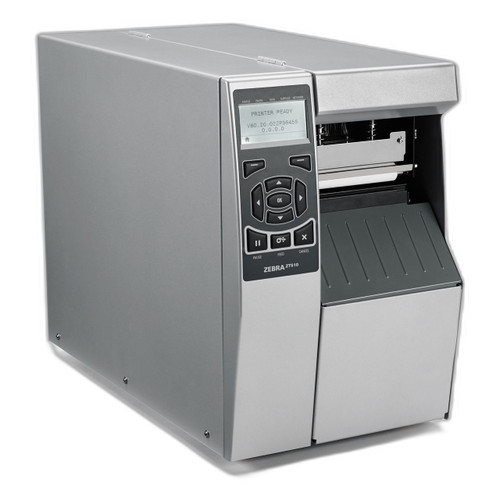
Both the Sato WT212-404NW-EX1-2 and the Zebra ZT51042-T110000Z are desktop-class, 203 DPI thermal barcode and label printers targeted at shipping, logistics, and compliance labeling environments. Each supports a roughly 4-inch print width and thermal print technology, placing them squarely in the same purchase category for buyers evaluating a compact workstation label printer. This comparison examines connectivity and interface breadth, media handling and physical footprint, and memory plus symbology support—the three axes most likely to drive a final selection decision.
In This Guide
- Which printer offers broader connectivity and integration flexibility?
- How do media handling range and physical footprint compare between the two units?
- Which unit delivers stronger memory resources and documented print performance?
- Which should you choose: the WT212-404NW-EX1-2 or the ZT51042-T110000Z?
- Side-by-Side Specs
- FAQ
Which printer offers broader connectivity and integration flexibility?
The Sato WT212-404NW-EX1-2 ships with four interface options documented in its spec sheet: Ethernet (wired LAN), Wi-Fi, Bluetooth, and USB. This breadth covers wired network drops, wireless access points, direct Bluetooth pairing to handhelds or tablets, and USB-tethered host connections—making it adaptable to a wide range of workstation and warehouse topologies without requiring optional add-on modules.
The Zebra ZT51042-T110000Z lists only Wi-Fi as its connectivity specification in the provided data. No Ethernet, Bluetooth, or USB interface is documented in the specs supplied. Buyers operating in wired-first environments or needing USB host or Bluetooth pairing cannot confirm those capabilities from the available specification data. The Zebra does document a broad barcode symbology set—Code 128, Code 39, QR Code, UPC, and EAN (1D and 2D)—while the Sato's supported symbologies are not listed in its provided specs.
How do media handling range and physical footprint compare between the two units?
The Sato WT212-404NW-EX1-2 provides documented media width support from a minimum of 1.0 inch to a maximum of 4.65 inches, with a maximum roll diameter of 5 inches and a maximum ribbon length of 984 feet. It supports both direct thermal and thermal transfer print modes, giving operators the choice of ribbon-based printing for durability-critical labels or ribbon-free direct thermal for short-life shipping labels. Physical dimensions are 8.69" × 10.96" × 7.38" and weight is 5.46 lbs (2.48 kg).
The Zebra ZT51042-T110000Z documents a media (paper) width range of 0.79 inches (20 mm) to 4.5 inches (114 mm), which is a slightly wider minimum-to-maximum span on the lower end. However, the Zebra's listed weight of 50 lbs (22.7 kg) is conspicuously at odds with its 'desktop' classification and the rest of its spec profile; this figure appears inconsistent with a 4-inch desktop unit and should be verified against Zebra's published datasheet before purchase. Physical body dimensions are not provided in the Zebra's spec data. The product description references an integrated label cutter, which the Sato does not list.
The Zebra's print technology is listed simply as 'Thermal (no ink/toner)' without specifying whether thermal transfer is supported, meaning ribbon-based printing capability cannot be confirmed from provided specs.
Which unit delivers stronger memory resources and documented print performance?
The Sato WT212-404NW-EX1-2 documents 32 MB SDRAM and 16 MB Flash, with 16 MB of user storage. Print speed is specified at 6 inches per second (ips) at 203 DPI. These figures reflect a capable but modest memory configuration suited to label formats of typical complexity.
The Zebra ZT51042-T110000Z lists 512 MB RAM—a 16× advantage over the Sato's 32 MB SDRAM—based on the provided spec data. This substantially larger memory pool supports more complex label formats, larger format libraries stored on-device, and higher-throughput print queuing. However, no print speed (ips) is documented in the Zebra's supplied specs, so a direct throughput comparison cannot be made. Flash storage, user storage capacity, and ribbon specifications are also absent from the Zebra's provided data.
The Sato's operating environment is documented at 41°F–104°F (5°C–40°C) and powered via AC 100–240V, 50/60Hz, confirming broad voltage compatibility. Equivalent environmental or power specifications are not present in the Zebra's provided spec set.
Which should you choose: the WT212-404NW-EX1-2 or the ZT51042-T110000Z?
Our take: The WT212-404NW-EX1-2 is the stronger choice when connectivity breadth, dual print-mode flexibility, and a fully documented spec profile are the deciding factors. The Sato provides four confirmed interfaces (Ethernet, Wi-Fi, Bluetooth, USB) versus one (Wi-Fi) for the Zebra, supports both direct thermal and thermal transfer versus thermal-only (unconfirmed transfer) for the Zebra, and carries a documented print speed of 6 ips that the Zebra's specs do not match. The Zebra counters with a significantly larger 512 MB RAM pool versus the Sato's 32 MB, documented barcode symbology coverage (1D and 2D), and an integrated cutter—all meaningful advantages for high-volume, format-complex, or automated-separation workflows. The Zebra's 50 lb weight figure appears anomalous and warrants datasheet verification. Buyers prioritizing multi-interface environments, ribbon printing, and fully specified units should favor the Sato; those needing large on-device memory and automated cutting should evaluate the Zebra after confirming its full published specifications.
Side-by-Side Comparison
Spec-for-spec, from manufacturer data.
| Specification | Sato WT212-404NW-EX1-2 | Zebra ZT51042-T110000Z |
|---|---|---|
| Print Resolution | 203 DPI | 203 DPI |
| Print Speed | 6 ips | — |
| Print Method | Direct Thermal / Thermal Transfer | Thermal (transfer not confirmed) |
| Max Print Width | 4.09" | 4.0" |
| Media Width Range | 1.0" – 4.65" | 0.79" – 4.5" |
| Max Roll Diameter | 5" | — |
| Max Ribbon Length | 984 ft | — |
| Connectivity | Ethernet, Wi-Fi, Bluetooth, USB | Wi-Fi |
| RAM | 32 MB SDRAM | 512 MB RAM |
| Flash / Storage | 16 MB Flash + 16 MB user | — |
| Integrated Cutter | — | Yes |
| Barcode Symbologies | — | Code 128, Code 39, QR Code, UPC, EAN |
| Dimensions | 8.69" × 10.96" × 7.38" | — |
| Weight | 5.46 lbs (2.48 kg) | 50 lbs / 22.7 kg (verify — appears anomalous) |
| Power Input | AC 100–240V, 50/60Hz | — |
| Operating Temperature | 41°F – 104°F (5°C – 40°C) | — |
| Warranty | 1-year | 1-year |
Frequently Asked Questions
Which should you choose: the WT212-404NW-EX1-2 or the ZT51042-T110000Z?
The WT212-404NW-EX1-2 is the stronger choice when connectivity breadth, dual print-mode flexibility, and a fully documented spec profile are the deciding factors. The Sato provides four confirmed interfaces (Ethernet, Wi-Fi, Bluetooth, USB) versus one (Wi-Fi) for the Zebra, supports both direct thermal and thermal transfer versus thermal-only (unconfirmed transfer) for the Zebra, and carries a documented print speed of 6 ips that the Zebra's specs do not match. The Zebra counters with a significantly larger 512 MB RAM pool versus the Sato's 32 MB, documented barcode symbology coverage (1D and 2D), and an integrated cutter—all meaningful advantages for high-volume, format-complex, or automated-separation workflows. The Zebra's 50 lb weight figure appears anomalous and warrants datasheet verification. Buyers prioritizing multi-interface environments, ribbon printing, and fully specified units should favor the Sato; those needing large on-device memory and automated cutting should evaluate the Zebra after confirming its full published specifications.
Does the Sato WT212-404NW-EX1-2 or the Zebra ZT51042-T110000Z support wired Ethernet connectivity?
Only the Sato WT212-404NW-EX1-2 lists Ethernet as a documented interface. The Zebra ZT51042-T110000Z's provided specifications list Wi-Fi only; Ethernet support is not confirmed in the supplied spec data and should be verified with Zebra's official datasheet before assuming wired-network compatibility.
Can either printer handle thermal transfer ribbon printing, or are they direct-thermal only?
The Sato WT212-404NW-EX1-2 explicitly supports both direct thermal and thermal transfer modes, with a maximum ribbon length of 984 feet documented. The Zebra ZT51042-T110000Z is described as 'Thermal (no ink/toner)' in its provided specs; thermal transfer capability is not confirmed in the supplied data. Buyers requiring ribbon-based printing for durable or chemical-resistant labels should confirm the Zebra's print modes directly with Zebra's published specifications.
Which printer is better suited for high-volume or complex label formats requiring large on-device memory?
The Zebra ZT51042-T110000Z has a documented 512 MB RAM, compared to the Sato WT212-404NW-EX1-2's 32 MB SDRAM and 16 MB Flash. For workflows involving large label template libraries, complex graphics, or high-throughput queuing, the Zebra's memory advantage is substantial on paper. However, the Zebra's print speed is not specified in the provided data, so throughput cannot be directly compared; verify ips performance with Zebra's official datasheet before making a final decision for high-volume applications.
More Label Printer Comparisons
- Sato WD212-409DN-EX1-2 vs Zebra ZT51042-T110000Z
- Sato WD212-409DN-EX1-2 vs Zebra ZT11142-D01000FZ
- Sato WD212-409DN-EX1-2 vs Sato WD212-409DW-EX1-2
- Sato WD212-409DN-EX1-2 vs Sato WT312-403DW-EX1-2
- Sato WD212-409DW-EX1-2 vs Zebra ZT51042-T110000Z
- Sato WD212-409DW-EX1-2 vs Zebra ZT11142-D01000FZ
Label Printer Buying Guides
Get a Second Opinion on Your Camera Choice
Share your site layout, coverage goals, and budget. Our team will validate the camera selection, flag anything we would change, and recommend products that match the use case.