
Sato WD312-405DW-EX1-2 vs Sato WD212-409DW-EX1-2: Specification Comparison
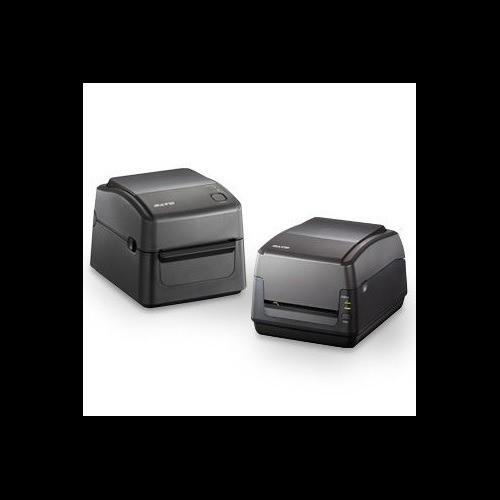
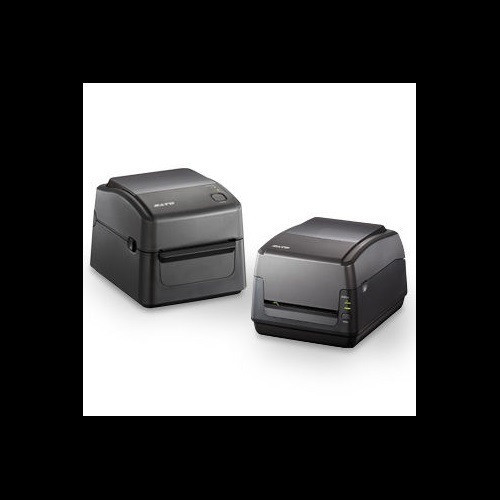
Both products are Sato WS4-series desktop thermal printers operating at 203 dpi, positioned for label printing in light-to-medium duty environments. The WD312-405DW-EX1-2 and WD212-409DW-EX1-2 share the same form factor, print resolution, speed, connectivity suite, memory configuration, media handling range, power requirements, and warranty terms. This comparison examines where the two models diverge across connectivity detail, media handling specifications, and ancillary features, helping buyers determine which unit better fits their specific deployment requirements.
In This Guide
- Do the WD312-405DW-EX1-2 and WD212-409DW-EX1-2 differ in host connectivity options?
- Are there differences in media and ribbon handling specifications between the two models?
- Do the WD312-405DW-EX1-2 and WD212-409DW-EX1-2 offer the same memory and user storage capacity?
- Which should you choose: the WD312-405DW-EX1-2 or the WD212-409DW-EX1-2?
- Side-by-Side Specs
- FAQ
Do the WD312-405DW-EX1-2 and WD212-409DW-EX1-2 differ in host connectivity options?
Both printers share the same top-level connectivity headline — Ethernet, Wi-Fi, Bluetooth, and USB. However, the WD212-409DW-EX1-2 spec explicitly identifies the USB interface as USB 2.0, while the WD312-405DW-EX1-2 spec lists USB without a version qualifier. Additionally, the WD312-405DW-EX1-2 spec calls out RS-232C serial as part of its connectivity set, which is absent from the WD212-409DW-EX1-2 spec. Buyers requiring a legacy RS-232C serial host connection should note this distinction: based on provided specs, only the WD312-405DW-EX1-2 documents that interface. If USB version matters operationally, the WD212-409DW-EX1-2 is the only model with a confirmed USB 2.0 designation in its spec sheet.
Are there differences in media and ribbon handling specifications between the two models?
Media width range is identical on both units at 1 inch to 4.65 inches, and maximum roll diameter is 5 inches for both. Ribbon maximum length is 984 ft (300 m) on both. The WD212-409DW-EX1-2 spec additionally documents a media core size of 1 inch, a detail absent from the WD312-405DW-EX1-2 spec. Both support direct thermal and thermal transfer print methods, and both handle a maximum print width of 4.09 inches. For most label media purchasing decisions, the two units appear equivalent; the 1-inch core callout on the WD212-409DW-EX1-2 provides slightly more procurement clarity for media sourcing.
Do the WD312-405DW-EX1-2 and WD212-409DW-EX1-2 offer the same memory and user storage capacity?
Both models carry identical memory configurations per the provided specs: 16 MB Flash, 32 MB SDRAM, and 16 MB user storage. This parity means label format storage capacity, firmware headroom, and runtime processing resources are equivalent between the two units as specified. Neither model is differentiated by memory in a way that would favor one over the other for high-volume format libraries or complex label programming tasks. Buyers evaluating memory as a selection criterion will find no basis for preference between these two models based on the available specification data.
Which should you choose: the WD312-405DW-EX1-2 or the WD212-409DW-EX1-2?
Our take: The WD312-405DW-EX1-2 is the stronger choice when a legacy RS-232C serial host connection is required, as it is the only model that documents this interface in its provided specs. Beyond that single differentiator, the two printers are functionally equivalent across every other measurable dimension in the supplied data: both deliver 203 dpi resolution, 6 ips print speed, a 4.09-inch maximum print width, identical media width range (1"–4.65"), identical ribbon capacity (984 ft), identical memory (16 MB Flash / 32 MB SDRAM / 16 MB user storage), the same 5-inch max roll diameter, identical power input (AC 100–240V, 50/60 Hz), the same operating temperature range (41°F–104°F), and a 1-year warranty. The WD212-409DW-EX1-2 explicitly confirms USB 2.0 and a 1-inch media core, which aids procurement clarity. Choose the WD312-405DW-EX1-2 for environments retaining serial-connected hosts; choose the WD212-409DW-EX1-2 for standard USB/network-only deployments where confirmed USB 2.0 and media core documentation matter.
Side-by-Side Comparison
Spec-for-spec, from manufacturer data.
| Specification | Sato WD312-405DW-EX1-2 | Sato WD212-409DW-EX1-2 |
|---|---|---|
| Series | WS4 | WS4 |
| MPN | WD312-405DW-EX1-2 | WD212-409DW-EX1-2 |
| Print Resolution | 203 dpi | 203 dpi |
| Print Speed | 6 ips | 6 ips |
| Max Print Width | 4.09" | 4.09" |
| Print Method | Direct Thermal / Thermal Transfer | Direct Thermal / Thermal Transfer |
| Media Width Range | 1" to 4.65" | 1" to 4.65" |
| Media Core | — | 1" |
| Max Roll Diameter | 5" | 5" |
| Max Ribbon Length | 984 ft (300 m) | 984 ft |
| Connectivity | Ethernet, Wi-Fi, Bluetooth, USB, RS-232C | Ethernet, Wi-Fi, Bluetooth, USB 2.0 |
| Memory Flash | 16 MB | 16 MB |
| Memory SDRAM | 32 MB | 32 MB |
| User Storage | 16 MB | 16 MB |
| Power Input | AC 100–240V, 50/60 Hz | AC 100–240V, 50/60 Hz |
| Operating Temperature | 41°F–104°F (5°C–40°C) | 41°F–104°F (5°C–40°C) |
| Weight | 5.46 lb (2.48 kg) | 5.46 lb (2.48 kg) |
| Dimensions (W×D×H) | 8.69" × 10.96" × 7.38" | 8.69" × 10.96" × 7.38" |
| Warranty | 1-year | 1-year |
Frequently Asked Questions
Which should you choose: the WD312-405DW-EX1-2 or the WD212-409DW-EX1-2?
The WD312-405DW-EX1-2 is the stronger choice when a legacy RS-232C serial host connection is required, as it is the only model that documents this interface in its provided specs. Beyond that single differentiator, the two printers are functionally equivalent across every other measurable dimension in the supplied data: both deliver 203 dpi resolution, 6 ips print speed, a 4.09-inch maximum print width, identical media width range (1"–4.65"), identical ribbon capacity (984 ft), identical memory (16 MB Flash / 32 MB SDRAM / 16 MB user storage), the same 5-inch max roll diameter, identical power input (AC 100–240V, 50/60 Hz), the same operating temperature range (41°F–104°F), and a 1-year warranty. The WD212-409DW-EX1-2 explicitly confirms USB 2.0 and a 1-inch media core, which aids procurement clarity. Choose the WD312-405DW-EX1-2 for environments retaining serial-connected hosts; choose the WD212-409DW-EX1-2 for standard USB/network-only deployments where confirmed USB 2.0 and media core documentation matter.
Does the WD312-405DW-EX1-2 or WD212-409DW-EX1-2 support RS-232C serial connectivity?
Based on the provided specs, only the WD312-405DW-EX1-2 lists RS-232C as part of its connectivity set. The WD212-409DW-EX1-2 spec does not include RS-232C. If serial host connectivity is a requirement, the WD312-405DW-EX1-2 is the documented option between these two models.
Are the WD312-405DW-EX1-2 and WD212-409DW-EX1-2 compatible with the same label media?
Yes. Both models share an identical media width range of 1 inch to 4.65 inches, a maximum roll diameter of 5 inches, and a maximum print width of 4.09 inches. The WD212-409DW-EX1-2 additionally specifies a 1-inch media core in its specs, while the WD312-405DW-EX1-2 does not state a core size. Buyers should verify core compatibility with their media supplier if the WD312-405DW-EX1-2 is selected.
Is there any difference in print performance between the WD312-405DW-EX1-2 and WD212-409DW-EX1-2?
No. Per the provided specifications, both printers deliver identical print performance: 203 dpi resolution, 6 ips print speed, and support for both direct thermal and thermal transfer print methods at up to 4.09 inches wide. Neither model has a documented performance advantage over the other based on the available spec data.
More Label Printer Comparisons
- Sato WD212-409DN-EX1-2 vs Zebra ZT51042-T110000Z
- Sato WD212-409DN-EX1-2 vs Zebra ZT11142-D01000FZ
- Sato WD212-409DN-EX1-2 vs Sato WD212-409DW-EX1-2
- Sato WD212-409DN-EX1-2 vs Sato WT312-403DW-EX1-2
- Sato WD212-409DW-EX1-2 vs Zebra ZT51042-T110000Z
- Sato WD212-409DW-EX1-2 vs Zebra ZT11142-D01000FZ
Label Printer Buying Guides
Get a Second Opinion on Your Camera Choice
Share your site layout, coverage goals, and budget. Our team will validate the camera selection, flag anything we would change, and recommend products that match the use case.