
Pelco SRXV2-2F3-EWD-IR vs Pelco SRXV2-2F3-IMD-IR: Specification Comparison
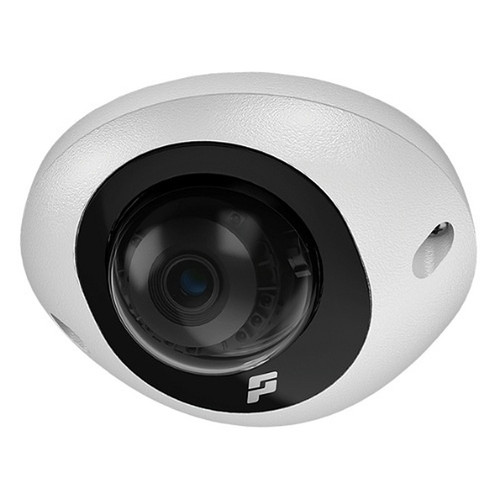
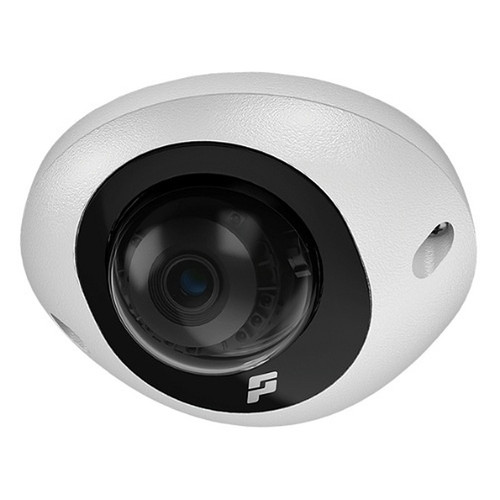
The Pelco SRXV2-2F3-EWD-IR and SRXV2-2F3-IMD-IR are both 2MP fixed dome cameras from the Sarix Value 2 Series, making them direct cross-shop candidates for integrators choosing between an outdoor and an indoor deployment. Both share the same sensor platform, resolution, IR illumination, and WDR rating. The meaningful differences lie in their physical installation environment rating, lens configuration, connector type, and dimensional footprint—factors that determine which model belongs on a particular project.
In This Guide
How do the imaging specs compare?
Both cameras share an identical core imaging platform: a 1/2.8-inch progressive scan CMOS sensor producing 1920×1080 at 30 fps, a 120 dB wide dynamic range, an F1.4 aperture, and a minimum illumination of 0.02 lux color / 0 lux IR via integrated 850 nm IR illumination for zero-lux monochrome operation. Video compression on both covers H.265, H.264, and Motion JPEG, and both implement SmartCodec technology with Dynamic GOP for bandwidth management. No imaging performance advantage exists between the two models based on the provided specifications.
Where the imaging path diverges is lens configuration. The EWD-IR is fitted with a fixed 2.8 mm lens (EFL), delivering a predictable, pre-aimed field of view suited to known coverage zones. The IMD-IR carries a varifocal 2.7–13.5 mm lens with remote zoom and autofocus plus an IR cut filter, giving installers roughly a 5× zoom range to dial in coverage after mounting. For sites where the exact coverage angle is unknown at installation time, the IMD-IR's varifocal lens is the operational differentiator.
What about installation and environment?
The most significant installation delta is the environment rating. The EWD-IR is rated for outdoor deployment; the IMD-IR is rated for indoor use only. Both carry identical ingress protection ratings of IP42 and IK09 vandal resistance per the provided specifications. The operating temperature range is stated identically as 0°C to +50°C for both. However, the EWD-IR datasheet separately lists a storage temperature of −40°C to +60°C and carries certifications including UL, cUL, CE, RoHS, RCM, UKCA, NOM, KC, BIS, and CMIM—certifications for the IMD-IR are not explicitly enumerated in the provided specs.
Connector and physical footprint differ between models. The EWD-IR uses an M12 D-coded 4-pin female connector (M12-to-RJ45 adapter included), which is a weather-resistant industrial connection appropriate for outdoor runs. The IMD-IR uses a standard RJ-45 connector, typical for indoor structured cabling environments. The EWD-IR measures 111.5 mm × 111 mm × 57.6 mm and weighs 409 g. The IMD-IR's dimensional data in the provided specs is inconsistent—multiple dimension sets and weights (636 g, 273 g, 540 g) appear to reference multiple form factors; no single clean value can be cited. Mounting options also differ: the EWD-IR supports wall, pendant, and rack; the IMD-IR supports wall, ceiling, pole, pendant, and corner, giving it more versatile indoor placement options including drop-ceiling installations. Both are PoE Class 3 (802.3af).
Which fits your VMS and analytics better?
Both cameras are ONVIF Profile S and Profile T compliant and carry NDAA Section 889 approval, making them eligible for government and education deployments and compatible with any ONVIF-conformant VMS. Both support HTTPS encryption and microSD on-board storage. The IMD-IR specification additionally lists SD card storage, FTP, white light, email, text overlay, and HTTP generic event under camera automation capabilities; equivalent automation feature detail is not enumerated in the EWD-IR spec block. Both carry 512 MB RAM and 256 MB Flash.
Neither model lists an audio input or output in the provided specifications—this should be confirmed against the full datasheet before specifying for applications requiring two-way audio or audio detection analytics. Edge analytics capabilities beyond bandwidth management (SmartCodec/Dynamic GOP) are not described in the provided specs for either unit. Warranty is identical at 5 years for both models.
Which should you choose: the SRXV2-2F3-EWD-IR or the SRXV2-2F3-IMD-IR?
Our take: The SRXV2-2F3-EWD-IR is the stronger choice when the installation point is an outdoor or exposed location requiring a weather-hardened connector and outdoor environmental rating, while the SRXV2-2F3-IMD-IR is the correct selection for indoor deployments where a varifocal lens, standard RJ-45 connectivity, and extended mounting options (ceiling, pole, corner) are operationally required. Three concrete spec deltas drive the decision: (1) the EWD-IR uses a fixed 2.8 mm lens versus the IMD-IR's varifocal 2.7–13.5 mm with remote zoom and autofocus; (2) the EWD-IR carries an M12 D-coded weather-resistant connector versus the IMD-IR's standard RJ-45; and (3) the EWD-IR is rated for outdoor environments versus the IMD-IR's indoor-only rating. Where imaging performance, WDR, IR low-light operation, PoE class, ONVIF profile, NDAA compliance, and warranty are concerned, the two cameras are specification-identical. Choose based solely on deployment environment and whether post-mount lens adjustment is required.
Side-by-Side Comparison
Spec-for-spec, from manufacturer data.
| Specification | Pelco SRXV2-2F3-EWD-IR | Pelco SRXV2-2F3-IMD-IR |
|---|---|---|
| Series | Sarix Value 2 | Sarix Value 2 |
| Resolution | 2MP (1920×1080) | 2MP (1920×1080) |
| Image Sensor | 1/2.8" Progressive Scan CMOS | 1/2.8" Progressive Scan CMOS |
| Lens / Focal Length | Fixed 2.8 mm (EFL) | Varifocal 2.7–13.5 mm, Remote Zoom & Autofocus |
| Aperture | F1.4 | F1.4 |
| Min Illumination | 0.02 lux color / 0 lux IR | 0.02 lux color / 0 lux IR |
| IR Illumination | 850 nm integrated IR | 850 nm integrated IR |
| WDR | 120 dB | 120 dB |
| Max Frame Rate | 30 fps | 30 fps |
| Video Compression | H.265; H.264; Motion JPEG | H.265; H.264; Motion JPEG |
| IP Rating | IP42 | IP42 |
| IK / Impact Rating | IK09 | IK09 |
| Environment Rating | Outdoor | Indoor |
| Operating Temperature | 0°C to +50°C | 0°C to +50°C |
| Power Input / PoE Class | PoE 802.3af / Class 3 | PoE 802.3af / Class 3 |
| Connector Type | M12 D-coded 4-pin (M12-to-RJ45 adapter included) | RJ-45 |
| Mount Types | Wall; Pendant; Rack | Wall; Ceiling; Pole; Pendant; Corner |
| Edge Storage | microSD | microSD |
| ONVIF Compliance | Profile S; Profile T | Profile S; Profile T |
| NDAA Section 889 | Compliant | Compliant |
| Dimensions (L×W×H) | 111.5 mm × 111 mm × 57.6 mm | Not clearly specified (multiple values in spec) |
| Weight | 409 g | Not clearly specified (multiple values in spec) |
| Memory | 512 MB RAM / 256 MB Flash | 512 MB RAM / 256 MB Flash |
| Warranty | 5-year | 5-year |
Frequently Asked Questions
Which should you choose: the SRXV2-2F3-EWD-IR or the SRXV2-2F3-IMD-IR?
The SRXV2-2F3-EWD-IR is the stronger choice when the installation point is an outdoor or exposed location requiring a weather-hardened connector and outdoor environmental rating, while the SRXV2-2F3-IMD-IR is the correct selection for indoor deployments where a varifocal lens, standard RJ-45 connectivity, and extended mounting options (ceiling, pole, corner) are operationally required. Three concrete spec deltas drive the decision: (1) the EWD-IR uses a fixed 2.8 mm lens versus the IMD-IR's varifocal 2.7–13.5 mm with remote zoom and autofocus; (2) the EWD-IR carries an M12 D-coded weather-resistant connector versus the IMD-IR's standard RJ-45; and (3) the EWD-IR is rated for outdoor environments versus the IMD-IR's indoor-only rating. Where imaging performance, WDR, IR low-light operation, PoE class, ONVIF profile, NDAA compliance, and warranty are concerned, the two cameras are specification-identical. Choose based solely on deployment environment and whether post-mount lens adjustment is required.
Is the SRXV2-2F3-EWD-IR or SRXV2-2F3-IMD-IR better for low light?
Based on the provided specifications, both cameras are identical in low-light performance: each uses the same 1/2.8-inch CMOS sensor with an F1.4 aperture, a minimum illumination of 0.02 lux color, and 0 lux monochrome via integrated 850 nm IR illumination. Neither model has a low-light advantage over the other.
Can I use the SRXV2-2F3-EWD-IR indoors, or is it only for outdoor use?
The SRXV2-2F3-EWD-IR is spec'd as an outdoor camera. While its IP42 / IK09 rating and M12 weather-resistant connector make it physically robust, deploying it indoors is not prohibited by the specs—however, the IMD-IR is purpose-designed for indoor use with standard RJ-45 connectivity, a varifocal lens, and indoor mounting options (ceiling, pole, corner) that better suit typical interior installations.
Which model should I choose if the final camera angle will be adjusted after mounting?
The SRXV2-2F3-IMD-IR is the appropriate choice. It is fitted with a varifocal 2.7–13.5 mm lens with remote zoom, autofocus, and an IR cut filter, allowing the field of view to be adjusted without physically repositioning the camera. The SRXV2-2F3-EWD-IR has a fixed 2.8 mm lens with no adjustment range specified.
Get a Second Opinion on Your Camera Choice
Share your site layout, coverage goals, and budget. Our team will validate the camera selection, flag anything we would change, and recommend products that match the use case.