
Pelco SRXP4-2V10-EMD vs Pelco SRXP4-2V10-IMD: Specification Comparison
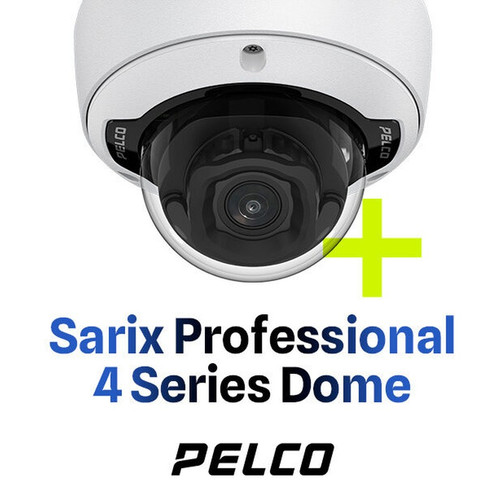
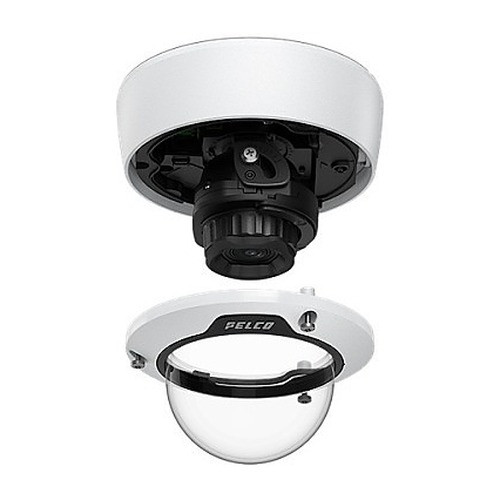
The Pelco SRXP4-2V10-EMD and SRXP4-2V10-IMD are both 2MP fixed dome cameras from the Sarix Professional 4 series, sharing the same 1/2.8-inch progressive scan CMOS sensor and PoE Class 3 power input. The primary divide is deployment environment: the EMD is rated for outdoor use with IP66 and IK09, while the IMD targets indoor installations. Both carry a 5-year warranty and full ONVIF Profile S/T/G/M compliance, making them genuine cross-shop candidates for integrators deciding between an indoor and outdoor placement within the same project.
In This Guide
How do the imaging specs compare?
Both cameras resolve 1920×1080 at 2MP from a 1/2.8-inch progressive scan CMOS sensor. The EMD specifies a 4.4–9.3 mm motorized varifocal lens (HFOV 32–109°) at F1.4, while the IMD specifies a 3.4–10.5 mm motorized varifocal lens (HFOV 31–101°) at F1.6. The EMD's wider minimum focal length offers a broader maximum field of view, whereas the IMD's longer maximum focal length provides slightly more reach at the telephoto end. Aperture favors the EMD at F1.4 versus the IMD's F1.6, though the difference is marginal.
Wide dynamic range figures differ meaningfully: the EMD claims 130 dB SureVision WDR, while the IMD specifies 126 dB with WDR on (and 83 dB with WDR off). Minimum illumination is similar—both reach 0.01 lux in color—but the IMD specifies 0.005 lux monochrome versus the EMD's 0.003 lux monochrome, giving the EMD a slight edge in near-darkness B&W sensitivity. The IMD explicitly documents its electronic shutter range (1/7.5 to 1/30,000 sec), P-Iris control, up to 64 privacy zones, and 3D noise reduction; these parameters are not stated in the EMD spec sheet provided. Maximum frame rate is 60 fps for the EMD; the IMD lists both 50 fps and 60 fps depending on region.
What about installation and environment?
The EMD is rated IP66 and IK09, confirming it is sealed against high-pressure water jets and resistant to dust ingress, and impact-rated for outdoor vandal-prone environments. The IMD also carries IP66 and IK09 ratings per its specifications, which is relatively robust for an indoor dome and provides flexibility in semi-exposed interior spaces such as lobbies or covered parking structures. Neither product's provided specifications include an operating temperature range, so installers requiring confirmation of thermal limits must consult the respective datasheets directly.
Both cameras are PoE Class 3 (802.3af), requiring no separate power run. The IMD explicitly lists CAT5-or-higher cabling with an RJ45 connector and a 100BASE-TX network interface; the EMD's provided specs confirm Ethernet connectivity but do not call out the network interface speed. The IMD additionally lists 12 VDC as an alternate power input; this is not stated for the EMD. Housing color is white for both. The IMD specifies mount compatibility across wall, ceiling, pole, pendant, and corner; the EMD lists wall, ceiling, and pendant.
Which fits your VMS and analytics better?
Both cameras comply with ONVIF Profile S, T, G, and M, ensuring broad VMS compatibility. The EMD's provided specifications list Smart Analytics including Person/Vehicle Detection, Directional Violation, Loitering, Beam Crossing, Crowd Detection, and Tamper Alert as edge-based capabilities. The IMD's analytics are described as Pixel Motion and Classified Object Detection in the specification field; this is a narrower stated set than the EMD, though the IMD datasheet may document additional analytics not reflected in the provided spec data.
For audio, the EMD notes microphone support; the IMD provides more detail, specifying G.711 PCM 8 kHz and Opus audio compression with line-level I/O. The IMD also documents alarm in/out external I/O and a USB 2.0 port, neither of which appears in the EMD's provided specifications. On-board storage: both support microSD, but the IMD explicitly supports microSD/SDHC/SDXC up to 1.5 TB; the EMD confirms microSD support without specifying a maximum capacity. Both carry H.264, H.265, and Pelco Smart Compression; the IMD adds Motion JPEG to its listed codecs. Supported network protocols (IPv4, IPv6, HTTP, HTTPS, DNS, NTP, RTSP, RTP, TCP, UDP, DHCP) are stated only for the IMD in the provided data.
Which should you choose: the SRXP4-2V10-EMD or the SRXP4-2V10-IMD?
Our take: The SRXP4-2V10-EMD is the stronger choice when the installation site is outdoors or subject to environmental exposure, while the SRXP4-2V10-IMD is better suited to interior deployments requiring richer documented integration options. Three concrete spec deltas matter most: the EMD claims 130 dB WDR versus the IMD's 126 dB, a meaningful advantage in high-contrast outdoor scenes such as backlit entrances; the EMD's B&W minimum illumination is 0.003 lux versus the IMD's 0.005 lux, offering slightly greater sensitivity in near-dark conditions; and the IMD documents alarm I/O, USB 2.0, audio line-level I/O, and microSD up to 1.5 TB in explicit spec fields, while several of these are absent from the EMD's provided data. If edge analytics breadth is the deciding factor, the EMD's stated analytics list (Directional Violation, Loitering, Beam Crossing, Crowd Detection) exceeds what is documented in the IMD's provided specs. Verify temperature ratings and full analytics capabilities against each product's datasheet before finalizing the bill of materials.
Side-by-Side Comparison
Spec-for-spec, from manufacturer data.
| Specification | Pelco SRXP4-2V10-EMD | Pelco SRXP4-2V10-IMD |
|---|---|---|
| Resolution | 2MP (1920×1080) | 2MP (1920×1080) |
| Image Sensor | 1/2.8" progressive scan CMOS | 1/2.8" progressive scan CMOS |
| Lens / Focal Length | 4.4–9.3 mm motorized varifocal | 3.4–10.5 mm motorized varifocal |
| Maximum Aperture | F1.4 | F1.6 |
| Horizontal FOV | 32–109° | 31–101° |
| WDR | 130 dB SureVision | 126 dB (WDR on); 83 dB (WDR off) |
| Min Illumination (Color) | 0.01 lux | 0.01 lux at 33 ms |
| Min Illumination (Mono) | 0.003 lux | 0.005 lux at 33 ms |
| IR Illumination | None specified | None specified |
| Max Frame Rate | 60 fps | 50 fps / 60 fps |
| Video Compression | H.264; H.265; Smart Compression | H.264; H.265; Motion JPEG; Smart Compression |
| IP Rating | IP66 | IP66 |
| Vandal / Impact Rating | IK09 | IK09 |
| Power Input / PoE Class | PoE 802.3af / Class 3 | PoE 802.3af / Class 3; also 12 VDC |
| Edge Storage | microSD (max capacity not stated) | microSD/SDHC/SDXC up to 1.5 TB |
| Audio | Microphone supported | G.711 PCM 8 kHz; Opus; line-level I/O |
| External I/O | — | Alarm In; Alarm Out; USB 2.0 |
| ONVIF Compliance | Profile S; T; G; M | Profile S; T; G; M |
| Edge Analytics | Person/Vehicle Detection; Directional Violation; Loitering; Beam Crossing; Crowd Detection; Tamper Alert | Pixel Motion; Classified Object Detection |
| Environment Rating | Outdoor | Indoor |
| Warranty | 5 years | 5 years |
Frequently Asked Questions
Which should you choose: the SRXP4-2V10-EMD or the SRXP4-2V10-IMD?
The SRXP4-2V10-EMD is the stronger choice when the installation site is outdoors or subject to environmental exposure, while the SRXP4-2V10-IMD is better suited to interior deployments requiring richer documented integration options. Three concrete spec deltas matter most: the EMD claims 130 dB WDR versus the IMD's 126 dB, a meaningful advantage in high-contrast outdoor scenes such as backlit entrances; the EMD's B&W minimum illumination is 0.003 lux versus the IMD's 0.005 lux, offering slightly greater sensitivity in near-dark conditions; and the IMD documents alarm I/O, USB 2.0, audio line-level I/O, and microSD up to 1.5 TB in explicit spec fields, while several of these are absent from the EMD's provided data. If edge analytics breadth is the deciding factor, the EMD's stated analytics list (Directional Violation, Loitering, Beam Crossing, Crowd Detection) exceeds what is documented in the IMD's provided specs. Verify temperature ratings and full analytics capabilities against each product's datasheet before finalizing the bill of materials.
Is the SRXP4-2V10-EMD or SRXP4-2V10-IMD better for low light?
The EMD has a slight edge in monochrome (B&W) low-light sensitivity at 0.003 lux versus the IMD's 0.005 lux monochrome. Both reach 0.01 lux in color mode. The EMD also claims 130 dB WDR versus 126 dB for the IMD, which helps in high-contrast scenes. For pure near-darkness B&W performance, the EMD specification is stronger based on the numbers provided.
Can the SRXP4-2V10-IMD be used outdoors?
The IMD carries an IP66 and IK09 rating per the specifications provided, so it is physically sealed against dust and high-pressure water ingress and is impact-resistant. However, Pelco classifies it as an indoor dome. Operating temperature limits for the IMD are not stated in the provided specs. Installers should confirm with the IMD datasheet and Pelco before deploying it in an exposed outdoor location.
Do both cameras support the same VMS integrations?
Yes—both carry ONVIF Profile S, T, G, and M compliance, which covers the vast majority of enterprise VMS platforms. Both also use H.264, H.265, and Pelco Smart Compression. The IMD additionally lists Motion JPEG and documents a broader set of supported network protocols (IPv4, IPv6, RTSP, HTTPS, etc.) in its provided specs, though the EMD likely supports similar protocols; those details are simply not present in the spec data provided for the EMD.
Get a Second Opinion on Your Camera Choice
Share your site layout, coverage goals, and budget. Our team will validate the camera selection, flag anything we would change, and recommend products that match the use case.