
Pelco SRXP4-2V10-EMD-IR vs Pelco SRXP4-2V10-IMD: Specification Comparison
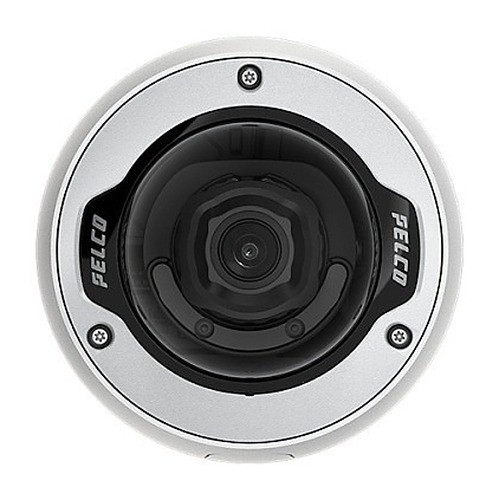
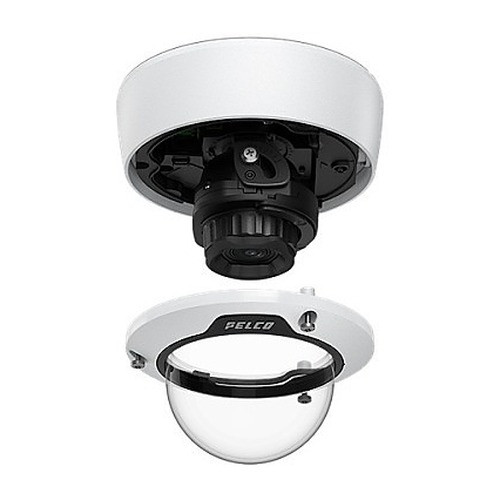
Both the Pelco SRXP4-2V10-EMD-IR and SRXP4-2V10-IMD are 2MP fixed dome cameras from the Sarix Professional 4 series, sharing the same 1/2.8-inch progressive scan CMOS sensor and PoE Class 3 power input. The core distinction is deployment environment: the EMD-IR is an outdoor-rated dome with integrated IR illumination, while the IMD is an indoor dome without IR. Installers evaluating perimeter and interior coverage within the same camera family will find this a direct cross-shop decision on environmental rating, illumination, WDR depth, and lens range.
In This Guide
How do the imaging specs compare?
Both cameras share a 1/2.8-inch progressive scan CMOS sensor at 1920×1080 (2MP). The EMD-IR spec lists a maximum frame rate of 60 fps and a motorized varifocal lens covering 4.4–9.3 mm with an HFOV of 32–109 degrees at F1.4 aperture. The IMD specifies a 3.4–10.5 mm motorized varifocal lens with autofocus, an HFOV of 31–101 degrees, and a maximum aperture of F1.6; its maximum frame rate is listed as 50/60 fps depending on mode. The IMD's wider focal range (3.4 mm vs. 4.4 mm wide end) provides a slightly broader field of view at its widest setting.
WDR performance differs meaningfully. The EMD-IR is rated at 130 dB SureVision WDR. The IMD specifies 126 dB WDR on and 83 dB WDR off. On minimum illumination, the EMD-IR is rated at 0.01 lux color and 0 lux with IR active; the IMD is rated at 0.01 lux color and 0.005 lux monochrome at 33 ms without IR assistance. IR capability is present only on the EMD-IR (850 nm, 0.003 lux mono per spec); the IMD carries no integrated IR illuminator per the provided specifications.
What about installation and environment?
The EMD-IR is specified for outdoor use with an IP66 rating and IK09 vandal resistance. The IMD is specified for indoor use; its provided specs include an IP66 notation in two fields, but the primary environment rating is listed as Indoor — installers should verify actual housing rating against the datasheet before outdoor deployment. Both carry IK09 impact resistance. Neither spec sheet provides an explicit operating temperature range in the structured fields supplied; the EMD-IR spec references a storage temperature figure of -10°C to +70°C (14°F to 158°F) in a field labeled Storage Temperature, which should not be treated as a confirmed operating range without datasheet verification.
Both cameras are powered by PoE Class 3 and support microSD onboard storage. The IMD spec additionally documents microSDHC/SDXC support up to 1.5 TB, USB 2.0, RJ45 connector on 100BASE-TX, and alarm I/O (alarm in, alarm out). The EMD-IR spec does not detail alarm I/O or USB in the provided fields. The IMD also documents 12 VDC as an alternate power input; this is not confirmed in the EMD-IR spec. Mounting options listed for the EMD-IR are wall, ceiling, and pendant; the IMD lists wall, ceiling, pole, pendant, and corner.
Which fits your VMS and analytics better?
Both cameras comply with ONVIF Profile S, Profile T, Profile G, and Profile M, ensuring broad VMS compatibility. Both support H.264, H.265, and Pelco Smart Compression. The IMD additionally specifies Motion JPEG, multi-stream H.264/H.265, 3D noise reduction, a signal-to-noise ratio greater than 50 dB, electronic shutter range of 1/7.5 to 1/30000 sec, P-Iris control, image rotation including corridor mode, up to 64 privacy zones, and digital defog. These detailed imaging controls are not listed in the EMD-IR's provided specifications.
Edge analytics are documented more explicitly for the EMD-IR: Smart Analytics covering Person/Vehicle Detection, Directional Violation, Loitering, Beam Crossing, Crowd Detection, and Tamper Alert are listed as named features. The IMD lists Pixel Motion and Classified Object Detection. Audio is noted differently: the EMD-IR references microphone support; the IMD specifies line-level audio I/O with G.711 PCM 8 kHz and Opus compression. The IMD's alarm I/O enables integration with external sensors or outputs, which is not confirmed in the EMD-IR spec. Both carry a 5-year warranty.
Which should you choose: the SRXP4-2V10-EMD-IR or the SRXP4-2V10-IMD?
Our take: The SRXP4-2V10-EMD-IR is the stronger choice when the deployment site is outdoors or requires 24/7 coverage in zero-light conditions. Its integrated 850 nm IR illumination achieves 0 lux sensitivity (versus 0.005 lux monochrome on the IMD with no IR), and its WDR is rated 4 dB higher at 130 dB versus the IMD's 126 dB, meaningful in high-contrast outdoor scenes. Its named Smart Analytics suite (Person/Vehicle Detection, Loitering, Beam Crossing, Crowd Detection, Directional Violation) is more extensively documented than the IMD's Pixel Motion and Classified Object Detection. Conversely, the SRXP4-2V10-IMD is the appropriate selection for interior spaces: it offers a wider minimum focal length (3.4 mm vs. 4.4 mm), richer imaging controls (P-Iris, corridor mode, 64 privacy zones, digital defog), line-level audio I/O with Opus compression, alarm I/O, and confirmed microSDXC storage up to 1.5 TB. Select the EMD-IR for outdoor perimeter and low-light applications; select the IMD for structured indoor environments requiring granular image control and integration flexibility.
Side-by-Side Comparison
Spec-for-spec, from manufacturer data.
| Specification | Pelco SRXP4-2V10-EMD-IR | Pelco SRXP4-2V10-IMD |
|---|---|---|
| Resolution | 2MP (1920×1080) | 2MP (1920×1080) |
| Image Sensor | 1/2.8" progressive scan CMOS | 1/2.8" progressive scan CMOS |
| Lens / Focal Length | 4.4–9.3 mm motorized varifocal | 3.4–10.5 mm motorized varifocal with autofocus |
| Horizontal FOV | 32°–109° | 31°–101° |
| Maximum Aperture | F1.4 | F1.6 |
| Min Illumination (Color) | 0.01 lux | 0.01 lux at 33 ms |
| Min Illumination (Mono/IR) | 0 lux (IR active); 0.003 lux mono | 0.005 lux at 33 ms (no IR) |
| IR Illumination | Integrated 850 nm IR | — |
| WDR | 130 dB SureVision | 126 dB (WDR on); 83 dB (WDR off) |
| Max Frame Rate | 60 fps | 50/60 fps |
| Video Compression | H.264; H.265; Smart Compression | H.264; H.265; Motion JPEG; Smart Compression |
| IP Rating | IP66 | IP66 (listed; primary rating: Indoor — verify datasheet) |
| IK / Impact Rating | IK09 | IK09 |
| Environment Rating | Outdoor | Indoor |
| Power Input / PoE Class | PoE Class 3 (802.3af) | PoE Class 3 (802.3af); 12 VDC |
| Edge Storage | microSD | microSD/SDHC/SDXC up to 1.5 TB |
| Audio | Microphone supported | Line-level I/O; G.711 PCM 8 kHz; Opus |
| Alarm I/O | — | Alarm In, Alarm Out |
| ONVIF Profiles | S, T, G, M | S, T, G, M |
| Edge Analytics | Person/Vehicle Detection, Directional Violation, Loitering, Beam Crossing, Crowd Detection, Tamper Alert | Pixel Motion; Classified Object Detection |
| Mounting Options | Wall; Ceiling; Pendant | Wall; Ceiling; Pole; Pendant; Corner |
| Warranty | 5-year | 5-year |
Frequently Asked Questions
Which should you choose: the SRXP4-2V10-EMD-IR or the SRXP4-2V10-IMD?
The SRXP4-2V10-EMD-IR is the stronger choice when the deployment site is outdoors or requires 24/7 coverage in zero-light conditions. Its integrated 850 nm IR illumination achieves 0 lux sensitivity (versus 0.005 lux monochrome on the IMD with no IR), and its WDR is rated 4 dB higher at 130 dB versus the IMD's 126 dB, meaningful in high-contrast outdoor scenes. Its named Smart Analytics suite (Person/Vehicle Detection, Loitering, Beam Crossing, Crowd Detection, Directional Violation) is more extensively documented than the IMD's Pixel Motion and Classified Object Detection. Conversely, the SRXP4-2V10-IMD is the appropriate selection for interior spaces: it offers a wider minimum focal length (3.4 mm vs. 4.4 mm), richer imaging controls (P-Iris, corridor mode, 64 privacy zones, digital defog), line-level audio I/O with Opus compression, alarm I/O, and confirmed microSDXC storage up to 1.5 TB. Select the EMD-IR for outdoor perimeter and low-light applications; select the IMD for structured indoor environments requiring granular image control and integration flexibility.
Is the SRXP4-2V10-EMD-IR or SRXP4-2V10-IMD better for low-light performance?
For true zero-light conditions, the SRXP4-2V10-EMD-IR is the clear choice: its integrated 850 nm IR illumination brings minimum illumination to 0 lux (IR active) and 0.003 lux monochrome per spec. The SRXP4-2V10-IMD has no integrated IR and is rated at 0.005 lux monochrome at 33 ms, which is adequate for dimly lit interior spaces with some ambient light but insufficient for pitch-dark environments.
Can the SRXP4-2V10-IMD be installed outdoors?
Based on the provided specifications, the SRXP4-2V10-IMD is classified as an indoor environment camera. While IP66 appears in two spec fields, the primary Environment Rating is listed as Indoor. Installers should verify the actual housing rating and temperature tolerance directly against the official Pelco datasheet before considering any outdoor deployment. The SRXP4-2V10-EMD-IR is explicitly rated for outdoor use with IP66.
Which camera offers more VMS and third-party integration options?
Both cameras support ONVIF Profile S, T, G, and M, so VMS compatibility is equivalent. However, the SRXP4-2V10-IMD provides more documented integration hooks: line-level audio I/O with G.711 and Opus compression, alarm in/alarm out terminals, USB 2.0, and up to 64 privacy zones. The SRXP4-2V10-EMD-IR documents microphone support and a more detailed named analytics suite (six analytics event types listed), but alarm I/O and USB are not confirmed in its provided specifications.
Get a Second Opinion on Your Camera Choice
Share your site layout, coverage goals, and budget. Our team will validate the camera selection, flag anything we would change, and recommend products that match the use case.